OpEds
South Africa bet on the wrong horse in its ICJ ‘genocide’ gambit

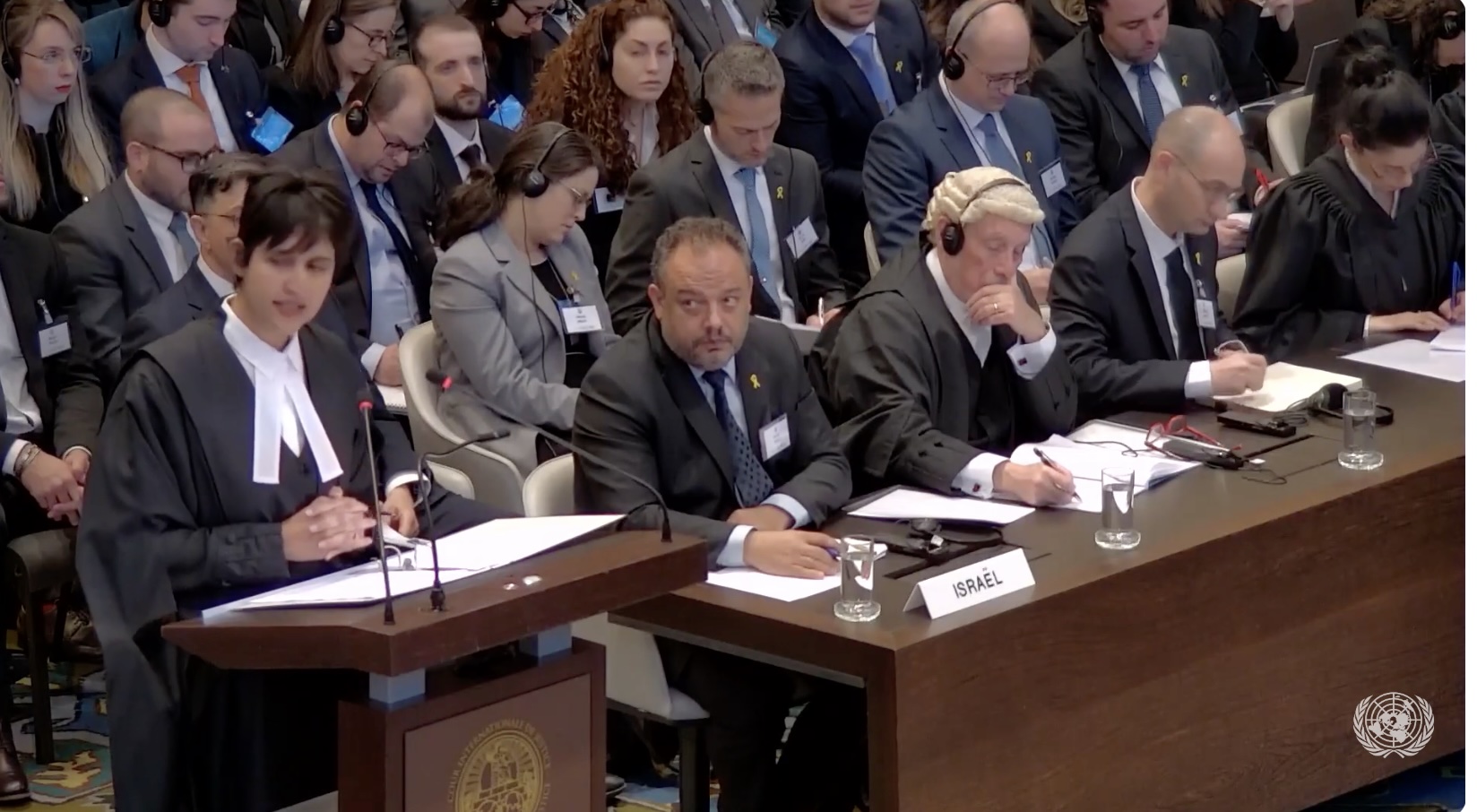
In December 2023, South Africa filed a petition at the International Court of Justice (ICJ) against Israel for allegedly violating the Convention on the Prevention and Punishment of Genocide during its operations against Hamas in Gaza. South Africa demanded the ICJ place provisional measures on Israel, most notably, that it imposes a unilateral ceasefire.
South Africa claimed its actions were to “liberate humanity from the ‘odious scourge’ of genocide” and to “remind us all of our shared values”. It further asserted that “We must all answer to the call to defend the principles of international law and to reassert the vital role played by the United Nations [UN] and international dispute settlement mechanisms like the ICJ.”
Despite the lofty words, South Africa’s case was always unsupportable, both factually and legally. To prove genocide, it would have to show that Israel acted with the sole special intent of destroying Palestinians as a group. No such intent exists, and South Africa’s “proof” is weak at best. Its filings completely erase the context of 7 October 2023, cover up Hamas terror tunnels and use of human shields, and lie about the issue of humanitarian aid to Gaza. Its only “evidence” of intent are a few falsified statements allegedly made by Israeli officials.
Its initial request was so unconvincing that even the ICJ, the UN’s politicised court, would not grant the demand for a ceasefire. Subsequent requests were treated similarly. When it came time to actually submit hard evidence, South Africa reportedly scrambled to cobble together more of the same tendentious and manipulated information.
It was clear from the outset, however, that South Africa’s legal machinations were not about “defending the principles of international law” or to “reassert the vital role played by the UN” – as claimed by the government – but rather were part of the information war against Israel. The goal was to internationally isolate and pressure Israel into stopping its operations against Hamas and Iran’s other proxy armies, Hezbollah and the Houthis, which joined in the assault on the Jewish State.
Far from caring about “international law”, the South African government’s ongoing public sentiments have been virtually silent about 7 October 2023 and the hostages. Not only has the government misinformed, it openly embraced the butchers, hosting Hamas officials at a conference in Johannesburg just a month after the atrocities. The country began organising coalitions of countries to issue statements of condemnation solely directed at Israel. South Africa included members of nongovernmental organisations linked to the Popular Front for the Liberation of Palestine terrorist organisation on its legal team. Around this time also, a large debt owed by the African National Congress was also mysteriously settled, with rumours that Iran had paid the bill in exchange for the ICJ filing.
Even today, far from “reasserting the UN’s vital role”, after the October 2025 ceasefire adopting United States (US)President Donald Trump’s 20-point plan for Gaza, and its endorsement by UN Security Council Resolution 2803, South African government statements erase the humanitarian and security framework currently in place, while also remaining silent about Hamas’s continuing violations of it.
South Africa’s role in bringing this case, therefore, was never about the actual substance of the Genocide Convention or upholding international law and institutions. Rather, it reflected South Africa’s desire to more closely align with the axis of China, Russia, and Iran.
In this vein, on the first anniversary of Russia’s invasion of Ukraine, South Africa conducted military exercises with Russia and China. Another round took place in January 2026, this time with participation from Iran, precisely while the mullahs were massacring 30 000 of their own citizens protesting against the regime. South Africa has also sought to boost trade with all three actors. Choosing to ally with countries that threaten and wage aggressive war against their neighbours, commit genocide against their minority populations, crush any and all dissent by political opponents, arbitrarily detain and torture, block freedom of speech and protest, and practise gender and ethnic apartheid is the height of hypocrisy and belies South Africa’s self-serving talk on Gaza.
South Africa’s approach is not only hypocritical, but short-sighted, and it has already had far-reaching consequences. In addition to courting Russia, China, and Iran, South Africa was also looking to improve its ties with the United Arab Emirates (UAE). Iran’s unceasing attacks on the UAE have provoked fury, and it may retaliate against those who have taken sides with Iran. South African’s increasing hostility towards Israel has harmed much needed access to Israeli tech in the water, medical, cyber, defence, and agricultural fields.
South Africa’s diplomatic choices have caused the most damage, however, to its most important relationship. The United States is South Africa’s biggest trading partner, and largest funder of its civil society sector. The US has vociferously objected to the ICJ case. Pretoria’s increasing alienation from and antagonism towards the US has drawn the ire of the Trump administration. The US has increased tariffs on South Africa and cut massive amounts of humanitarian aid to the country. The US has also snubbed South Africa in its efforts to enhance its international profile, by boycotting the G20 meeting last year in Johannesburg. Punitive actions are likely to intensify after the fallout from the Iran war.
Regardless of whether the regime in Iran survives, it has suffered serious military and financial destruction that will only exacerbate the country’s economic collapse. It will be hard to think of the benefits it could now provide to South Africa. Moreover, should the people of Iran rise up and depose those who have oppressed them for 47 years, the new leaders will remember which side the South African government chose in their struggle for freedom.
It is highly possible that even with the geopolitical changes that will undoubtedly come from the Iran war, South Africa may ultimately prevail at the ICJ. The UN court is a political body that does not have the ability to engage in real fact finding or evidence testing. It is not bound by rules that generally govern court proceedings, and there are no mechanisms for oversight or accountability. Much of the time, this body merely endorses unverified UN reports, regardless of their credibility, and factual and legal accuracy.
So in the end, South Africa may score an information war “win” against Israel. But will it be worth the damage it has inflicted on itself in the process?
- Anne Herzberg is the legal adviser of NGO Monitor, a Jerusalem-based research organisation.