



Israel
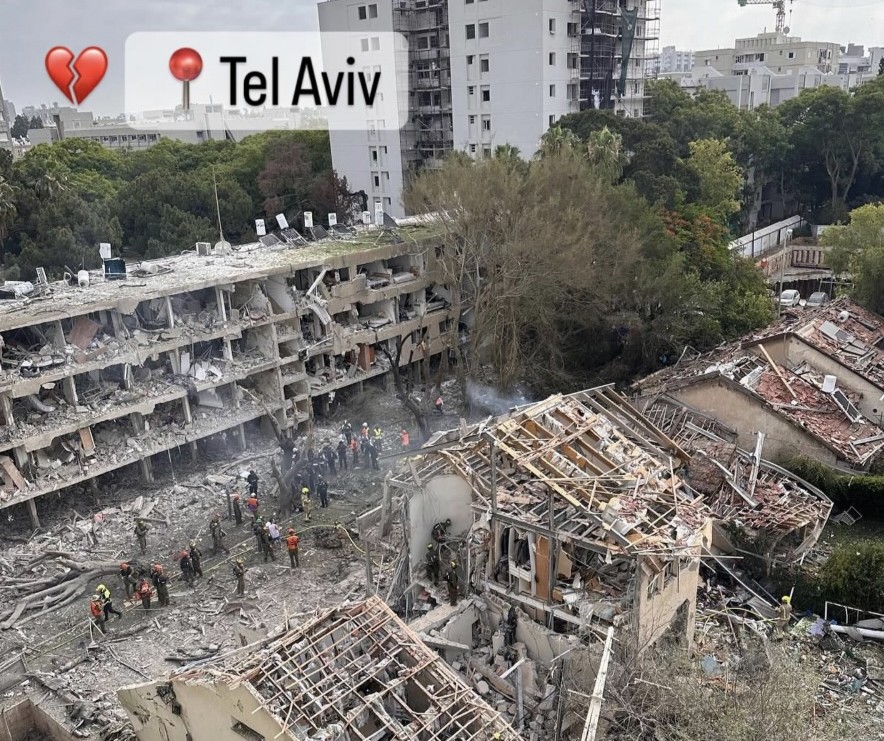
Why people believe that Tel Aviv is rubble and the PM is dead

Videos showing Tel Aviv flattened into a wasteland of collapsed buildings and burning streets are spreading rapidly online. And in some corners of the internet, people are celebrating the destruction. Strong rumours that Israeli Prime Minister Benjamin Netanyahu is dead have also contaminated social media.
Except the scenes and rumours aren’t real. They are AI-generated fabrications of a destroyed Tel Aviv, and the demise of Bibi. They have been shared widely across social media platforms, mostly without any indicators that they are fake.
“AI deepfakes are now so realistic that people will believe anything they see, and also won’t believe their own eyes. Here we’re seeing that on steroids, because so many people are predisposed to believe conspiracy theories involving Jews, and there are foreign influence operations deliberately spreading disinformation,” said former spokesperson for the State of Israel Eylon Levy.
Internet communications and technology expert and author Arthur Goldstuck argues that many people are eager to believe these videos because they confirm their pre-existing beliefs.
“It’s plain old confirmation bias: when the content lines up with a person’s worldview, the brain treats it as evidence rather than something to question.”
It’s also about algorithms.
“Social media rewards emotion and anger, rather than rationality and verification. A dramatic clip of a city in ruins will travel far faster than a sober explanation of what actually happened, and showing buildings standing as they always have,” said Goldstuck.
He explained that some fake videos are so convincing because the latest generative AI models are trained on enormous libraries of real imagery and video. They learn patterns in lighting, architecture, smoke, explosions, and camera movement, and so when prompted correctly, the AI reconstructs those patterns into scenes that mimic reality.
“Creators often combine several tools, like one that generates the scene, another that animates it, and another that adds sound effects or even camera shake. The final step is the presentation style: vertical video, shaky footage, compression artefacts, and urgent captions mimic the style of real social media clips,” he said.
Middle East commentator Rolene Marks made it clear that, though videos are saying Netanyahu was killed in a strike by Iran, he is alive and well.
“In fact, he made a point of filming himself buying a coffee, and he said the only thing that he’s dying for is the coffee, and that he loves his citizens so much,” she said.
Technology expert and University of Johannesburg professor Steven Sidley explained that he hadn’t even followed the story of Netanyahu being killed because he could tell it was obviously fake. “If he had been killed, we would have heard about it immediately from official Israeli sources,” he said.
Marks added, “Sites like TikTok, which are known to be propaganda generators, make sure that if you are on any WhatsApp groups, just because it says Israel, it’s not necessarily verified news. Make sure your news is verified and understand that we are dealing with the absolute masters in creating panic and propaganda, and that is Iran.”
Goldstuck argues there are three reasons people make these types of videos: propaganda, attention, and mischief.
“Conflict environments always produce information warfare, and AI makes it far cheaper, quicker, and more convincing. Instead of manipulating a single photo, you can fabricate an entire event,” he said.
He also explained that the attention economy we live in is partly to blame. “Viral content translates into followers, engagement and, very often, money, as some platforms run ads alongside viral content. The person posting such content often gets a percentage of the revenue. A shocking video can be highly profitable, given that it’s cheap to make and has a greater chance of going viral,” he said.
Furthermore, Goldstuck explained that people often make these kinds of videos simply because they can. “Give someone a powerful tool and a global audience, and someone will inevitably use it to cause chaos, just to see how far they can take it.”
Levy, who lives in Tel Aviv and was approached by random X users believing that the city is rubble, explained that people are so ready to believe it’s been destroyed because they want it to be true.
“You can’t understand the ‘Tel Aviv is burning’ hoax without grasping the glee and bloodlust with which it is being shared. For the past two years, much of the world has jumped down a conspiratorial rabbit hole with no connection to reality,” he said.
Goldstuck explained that in highly polarised conflicts, confirmation bias becomes stronger. “If someone already believes a country is an aggressor or deserves punishment, footage appearing to show it suffering can feel emotionally satisfying. That emotional reaction often overrides any attempt to verify whether the footage is real”.
However, this isn’t unique to one side, said Goldstuck. “People across the political spectrum fall for misinformation when it flatters their narrative. AI-generated imagery simply gives those narratives a far more persuasive visual form. The danger lies less in the technology itself than in how readily audiences accept what they want to see.”
“There are many more people in parts of the world who want Israel destroyed than those who don’t, so when videos appear showing Tel Aviv in ruins, many viewers are inclined to believe them,” said Sidley. “Images showing the city functioning normally, people eating at restaurants, or going about their daily lives, simply don’t spread as widely. The only way to challenge the false claims is to present photographic evidence of Tel Aviv, but even that is often dismissed. Until there is some technological solution to identify or limit such fabrications, it’s a no-win situation, and Israelis are often on the receiving end of it.”
Sidley explained that there is no defence against this phenomenon, as there is bias everywhere. And the only way to combat this is through digital signatures and blockchain wizardry, but that’s a long way off.
“So we must, with respect to this war going on now, just accept the fact that there are millions and millions of people who think that Tel Aviv is lying in ruins, which of course it’s not. There’s nothing to be done about it.”