





Israel
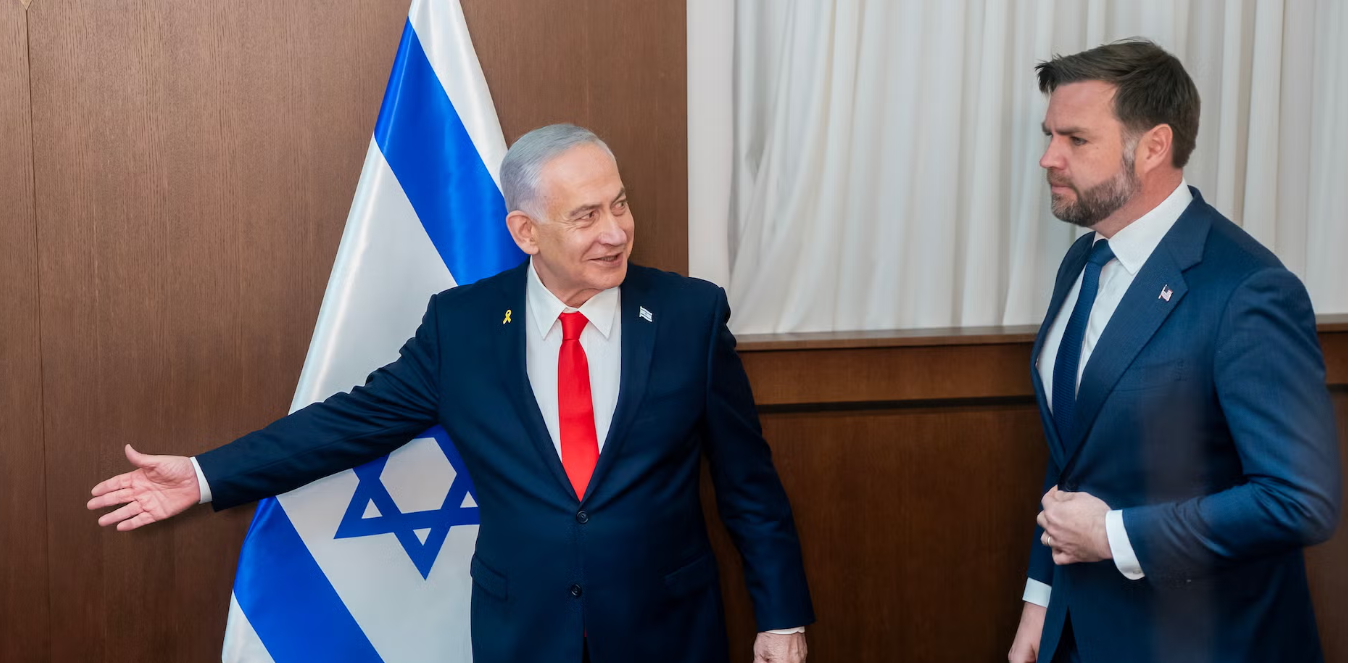
Netanyahu and far-right ministers do damage control on West Bank vote and Saudi Arabia comments that angered Trump

JTA -Israeli Prime Minister Benjamin Netanyahu sought to distance himself on Thursday, 23 October, from a Knesset vote that granted preliminary approval to a bill annexing the West Bank, after the measure drew strong condemnation from the White House.
At the same time, a far-right Israeli legislator apologised after making a dismissive and, some said, offensive comment about Saudi Arabia, putting him at odds with the White House’s goal of brokering relations between Israel and Saudi Arabia.
The backtracking comes at a time when the Israelis are facing fierce pressure from United States President Donald Trump and his administration not to jeopardise a fragile Gaza ceasefire that took hold earlier this month.
“The Knesset vote on annexation was a deliberate political provocation by the opposition to sow discord during US Vice-President JD Vance’s visit to Israel,” wrote Netanyahu’s office in a post on X.
His post came soon after Vice-President JD Vance, who departed from Israel on Thursday after a visit to “monitor” Israel’s ceasefire with Hamas, said the vote amounted to an “insult”, adding that if it was a political stunt, then “it was a very stupid political stunt”.
Trump has vowed not to allow Israel to annex the West Bank, a goal of the Israeli right that is seen as a red line for Arab states hoping to see an independent Palestinian state in the future.
“It won’t happen because I gave my word to the Arab countries,” Trump said in an interview with Time magazine published on Thursday. “Israel would lose all of its support from the US if that happened.”
The exchange comes days after Israeli settlers launched a volley of attacks on Palestinian activists and olive harvesters this week, leaving one woman in the hospital, adding to growing violence in the West Bank.
Netanyahu’s distancing from the Knesset bills told only part of the story. He claimed that the “Likud party and the religious parties did not vote for these bills”, two parties from his coalition, but while it was true that his Likud Party didn’t back the bills, others in his coalition, including Otzma Yehudit and Religious Zionists, did and represented the majority of their support. Still, the bills cannot achieve full passage without Netanyahu’s buy-in, which he said he wouldn’t give.
Bezalel Smotrich, the finance minister who leads the Religious Zionists, was at the centre of the other flareup on Thursday when he declared at a conference, “If Saudi Arabia tells us ‘normalisation in exchange for a Palestinian state’, friends, no thank you. Keep riding camels in the desert.”
Smotrich’s remarks were made ahead of a planned meeting between Trump and Saudi Crown Prince Mohammed bin Salman at the White House next month to discuss normalisation between Arab countries and Israel.
After drawing public criticism from others in Israeli politics, Smotrich later apologised for the remarks in a post on X, writing, “My statement about Saudi Arabia was definitely not successful, and I regret the insult it caused.”
But he said he wouldn’t retract his concern about Palestinian statehood, which the Saudis support. “However, at the same time, I expect the Saudis not to harm us and not to deny the heritage, tradition, and rights of the Jewish people to their historic homeland in Judea and Samaria and to establish true peace with us,” he wrote.
Israeli Diaspora Minister Amichai Chikli also appeared to criticise Smotrich’s comment in a post on X, writing, “I firmly oppose the establishment of a Palestinian state. That said, it doesn’t mean we should insult a potential ally.”
He then extended an invitation of his own for a new relationship, ending the week after he brought a far-right British personality to Israel against the objections of Britain’s organised Jewish community.
“Incidentally, we’re also pleased to be hosting a unique camel race in the Negev together with the Bedouin community in just a few weeks and we warmly invite our Saudi friends to join us,” Chikli wrote.







Gerald Levin
November 4, 2025 at 6:15 pm
Essential after October 7th. After World War 1, ALL land liberated from the Ottoman Empire in the Middle-East was referred to as ‘Palestine’. Faisal Hussein’s proposed Pan-Arab Palestine included Syria, Lebanon and Trans-Jordan (Without East-Bank land that was included in the biblical kingdom).
I was told this on appointment to a Commonwealth project, by the London Foreign Office; in August 1997. My project? To facilitate the biblical kingdom joining the Commonwealth.