


World
After the midterms, learning to listen: My last conversation with Saeb Erekat

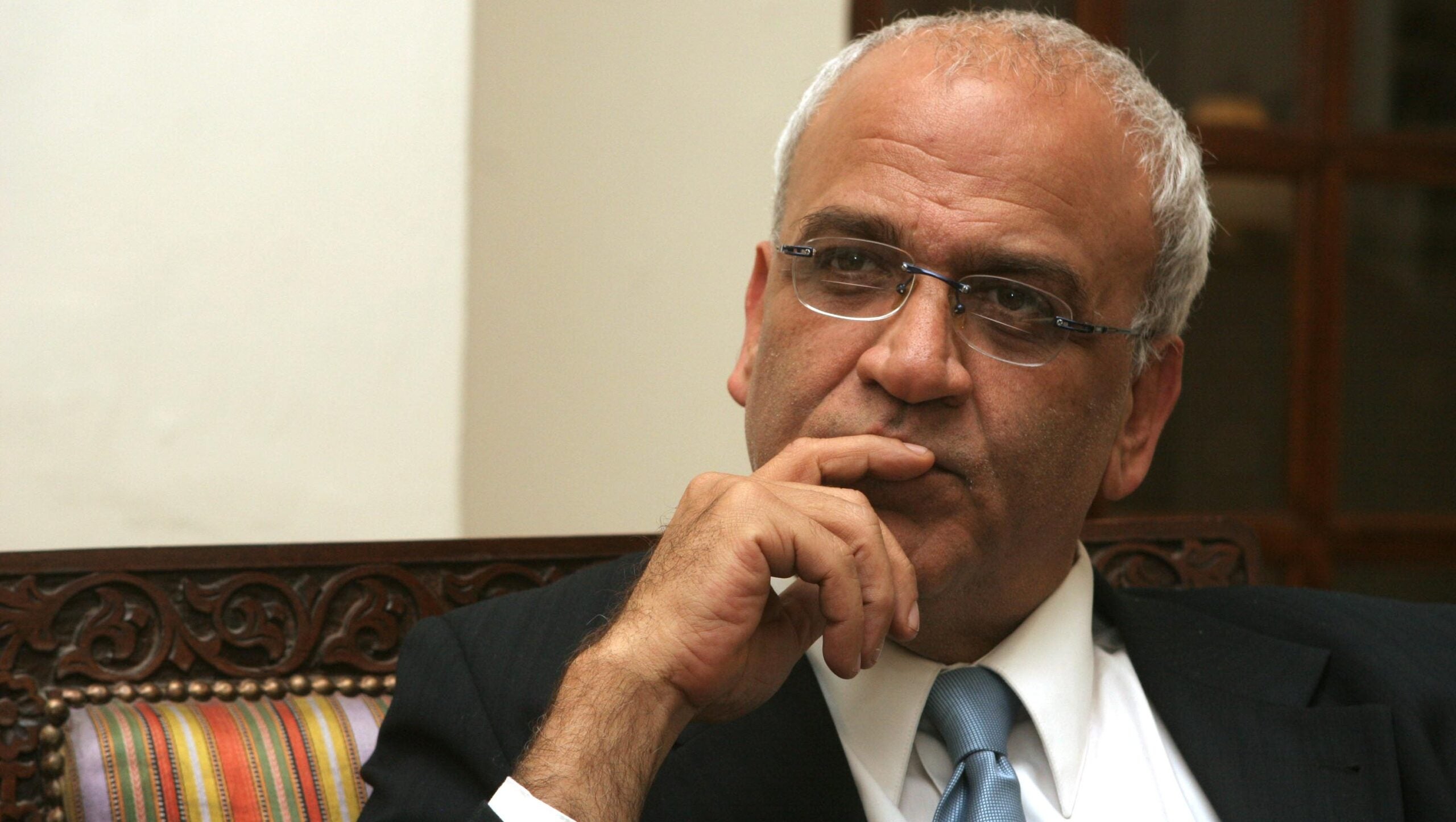
JTA – Nine years ago this month, I sat down to lunch with Saeb Erekat, the chief Palestinian negotiator, for what turned out to be our last conversation. Peace between Israelis and Palestinians was elusive then. Today we are further from achieving it than ever before.
Despite common perception and what some Middle East experts claimed, the Israeli-Palestinian conflict wasn’t the core conflict of the Middle East. For many years, the conflict has been with the Iranian regime and its proxies that want to undermine, threaten, and destabilise the Middle East and beyond. Today, as the war against the Iranian regime continues, that lunch reminds me that facing complex, dangerous problems requires a clear-eyed view.
The lunch was in November 2017, in a rental apartment in Virginia, not far from Washington. Saeb was a veteran peace negotiator and the secretary-general of the Palestine Liberation Organization executive committee, and I had come to know him during my first year as President Donald Trump’s Middle East envoy. He was in the United States recovering from a lung transplant for pulmonary fibrosis. He and his wife, Neameh, had invited me over, and they had made sure there was a kosher meal for me so we could eat together. For a while, we talked about their family, including their newest grandchild.
The United States was moving to close the Palestinian mission in Washington. I knew the news would anger him, and I wanted him to hear it from me in person. The Trump administration decided to exercise its prerogative, under American law, to suspend the waiver that kept the mission open because Palestinian Authority President Mahmoud Abbas had called on the International Criminal Court to investigate and prosecute Israeli officials. The Trump administration ordered the mission closed for good in September 2018.
Saeb told me that if Trump closed the mission, I would go home a failure. I said the failure would belong to his leadership, if it kept turning away from openings for peace. As I responded, I was looking at the picture of his new grandchild. I wondered how he would grow up, and whether the Palestinian leadership would change in a way that would let him live differently than Saeb did. That grandchild is now nine, and I suspect nothing is different for him at all.
That was the last time I spoke to Saeb, who died in 2020 of complications from COVID-19, two months after the Abraham Accords were signed. He had denounced the accords. When the agreement normalising relations between Israel and the United Arab Emirates was announced, he called it “an Arab dagger, a poisonous dagger, in my back”.
I have often wondered whether, given more time, he would have come to see them differently. About a year ago, I met a member of Saeb’s family who showed me pictures of their children and spoke about the future they hoped for them. This person was strong and direct, very much like Saeb, and we didn’t agree on much, if anything. Sitting there, I was back at that lunch table.
Those children and my grandchildren will live in the world we leave them. When I had lunch with Saeb, I wasn’t yet a grandfather. Now I am the grandfather of three and, G-d willing, am expecting my fourth grandchild. I want for Palestinian and Israeli grandchildren the same thing I want for my own: a future that is safe and full of possibility. In a world this unsettled, that is harder and harder to see. But the difficulty, however daunting, is no reason to stop trying.
The nine years since that lunch have held amazing things, horrific things, and dangerous things. The Abraham Accords showed what could happen when the American president and regional leaders seized an opening. Then came the horrific massacre and other atrocities committed by Palestinian terrorists on 7 October; the war in Gaza fought in response; and the war against the Iranian regime. The Middle East today is more dangerous and more volatile than it was when Saeb and I sat down to lunch. And yet I have watched Israel and some Gulf states thrive in ways I could not have imagined then.
Listening was part of how Trump’s peace team worked. I sat with Americans and Israelis, Palestinians and Europeans, and leaders across the Middle East. We often encountered resistance from the people across the table, and we kept going back anyway. Breakthroughs come from staying in the room, showing up again, and taking the opening when it comes.
Talking with people you profoundly disagree with doesn’t mean surrendering your convictions or your principles. It means holding them firmly and still looking for common ground. A breakthrough doesn’t mean full peace, and certainly doesn’t mean the so-called two-state solution, which means so many different things to different people.
After this month’s midterm elections in the United States, I again remember that lunch. The lessons I then learned about listening apply too to America, where the midterms showed just how polarised we have become. I intend to keep doing what I did at that lunch table: talking with people who disagree with me, even if they disagree strongly, rather than writing them off. I don’t expect agreement. But I am not willing to give up on openings before they appear.
The lunch didn’t change Saeb’s mind, and it didn’t change mine. Indeed, Saeb and I disagreed about almost everything. I am glad I sat with him anyway.
- Jason D Greenblatt was the White House Middle East envoy in the first Trump administration. He is the author of In the Path of Abraham: How Donald Trump Made Peace in the Middle East – and How to Stop Joe Biden From Unmaking It, the founder of Abraham Venture LLC, and publishes the Substack How to Watch.
- The views and opinions expressed in this article are those of the author and do not necessarily reflect the views of the SA Jewish Report, JTA, or its parent company, 70 Faces Media.