





Israel
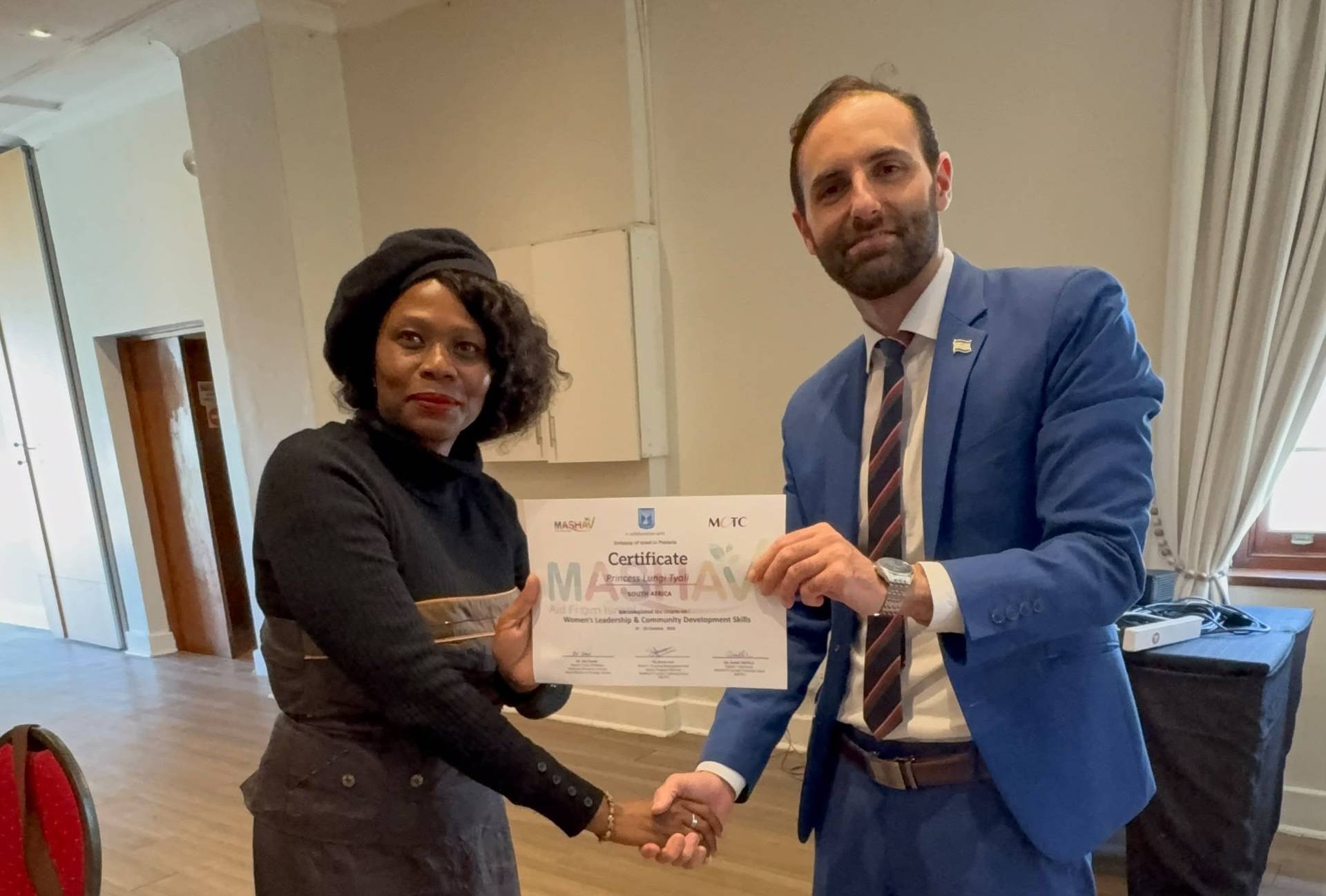
Israel’s man in Pretoria full of optimism

Hen Feder, Israel’s new deputy chief of mission in South Africa, carries with him at all times the letter his predecessor, Ariel Seidman, received in January this year, giving him 72 hours to leave the country. Feder does this not because he fears the same fate awaits him, but as a reminder that things can only move upwards and onwards from that point.
Feder’s position is the diplomatic equivalent of a deputy ambassador to South Africa. He arrived in the country in August to take up his post and was officially accredited by the Department of International Relations and Cooperation (DIRCO) in September. “I don’t keep my bags packed, but I keep this letter with me so I can look back and see where we were, with hopes that we can outgrow that crisis and find ways to move forward from there,” he told the SA Jewish Report.
Before taking up this position, Feder spent three years in France, from July 2023 to July 2026, as spokesman for the Embassy of Israel in Paris. Moving to South Africa in the same year his predecessor was expelled could have been a difficult decision.
“It wasn’t difficult at all because as diplomats we go wherever we are needed, and so I understood that I was needed here,” he said. “Besides, even though there are major discrepancies between our two governments, I think that compared with other places around the world, there is so much in common between us in Israel and South Africans in general.”
Feder, who was a corporate attorney in Israel and the United States before joining the Israeli Ministry of Foreign Affairs as a diplomatic cadet in 2022, said that France was a great training ground for South Africa.
“Paris was challenging, to say the least, because I found myself representing a country at war very early on. As a new diplomat starting my career, I was in the media line of fire literally as soon as I had unpacked.
“For people outside the community and Israel, it is difficult to understand what is going on in the Middle East as a whole, and Israel and the Palestinian territories specifically. After 7 October 2023, very quickly the empathy towards Israel evaporated and was replaced by criticism.”
He explained that, although the media and politics in France are “more nuanced” than in South Africa, where he said the leading party has taken on the Palestinian cause as part of its identity, France was still very challenging.
However, he arrived with the knowledge that there was no love lost between the ANC and Israel. He was also not expecting the mainstream media to welcome him with open arms, and they haven’t.
“I am not afraid of tough conversations or difficult interviews. I welcome it, as long as I am treated with respect.”
Feder said that the French journalists who came to his farewell party in Paris teased him that if he had survived French journalists, he would survive South Africa. “I think they were right because they were very critical of everything and ensured that I critically thought of every comment I made. At the same time, when I am not dealing with the media in South Africa, there are so many positive things happening here in South Africa.”
In his role as a diplomat in any country, he explained, there are layers to his work. And in South Africa, it is just a little different. He explained that there is usually an official layer of liaison with government, but he is in contact with various other parties that are in Parliament. “We have been well received by the Christian and Jewish communities. Even though the Jewish community support may be considered obvious, we don’t take it for granted. We have also been welcomed by traditional leaders.
“In terms of DIRCO and government, “our role is to strive for open communication to solve discrepancies and misunderstanding and so far that has been efficient. Whenever there have been issues with Israelis with problems in South Africa and South Africans in need in Israel, we have been able to resolve this well.”
He said he goes all out to strengthen ties with everyone willing to engage with Israel. “We hope to strengthen this connection and show all South Africans what positive relations with Israel can bring this country.
“Obviously we would never ignore the government layer, but in that area, it takes two to tango,” he said.
In both South Africa and Israel, the only certainty at this point after the elections is “change is coming”, Feder said. Whatever the outcome in Israel, it will not affect his role in South Africa as he is not a political appointee.
Having been in the diplomatic corps in France and then here since 7 October, Feder has experienced what both Israelis abroad and diaspora Jews are going through. “This period has shown me that we have to be much more united that we were before the massacre,” he said. “We must ensure our divisions and disagreements are at a level that we can still have meaningful and constructive discussions.
“When we look outside the melting pot, the amount of hatred towards us has become enormous very quickly. While we are dealing with this as Jews and Israelis, we cannot let our own differences get in the way. We need to keep in mind the forces that are acting against us are massive.”
He said that for him what has changed since 7 October is the realisation of the importance of unity and the strength we have when we are united and the risks to us when we aren’t.
“I have realised that the forces against us are so well-coordinated, planned, with long-term thinking. Without us being united against it, it is very difficult to move forward in a constructive way. For me, even when I have differences with people, I think there is a realisation that these things matter less when we have such great risks around us.”
In terms of antisemitism, he mentioned Qatar’s influence. “They have different influences in different countries; however, it is not by chance that Qatari news agency Al Jazeera is deemed illegal in many Arab countries but is one of the main channels in many top hotels in South Africa.
“Our haters are very good at trying to hide antisemitism in what they call antizionism. This sentiment is a global issue and is a huge challenge for diplomats because it does take different forms and faces. They know how to push the right buttons in the right countries. In Ireland, Israel is described as the new British. In South Africa, we are called the apartheid regime. In the US, we are accused of taking taxpayers’ money. The message is ultimately the same.”
Feder is, however, happy to be in South Africa.
“Wherever we go, we have been received with such warmth and hospitality. The people are so caring and kind, and the food – especially the meat – is so good here. The scenery in this country is breathtaking, and we will have such fun travelling and exploring when we can.”
