


Israel
Rediscovering the roots of a family forest in Israel

An international Jewish family – who now live in South Africa – has discovered that what it thought was its donation of 1 000 trees to Israel in 1986 was actually five times larger.
The discovery prompted newlyweds David and Laura Akinin, who live in Cape Town, to travel to Israel and plant trees of their own, continuing a tradition that began four decades earlier.
Originally from Venezuela, Akinin, 36, has lived in southern Africa for 12 years. He initially established a business in Namibia before expanding into Zambia and Zimbabwe. He and his French girlfriend moved to Cape Town about a year and a half ago. He also completed his master’s degree at the University of Cape Town.
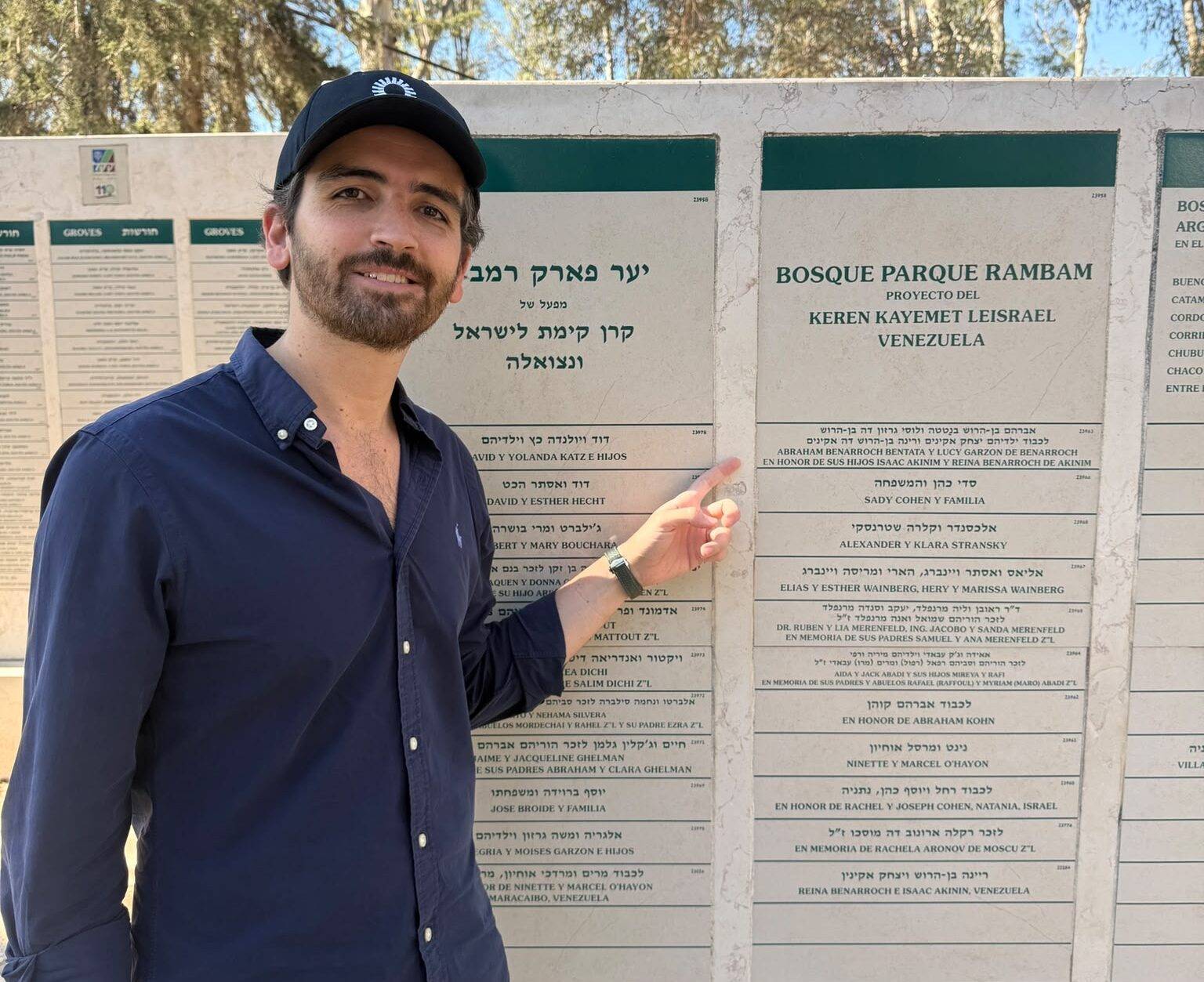
The tree story began with a newspaper clipping that Akinin’s family had kept since 1986. It documented how Abraham Benarroch Bentata and Lucy Garzon de Benarroch had planted trees in Israel to celebrate their daughter Reina’s marriage to Ysaac Akinin.
“As a kid, I always heard from my mother that one of the big wedding gifts my grandfather made to her and my father 40 years ago was this forest of trees,” Akinin said.
After marrying in May 2026, he revisited the story with his grandmother, who still had the original newspaper clipping. His grandfather had died 18 years earlier, when Akinin was 18.
He wanted to honour his grandparents’ contribution by planting trees with his new wife. “It was this mystical idea. I had never been to Israel. It was beautiful to think of the idea of planting trees.”
He contacted Keren Kayemeth LeIsrael Jewish National Fund (KKL-JNF) and asked whether the organisation could help locate the original forest. Its South African desk helped investigate the family’s history. It retrieved the original donation certificates and eventually identified the location of the family’s plaques.
The first donation, of 2 500 trees, was recorded in September 1986, in the Lavi Forest. The second followed in January 1988 on Mount Turan. Together, the donations account for 5 000 trees in what is now the Rambam Forest in the Lower Galilee, near Tiberias.
The original planting sites can no longer be identified precisely, but the trees remain part of the same forest. The plaques have been moved to the Golani Recognition Centre for protection.
For Akinin, finally standing in the forest earlier this month was an emotional experience. “It’s probably the first time in many years, if not to say since 18 years ago, that I felt like I was standing next to him,” he said, referring to his grandfather.
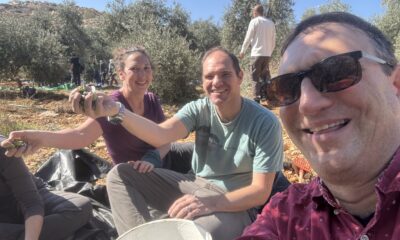
He described standing among the trees with Laura as particularly powerful. The couple invited her parents, Karen and Charles Constantini, to join them in Israel and on 12 November, the two families planted 10 trees in the Ben Shemen Forest near Modi’in.
Five trees were planted in the names of the Akinins and five in the name of the Constantinis, celebrating the young couple’s marriage and extending the family tradition to Laura’s family.
For Akinin, the experience represented more than a symbolic gesture.
“Many of us who live in the diaspora look for ways in which we can be helpful to Israel,” he said. “Especially now, at a time where there is war and so many of us want to do more, it felt like the right thing in a physical way to actually be part of bringing back greenery to the State of Israel.”
He said learning about the history of forest planting in Israel added another dimension to the experience. Early immigrants had planted trees in an arid landscape as part of establishing a new country. He said the forest hadn’t contained a single tree before his grandparents’ contribution had helped establish it.
“It wasn’t any more just a symbolic thing to do what my grandparents had done to help create the State of Israel,” he said. “It felt like we were really putting something on the ground, really giving shape to what will be the next forest in Israel.”
During their visit to the Lavi Forest, Akinin and his wife also discovered a connection closer to their current home. The Venezuelan section of the forest stands alongside a section commemorating contributions from South African families and organisations.
“I had never even discussed this in South Africa. I had never heard anyone talk about it,” he said. He was surprised by the number of South African names recorded there. He also discovered that a road leading into the forest had been donated by someone from Johannesburg.
The visit included an unexpected encounter with Maor Malka, a member of KKL-JNF’s northern fire and forest protection team. Akinin discovered that his name was the same as the firefighter’s late father and the connection prompted Malka to offer the couple a tour of the forest.
He showed them the specialist fire truck used by his team, including equipment donated by a community in New York. He also explained the dangers involved in protecting forests during the war. After 7 October, missiles fell in the northern forests, causing fires that required teams to work under military protection. Malka showed the couple the protective helmets and vests used during these operations.
He then took them on a two-hour drive through the forest, showing them views of Mount Tabor.
Akinin described the encounter as one of the most memorable experiences of their trip. “We think of firefighters as people who just stop fires, but they’re also protecting legacies and protecting pretty much what the State of Israel stands for,” he said.
The discovery has prompted Akinin to consider how other South African families might reconnect with their own contributions to Israel. He has contacted KKL-JNF’s South African desk to explore ways of sharing the information with communities in Cape Town and Johannesburg. He hopes other families will investigate whether their relatives also planted trees or contributed to Israel’s forests.
He will also encourage his family to mark significant occasions through tree donations. “Whenever we have meaningful moments in our lives, whether it’s the birth of a child, a marriage, or a Barmitzvah, try to find those dates to align with a tree donation,” he said. “It can be very symbolic and beautiful.”