





OpEds
Don’t look, don’t ask – the campaign against seeing Israel for yourself

A troubling pattern has emerged in South African public discourse around Israel: the problem is no longer disagreement over facts or policy, but a growing insistence that South Africans must not be allowed to verify facts for themselves, and that those who do, should be punished.
This pattern is increasingly visible in the treatment of politicians, traditional leaders, academics, and public figures who visit Israel. The criticism they face is rarely about what they actually say or do. Instead, the act of engagement itself is declared illegitimate in advance, dismissed as “propaganda”, and treated as proof of moral failure.
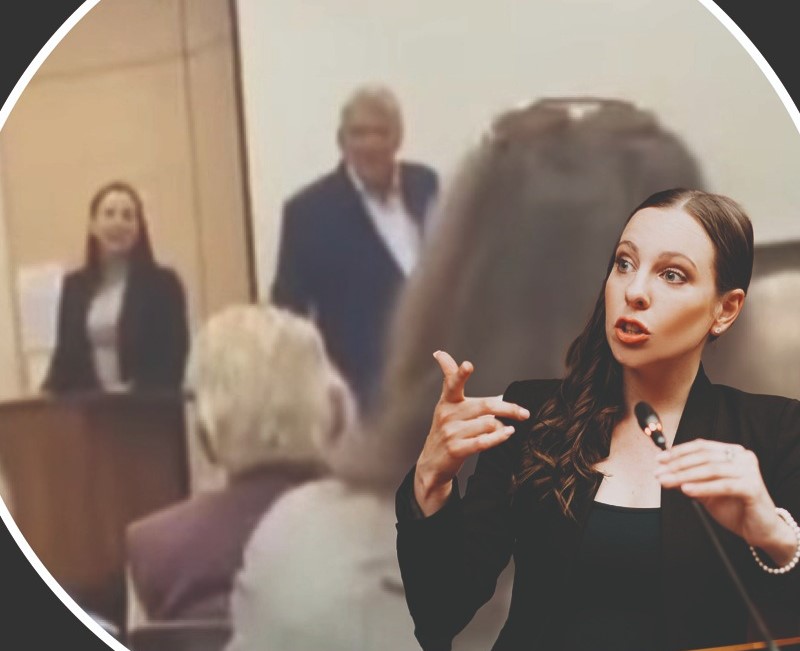
In May this year, Democratic Alliance MP, Emma Powell, was publicly disrupted while addressing a gathering in Cape Town. An activist accused her of “whitewashing apartheid” simply because she had visited Israel as part of a parliamentary study tour. No attempt was made to challenge specific claims or evidence. The accusation was categorical: if you went, you are compromised. The message was unmistakable – verification itself is disallowed.
The same logic was applied even more harshly to AbaThembu King, Buyelekhaya Dalindyebo, following his visit to Israel in earlier this month. His personal observations – including his conclusion that he did not witness genocide – were dismissed out of hand. Rather than engaging with what he said, critics focused on discrediting who he is. Most starkly, Economic Freedom Fighters (EFF) leader, Julius Malema, expelled Dalindyebo from the party, declaring that anyone who associates with Israel cannot represent the EFF. The expulsion was not based on misconduct or illegality, but on refusal to conform to an imposed ideological position. Independent judgement, in this case, became grounds for political excommunication.
This response is often justified through claims about the alleged Israeli narrative control, yet the irony is striking. Accusations of propaganda are being used to shut down speech, silence witnesses, and disqualify firsthand observation. Messengers are attacked so that evidence does not need to be addressed, and the act of seeing is treated as proof of guilt rather than a basis for informed debate.
This intolerance has extended beyond politics into the academic sphere – an area that should be most fiercely protected from ideological policing. In December, former International Relations Minister Dr Naledi Pandor publicly condemned a group of South African academics who visited Israel, describing their trip as “shameful”. Her criticism did not engage with their research questions, methodologies, or findings. Instead, it treated the act of academic engagement itself as unethical.
This should concern anyone who values the role of universities in a democratic society. Academic research exists precisely to test claims, challenge assumptions, and interrogate competing narratives, particularly in complex and contested environments. Inquiry is not endorsement, and research is not advocacy. When scholars are told that certain places or subjects are off-limits regardless of purpose or rigour, academic freedom ceases to be a principle and becomes a conditional privilege, granted only to those who reach approved conclusions.
Calls to close the Israeli embassy in South Africa further reinforce this contradiction. Presented as acts of accountability, such measures would in practice eliminate diplomatic engagement, restrict access to information, and prevent direct questioning of Israeli officials. Shutting down channels of contact does not enhance scrutiny; it prevents it. Transparency cannot coexist with enforced isolation.
Equally revealing is the selective invocation of “sovereignty”. South Africa maintains active diplomatic relations with numerous countries experiencing violent conflict, including Ethiopia, Sudan, South Sudan, the Democratic Republic of the Congo, Mozambique, and Somalia. Engagement with these states is rightly understood as diplomacy, not endorsement.
Beyond Africa, South Africa also maintains full diplomatic relations with Iran, despite extensive international documentation of systemic human rights abuses. In those cases, engagement is defended as sovereign foreign policy. Only in the case of Israel is engagement itself framed as illegitimate, immoral, or treasonous.
This inconsistency exposes the weakness of the argument. Sovereignty is not being defended as a principle; it is being selectively weaponised to enforce ideological conformity.
Taken together, these incidents reveal a clear and worrying pattern: First, engagement is pre-emptively delegitimised; any South African who travels to Israel is declared compromised before they speak. Second, verification is punished – politicians are disrupted, traditional leaders expelled, academics publicly shamed – not for misconduct, but for going at all. Third, moral verdicts are imposed in advance, and deviation is treated as dishonesty or betrayal.
South Africa’s own history offers a powerful cautionary lesson. It is a country that once insisted the world come and see for itself, precisely because isolation and silencing served injustice rather than truth. That legacy makes today’s efforts to discredit observation, suppress inquiry, and punish independent judgement all the more striking.
Disagreement with Israel’s policies is legitimate. Criticism is legitimate. But criminalising engagement, silencing verification, and punishing those who refuse to recite a predetermined script are not acts of solidarity. They are signs of insecurity.
A society confident in its moral position does not fear scrutiny. It invites it.
- Ariel Seidman is the Chargé d’Affaires at the Embassy of Israel to South Africa.




Eddie Windsor
December 23, 2025 at 2:36 pm
The Vienna Convention of 1961 demands the protection of the Israeli Embassy and it’s staff by the host country. No ANC or EFF controlled forces may enter onto the Embassy grounds without Israel’s permission.
Your article is well written and to the point.Send a copy to ANC and EFF .
Jacob Brits
December 23, 2025 at 9:42 pm
There are no surprises coming from this government regarding Israel. This government consists of criminals involved in self enrichment.
Your radical black in South Africa is the same as the radical Muslim in Israel. People like these groups must be governed with a iron fist. Governments must stop the transfer of funds from Iran to terrorist groups and so-called “brotherhoods” world wide. These groups and those supporting them, are children of the Dragon.
The world will turn against Israel but the G-d of Israel will take revenge and protect His people..
Michael Ronald Gerber
December 24, 2025 at 6:47 am
Full unabridged support for Israel and Christian unity against false incriminating ideology.
Chris Kotze
December 24, 2025 at 8:20 am
We can only pray for these people who dwell in darkness and being misled by satan.
Chris Kotze
East London
Max Strous
December 24, 2025 at 11:10 am
What is the case of former residents of SA who now live in Israel and return to SA to visit family. How will they be treated? Cause to fear? Or not