OpEds
Gayton versus Goliath – ANC cultural propaganda

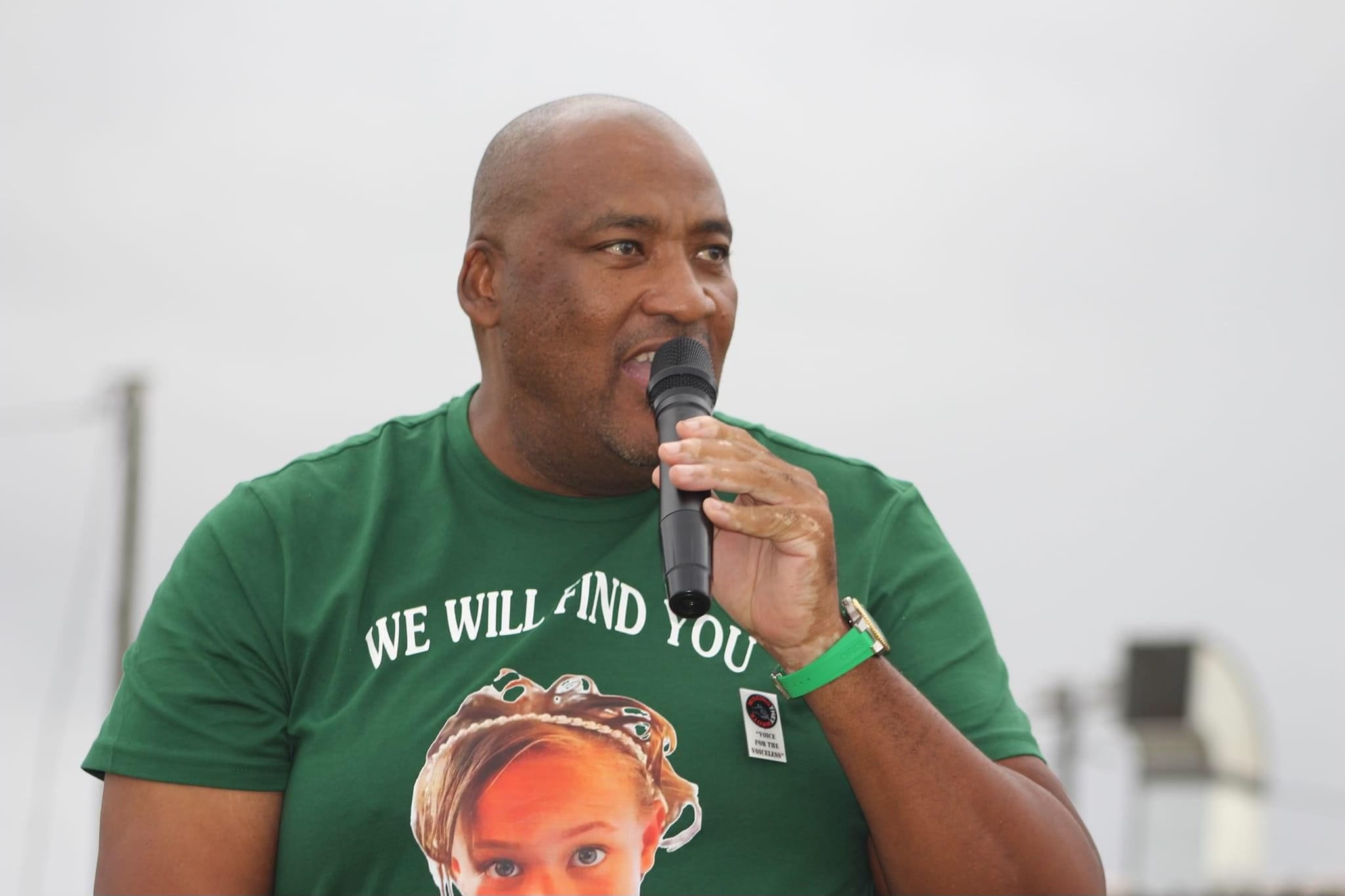
In 2024, just a couple of months after becoming minister of sport, arts, and culture, Gayton McKenzie, who is also the leader of Government of National Unity aligned party, the Patriotic Alliance, took to X (previously Twitter) to condemn a statement issued by his own department without his signature or authorisation. The statement expressed support for a campaign to have Israel excluded from the upcoming Paris Olympics. The source of the statement was Peace Mabe, the deputy minister of the department and a member of the African National Congress (ANC). A week earlier, the same deputy minister had hosted a hastily convened event with arts from the Venezuelan embassy of the Maduro regime, where she expressed similar sentiments and made sure to invite a speaker from Africa4Palestine to address the audience on boycotting Israel.
In 2025, McKenzie once again clashed with his department when he intervened to change the composition of a delegation of South African writers to the Havana Book Fair. McKenzie said the problem with the delegation was lack of representation, noting that there were, according to him, no white or coloured authors on the list. Members of the literary community were outraged, claiming that some of the authors McKenzie added were “pro-Israel”, “anti-Palestine”, and “not authors of note”. What’s interesting, however, is that the original list contained delegates who had never written a book before and several who supported cultural boycotts against Israel.
Now we have another incident, this time at the Venice Biennale, where support for artist Gabrielle Goliath’s work was withdrawn by the minister, allegedly because of the involvement of what he called a “foreign government”, later confirmed to be Qatar. McKenzie described the work as “highly divisive in nature”, and said it “relates to an ongoing international conflict that is widely polarising”. Goliath’s spokesperson said that “Minister McKenzie’s claims of foreign interference are deflection, intended to draw attention away from his blatantly censorial actions.”
However, with a bit of investigation, one finds that Goliath’s concerns about censorship at the Biennale are perhaps not that sincerely held. In 2024, she issued a statement at the event noting that she would reject support from United Kingdom art funding nongovernmental organisation Outset as part of a larger campaign because one of its many international artist-in-residence programmes was hosted in Israel. Yet reporting suggests that her team was at least willing to consider in principle funding from Qatar, an authoritarian regime where freedom of expression – not least on LQBTQI themes on which she has derived some of her art – is banned.
It’s worth noting that one of the members of the selection committee that approved Goliath’s work, Professor Nomusa Makhubu of the University of Cape Town, is a vocal supporter of the boycott of Israel at the institution.
What we are left with, then, is a pattern: several major public controversies, all involving the minister being at odds with his own department of sport, arts, and culture; the topics Cuba, Gaza, and Venezuela; all pet projects of the ANC; all laced with anti-Israel activism. What McKenzie has inherited isn’t an arts and culture department working in the interests of South Africans, but an ANC cultural propaganda subcommittee.
In a free country, public representatives must be held to account for their conduct, and artists have the right to criticise the decisions and methods of the minister in the exercise of his portfolio. McKenzie is no exception to this rule. If there are questions to answer, he must do so. However, one cannot help feeling that the squealing we are hearing doesn’t have as much to do with lofty concerns about artistic freedom as they would like us to believe. After all, where were these voices of concern when former, now deceased, Arts and Culture Minister Nathi Mthethwa publicly harassed Miss South Africa, Lalela Mswane, for months because she wanted to attend the Miss Universe pageant in Israel? Where were they when a group of extremists tried to prevent a public venue from hosting The Kiffness last year? No, what we are really hearing are those accustomed to receiving regular dollops of ideologically driven patronage having their cheese being moved.
A reminder that the department of arts and culture is supposed to represent all South Africans. A recent Pew opinion poll noted that 35% of South Africans have a favourable view of Israel. Now take a moment and imagine the South African pavilion at the Biennale displaying an artwork made of hostage posters of Africans kidnapped on 7 October. It’s hard to do, because such an installation would never have been chosen in the first place. We have a department that, until now, seems to be more interested in promoting Gaza than the cultural exports of South Africa.
Those incensed by McKenzie’s actions have invoked South Africa’s long and sordid history of suppressing the arts and censoring artists. Quite rightly, we cannot afford to return there. But South Africa also has an equally unpleasant history of taxpayer funds being used to pursue ideological cultural projects on behalf of the racist, undemocratic state. Now under the ANC, South Africans have been forced to pay for foreign authoritarian propaganda. The creaking we are hearing is that era coming to an end.
- Benji Shulman hosts the Studio +927 show on 101.9 ChaiFM.