Voices
Engaging through thick and thin

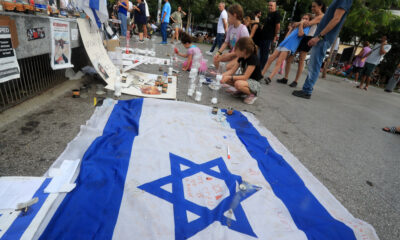
This weekend, we witnessed a momentous moment for our community. Rabbi Doron and Mrs Shelly Perez met President Cyril Ramaphosa at the Union Buildings to express their appreciation for the government’s tireless efforts to facilitate the return of their son Daniel’s body, allowing him to be brought home to Israel and laid to rest with dignity.
Daniel was one of our own. He and his family were born and raised among us, and they have remained an important part of our community. His death, and the prolonged holding of his body in captivity, was a tragedy and a pain we all felt personally.
Behind the scenes, the South African Jewish Board of Deputies was integrally involved in efforts to facilitate Daniel’s return, working closely with the relevant stakeholders throughout the process.
We deliberately chose not to speak publicly about our involvement at the time. In matters as sensitive as this, public intervention could have compromised the very outcome we were working towards. Our priority was always to achieve a result for the family.
This is one of the many ways in which the Board represents our community. Much of this work happens quietly, through engagement, advocacy, and relationship-building with government and other stakeholders. It may not always be visible, but maintaining these channels of communication is an essential part of our mandate.
And this is precisely why showing up matters.
Relationships are built over time, and our ability to advocate effectively, especially in moments of crisis, depends on being present, participating, and maintaining meaningful connections across government and South African society. Representation is not only about speaking out when we disagree; it is about being at the table, so that when our community needs help, there are people who know us, understand our concerns, and are willing to engage.
While we may at times strongly disagree with government policies and decisions, we must also practise hakarat hatov, recognising and expressing gratitude where it is due, as was modelled by the Perezes on Sunday. In this instance, we acknowledge the commitment shown by the government in assisting the Perez family.
That same principle was evident this weekend at the 70th anniversary commemoration of National Women’s Day at the Union Buildings, where our communal leadership once again joined fellow South Africans to commemorate the women of 1956.
We heard a powerful address from Sophie De Bruyn, one of the last surviving leaders of the historic Women’s March, sharing not only her memories of that defining day, but her reflections on South Africa today.
We also had the opportunity to engage with Malala Yousafzai, the youngest Nobel Peace Prize laureate, whose advocacy for girls’ education and women’s rights has inspired millions around the world. We introduced ourselves as representatives of the Jewish community, and she warmly welcomed the conversation.
These forums provide a valuable opportunity for our communal leaders to engage with government ministers, public figures, and fellow citizens. Our delegations are consistently received with warmth, and every interaction helps to strengthen the relationships that are so important to our community.
Though helping a Jewish family bring their son home and standing alongside fellow South Africans to commemorate one of the defining moments in our country’s history may seem like very different moments, they are connected by the same principle: we cannot advocate for our community from the sidelines. We must be present.
We need to be part of the fabric of South African society in moments of crisis and in moments of celebration, when we need to advocate, and when we need to listen, when we agree, and when we disagree.