Voices
Zero tolerance of antisemitism

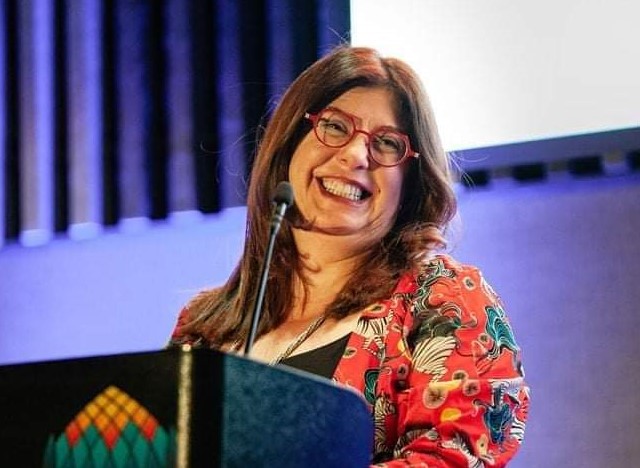
In July, a political commentator on Power FM stated that the Democratic Alliance had chosen Johannesburg mayoral candidate Helen Zille because “the Jews” were unhappy with Johannesburg. The assertion that we Jews are a secret controlling power, manipulating local politics for our benefit, is obviously false and blatantly antisemitic. Unfortunately, the interviewer didn’t challenge the guest on this bigoted conspiracy theory. The SA Jewish Board of Deputies (SAJBD) lodged a complaint against Power FM with the Broadcasting Complaints Commission of South Africa, and the station agreed to have me on air to dispel the myth and discuss Jews in South Africa and antisemitism more broadly.
I was grateful for the chance to explain, on air, why that statement troubled us. I began, as I often do in these conversations, with the basics. There are some 13 million Jews in the world and around 60 000 of us in South Africa, a small community, and one that isn’t so easily defined. We are a religion, in part, but also a culture and a shared history, an identity that in some ways predates the religion itself. I went on to describe how our history includes a long record of oppression, and how that oppression has always been fed by particular stereotypes.
This is the history that sits behind any suggestion, however casually made, that a small and diverse community of 60 000 people is somehow pulling strings behind a political party. To attribute that kind of power to a collective, with no evidence at all, is precisely the pattern that’s caused real harm before, and it puts the whole community at risk of being cast as some hidden hand behind the scenes.
I explained on air how proud I am that South Africa has relatively low levels of antisemitism, and is one of the few places where a person can still wear a kippah in public without feeling unsafe. That’s not something to take for granted. We are determined to maintain it, and so we hold a zero-tolerance attitude to antisemitism, even when unintentional. We discussed the core ideal of engagement and dialogue in sorting out differences, describing this concept as the single most crucial value that our society should uphold. It is precisely why we choose, in these moments, to engage in good faith rather than in anger, and why I was glad, this time, to have the opportunity to answer a blatantly antisemitic statement with the facts.
Last week, SAJBD national director Wendy Kahn attended a conference hosted by the Israeli Ministry of Foreign Affairs, together with counterparts from 50 Jewish communities across the diaspora. There were important conversations on the issues facing global Jewry, as antisemitism and other pressures continue to affect Jews around the world.
We are also pleased to congratulate Cape Union Mart and its founder, Philip Krawitz, for their legal victory in a defamation case against protesters who had been intimidating shoppers and making unfounded claims about Krawitz. The ruling affirms that the right to protest doesn’t extend to harassment or conduct that unfairly targets a business or an individual, a principle that matters greatly given how often Jewish businesses and individuals are singled out in this way.
On behalf of the SAJBD, I commend Cape Union Mart for defending its rights through the courts rather than in the street. It’s a reminder that political disagreement is never a justification for targeting someone because they are Jewish, or because of the beliefs they hold.
As we approach Rosh Hashanah this Friday evening, I wish our community, and all who observe it, a Shana tova. May 5787 be a year of health, safety, and quiet strength for South African Jewry, and for Jews around the world.