Israel
First responders rush towards disaster instead of shelter

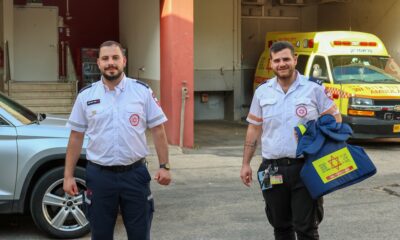
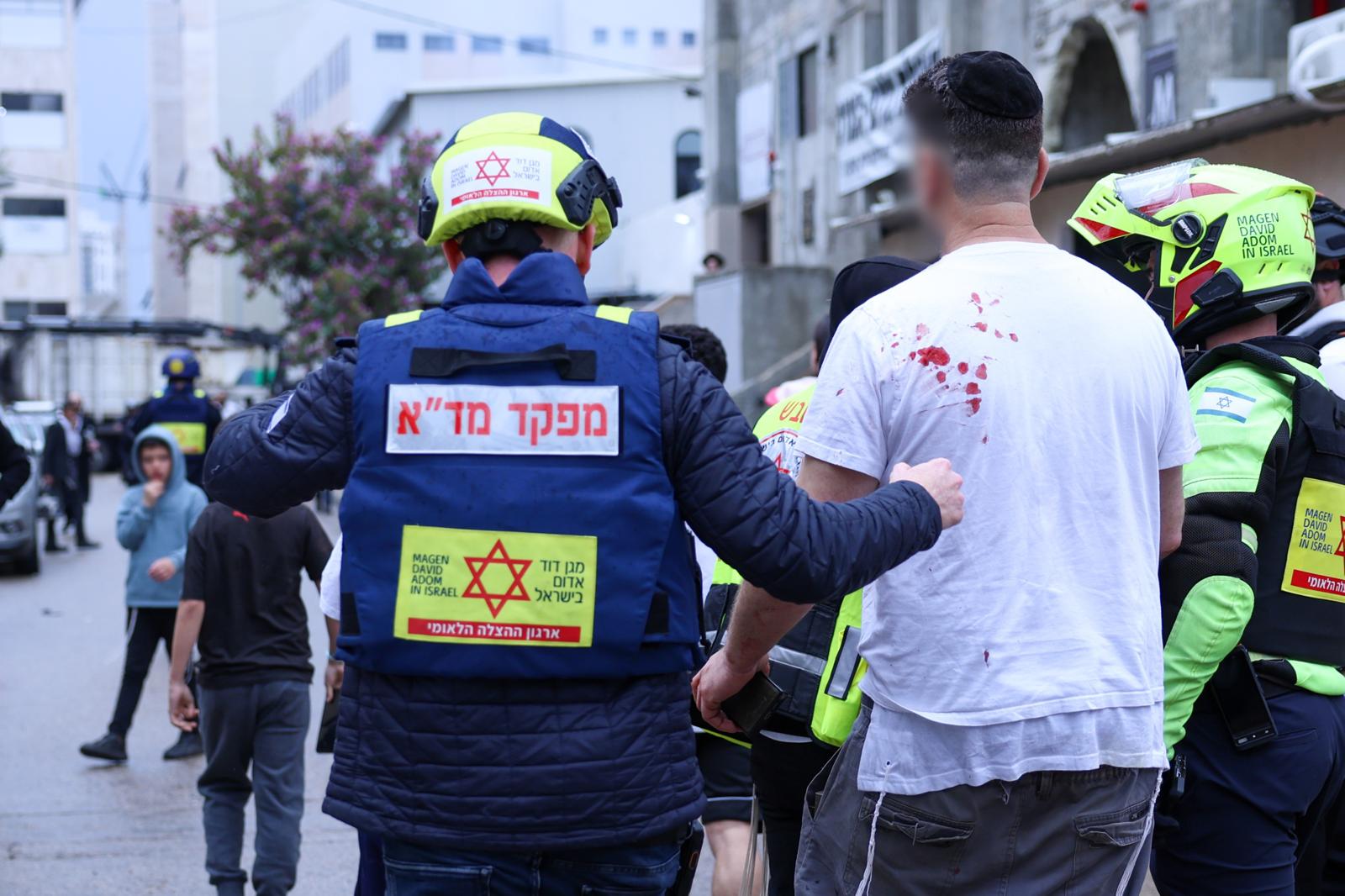
Rather than running away from disaster and devastation, first responders across Israel run towards the danger, wanting to help in any way they can. And when the war with Iran began on 28 February, they were ready to risk their lives to save others.
“I had a bag packed with essentials for an extended shift and possible sleepovers. So within 10 minutes, I was on my way to the Magen David Adom [MDA] Blood Services Center in Ramla,” South African oleh Laurence Seeff said. He has been working with Israel’s national emergency medical, disaster, ambulance, and blood bank service for nearly 10 years.
He knew as soon as the warning siren sounded at 09:00 that Saturday morning that he would be mobilised. “I immediately left with my team to head a blood drive in a predetermined safe area in Modi’in,” he said. “During missile attacks, we took cover on the highway and between buildings in residential areas. We spent nine hours taking blood to meet emergency blood stock quotas.”
As soon as the declaration of a special state of emergency on the home front was made on that Saturday, MDA raised its readiness to peak levels. Approximately 2 000 MDA ambulances and mobile intensive care units (MICUs), 800 emergency motorcycles, and 700 rapid response vehicles were fully manned. All 38 000 of the organisation’s volunteers and employees were prepared to provide a swift and efficient medical response to any need.
Terry Goodman, a South African-born paramedic who has been working with MDA since 2001, is also no stranger to war conditions and going into danger zones. She said her first shift after the Iran war began was extremely stressful as everyone was running into bomb shelters, whereas she and her colleagues had to leave them to go treat patients.
During Operation Lion’s Roar, MDA teams treated 2 503 casualties – including 594 from rocket fire – among them 23 fatalities, 23 in serious condition, 38 in moderate condition, 510 in mild condition, and 586 suffering from anxiety. More than 1 300 people were injured en route to protected areas, including three fatalities, six in serious condition, 12 in moderate condition, and 1 302 in mild condition.
Seeff explained that what goes through his mind when approaching a site struck by an Iranian missile isn’t very different from “normal” callouts. “Every first-response call is different, usually with sketchy details, meaning that I don’t know what to expect on scene. The main difference is mentally recapping safety protocols regarding potential explosive materials, electricity and gas hazards, and emergency vehicle traffic considerations,” he said. “Missile attacks add extra concerns of imminent danger, to me personally and to my teams.”
Being extremely busy doesn’t leave much time for processing, he said. “But sleep is more scarce, loud noises seem louder, and checking the well-being of family and friends in strike areas is an additional overhead during strikes”.
“There are no difficult emotions for me yet because we are still in it and haven’t truly comprehended it all,” said Goodman.
Her biggest challenge during the war was transporting an intubated patient needing urgent brain surgery from a hospital in the centre of the country to one on the northern border, an hour-and-a-half drive, all while rockets were still coming in.
“We have to keep driving and hope for the best. We wait two minutes after the sirens go off, hear the explosions, and then leave the shelters to [attend to] patients, when the rest of the country waits at least 10 minutes for the orders of the army command centre to send release messages,” she said.
“When arriving on strike locations, we first assess how badly the buildings are damaged and then try to get everyone who can walk out of the building. After that, we go in pairs from top floor to bottom looking for the injured and trapped.”
Seeff said that, in his role at the MDA blood bank as a driver, instructor, and blood drive supervisor, he also serves as a first responder, carrying emergency equipment in his car and ambulance. Most of his calls have been routine, as his area in central Israel has remained largely missile-free. “There’s an increase in trauma cases caused by the rush to reach bomb shelters and safe spaces, especially among the elderly.”
But he will never forget this year’s Pesach seder night when he was on a voluntary ambulance shift. He was dispatched to attend to a week-old unresponsive baby, and sirens and missile interceptions overhead made driving extremely dangerous.
“Arriving back at the ambulance station, being able to tell my colleagues that the baby survived, and describing the parents’ relief is the moment that I realised how I had made a difference,” he said.
The hardest part of the job for him emotionally is attending to the elderly and those injured while rushing to a safe area. “Experiencing their panic and helplessness hits home really hard for me. I’m there to assist medically only and then leave knowing that I hardly relieved their perpetual fear and panic,” he said.
The biggest logistical challenge for responders is getting to the scenes of a disaster, or transporting patients, as other drivers panic and drive dangerously fast during alerts and sirens. They may stop, slam on the brakes, decide their chosen location isn’t suitable, and then pull out into fast-moving traffic. Being caught out in the field during sirens and trying to find a protected area can be nerve-wracking.
“If we’re transporting a patient and sirens go off, a patient who cannot walk stays in the ambulance with a paramedic, and the rest of the team leaves and are on the floor outside for two minutes, and then we continue. So we try to get to the closest hospital as fast as possible in between sirens,” said Goodman.
“Of course I worry about my safety; the shrapnel could fall on my team or me. That’s the biggest concern. When patients are in their most vulnerable situations and see us, they feel relief that we are with them. Most of our work is psychologically helping the patient with what they’re going through. That is what I love about my job.”