Arts Reviews
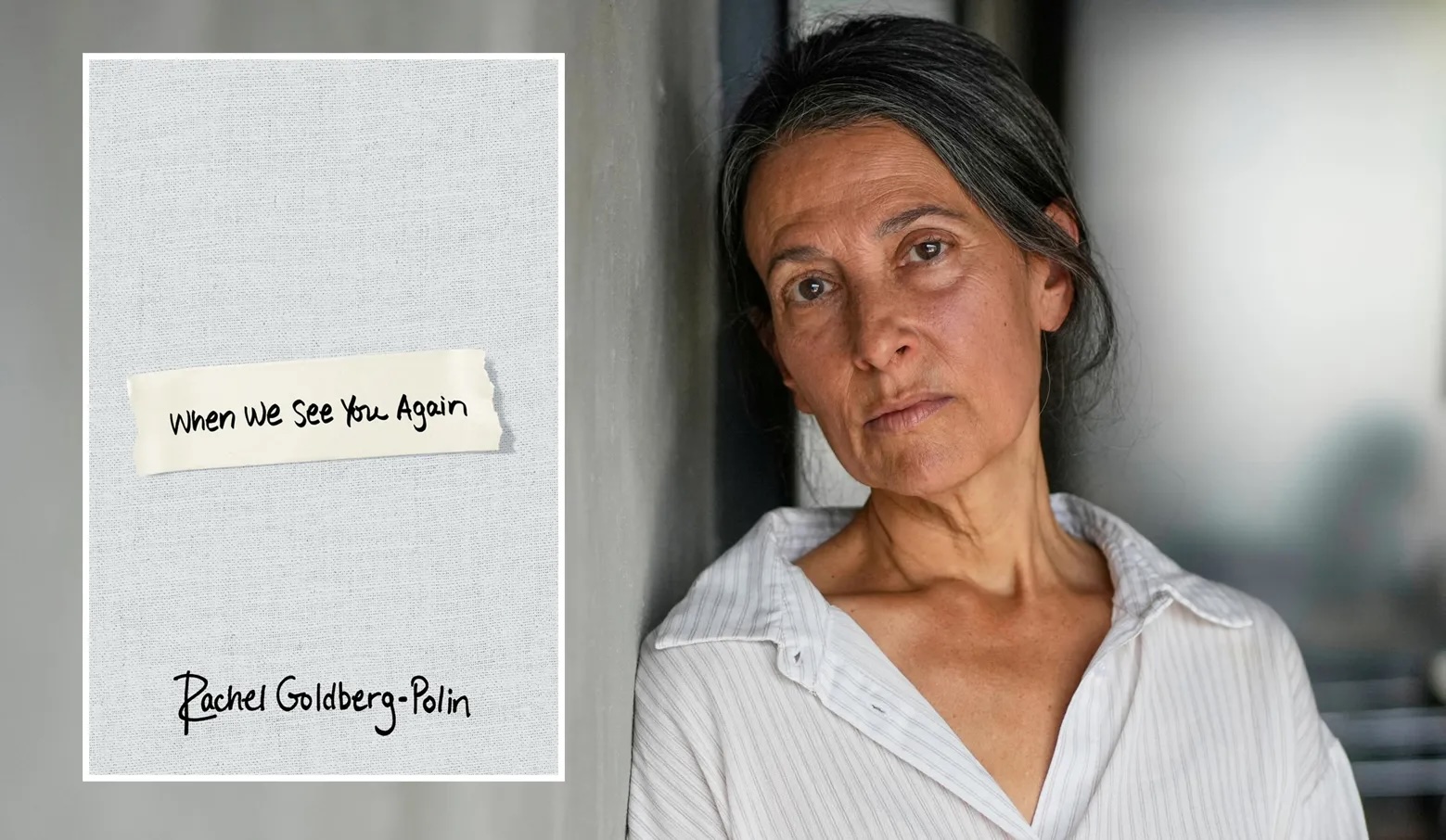
Reading Rachel Goldberg-Polin’s book

Since 7 October, we’ve been offered books, talks, and documentaries about the atrocities of that day and the anguish of the hostage families. It is fair to ask whether we need another.
Rachel Goldberg-Polin’s When We See You Again answers that question within the first few pages.
This isn’t simply another account of 7 October, neither is it merely Hersh Goldberg-Polin’s story. It’s a mother’s story. More than that, it’s a meditation on faith, resilience, and the extraordinary power of purpose when everything else has been stripped away.
I’ve had the privilege of hearing Rachel speak twice, her husband, Jon, once, and spending time with Rachel personally. What struck me in those encounters is exactly what comes through in her writing: extraordinary strength wrapped in extraordinary humility. Rachel never chose to become the voice of the hostage families. Circumstance thrust her into that role, and she carried it with grace, dignity, and remarkable moral clarity.
What makes this book so compelling is that it isn’t written from the comfort of hindsight. Rachel divides her life into “The Before” and “The After”. Through diary entries, speeches, and deeply personal reflections, she allows readers to experience the relentless uncertainty, the rumours, the fragile bursts of hope, and the crushing disappointments almost as she lived them.
There are no easy answers here. No attempt to turn unimaginable pain into neat life lessons. Rachel writes honestly about faith, not as certainty that everything will work out, but as the determination to keep showing up, to keep praying, to keep fighting, even when the outcome is unknown.
She draws on Torah, Talmud, philosophy, literature, and psychology, but never in a way that feels academic. These are not references made to impress the reader; they are the tools she reaches for to make sense of a reality that often defies understanding.
The heart of the book, however, is Hersh.
Rachel doesn’t simply describe the son she loved. She introduces us to the young man who inspired so many around him. His optimism, curiosity, humour, and compassion leap off the page. Long before 7 October, Hersh was captivated by Viktor Frankl’s Man’s Search for Meaning and the idea ‒ originally expressed by philosopher Nietzsche ‒ that “he who has a why to live can bear almost any how”.
For Hersh, this wasn’t just an inspiring quote. It was a way of living.
What makes that philosophy so powerful is its application in the tunnels of Gaza.
One of the book’s most moving passages recounts what former hostage Or Levy later shared about his time in captivity with Hersh. He describes how Hersh repeatedly returned to Frankl’s message, helping those around him find purpose even in a place designed to extinguish it. His resilience wasn’t performative. It became a lifeline for others.
Reading those pages gave me goosebumps.
Levy was later one of the guests we welcomed to South Africa through The Base and Jewish National Fund (JNF) South Africa Hostage Healing Project, and he has become a friend. During one of my conversations with Rachel, we reflected on Levy’s visit and the impact Hersh had on him, not only during captivity but afterwards as he rebuilds his life. It reinforced something she captures so beautifully throughout the book: freedom is not the end of the story. The headlines move on, but healing is painfully slow, often measured in tiny victories that the outside world never sees.
Yet this isn’t why the book is important.
It’s important because Rachel refuses to let Hersh become defined by the way he died. She insists that we remember the way he lived.
That may be the book’s greatest achievement.
It is not a political book, although politics inevitably surrounds it.
It is not simply a memoir, although it is deeply personal.
It is a book about what happens when love is stronger than despair, when faith survives unanswered questions, and when purpose becomes the only thing capable of carrying a family through the unimaginable.
I closed the book with tears in my eyes.
Not because I learned how Hersh’s story ended ‒ I already knew that ‒ but because Rachel had made me feel that I had come to know him.
And perhaps that is the greatest triumph of When We See You Again. In a world that too often reduces hostages to numbers and headlines, Rachel restores Hersh’s humanity. She reminds us that behind every photograph is a son, a brother, a friend, a dreamer ‒ a whole world.
- When We See You Again is available in South Africa through The Base and JNF South Africa. Order your copy at https://jnml.io/hershbook
- Saul Jassinowsky is vice-chairperson of the South African Zionist Federation, an executive committee member of JNF South Africa, and chairperson of Brothers for Life South Africa alongside serving in a number of other leadership positions across the South African Jewish community.