Israel
How Eli Kay’s legacy grew into a vineyard in the desert

Avi Kay, the father of South African-born Israeli Eli Kay, who was murdered in a terrorist attack in Jerusalem in 2021, has shared his family’s journey from devastating loss to renewal.
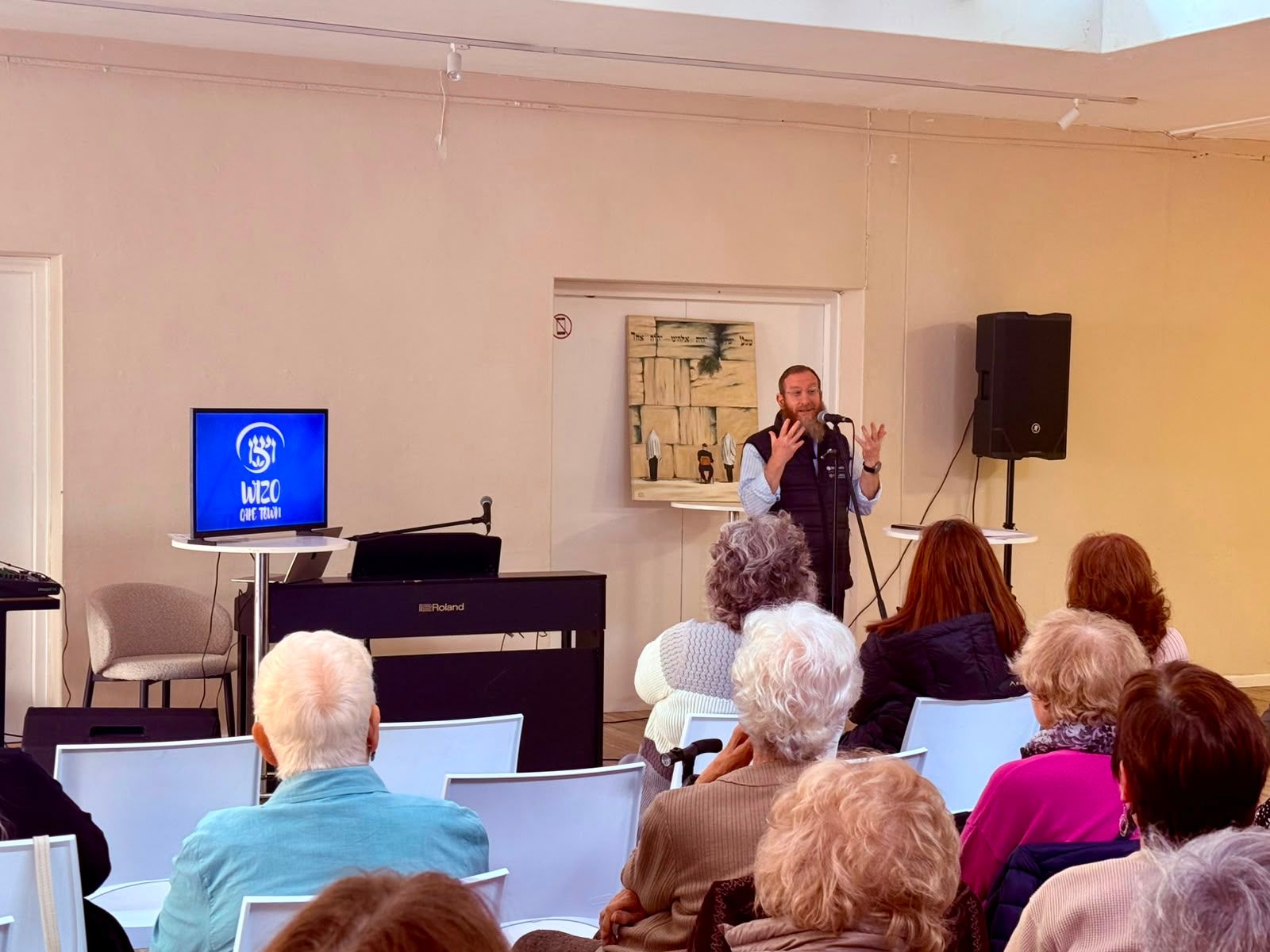
Speaking at an event hosted by the Women’s International Zionist Organisation Cape Town and the Green and Sea Point Hebrew Congregation, Kay reflected on his son’s life, the impact of his murder, and the projects established in his memory.
He traced the family’s move from South Africa to Israel, Eli’s service as a lone soldier in the Israel Defense Forces Paratroopers Brigade, his work in agriculture and education, and the family’s efforts to transform grief into purpose.
Johannesburg-born Eli, 26, was walking to work in Jerusalem’s Old City on 21 November 2021 when he was shot in a terrorist attack. His murder drew widespread attention in Israel and South Africa, and thousands attended his funeral in Jerusalem.
His father began by describing an ordinary family moment that had taken place shortly before he addressed the audience. His wife had gone to collect their grandson from nursery school in Jerusalem. “I watched a ping pong match between me and the digger,” he said, recalling how the toddler’s attention had shifted between his grandfather on a video call and construction vehicles working nearby.
The scene reminded him of biblical prophecies about children playing in the streets of Jerusalem and older generations watching over them. For Kay, the image represented continuity, renewal, and the future that Eli had believed in.
The family moved to Israel in December 2020 after years of Zionist commitment. Eli had arrived earlier. Kay recalled attending his son’s military ceremonies and watching him pledge allegiance to Israel. “We knew from that moment,” he said, describing the occasion on which Eli received his rifle, “that this was who he was.” After completing his army service, Eli worked on agricultural projects and later moved to Jerusalem, where he became a guide at the Kotel.
Kay recounted the hours after the attack and the difficult process of learning what had happened. “Eli was shot in the back by machine gun fire,” he said. He contrasted the brutality of the attack with the compassion shown by medical staff, volunteers, rabbis, friends, and strangers who helped the family navigate the aftermath.
Among the decisions the family faced was choosing the wording for Eli’s gravestone. Kay said they wanted the inscription to reflect who Eli was rather than simply their own grief. Although Eli had held strong views about Israel, he had also cared deeply for everyone who lived in the country.
“We put the words that he loved,” Kay said. “All the residents, all those who live in Israel.”
Kay spoke candidly about the psychological impact of losing a child. He described overwhelming anxiety, particularly about his wife’s safety. “I became pure fear,” he said.
He told the audience that he sought professional help and spent years working through the trauma. The experience gave him a deeper appreciation of the different ways mothers and fathers process grief. “I can’t appreciate what a mother goes through because I’m a father,” he said.
Yet from the beginning, the family made a conscious decision not to allow tragedy to define them. “Life will go on,” Kay said, recalling a principle that guided them after Eli’s death. That determination eventually led to the creation of the Eli Kay Project.
Knowing how much Eli loved agriculture, education, the desert, and bringing people together, the family searched for a meaningful way to continue his legacy. A year after his death, they visited farms in southern Israel and met people who had known him personally. One conversation with a farmer proved transformative. “The long and the short of it is I told him our story,” Kay said. “He looked me in the eye and said, ‘We’re going to plant a vineyard.’”
The result was the planting of 3 500 vines on previously uncultivated land. The project brought together agricultural experts, educators, donors, and volunteers. When soil samples were first tested, the verdict was discouraging. “The answer came back, dead,” Kay said. “Nothing.”
Yet after extensive preparation and cultivation, the vines flourished. “We expected three months later to be at 50 centimetres,” he said. “We were at more than a metre.” For Kay, the vineyard became a symbol of renewal.
Throughout the talk, he returned to the idea that people have a choice in how they respond to suffering. He described meeting survivors of terror attacks, wounded soldiers, and families carrying their own painful stories. What struck him was not their grief, but their determination to keep building. “Not a cloud of pity, not a cloud of shame, not a cloud of anger,” he said. “Not a political slogan, not an us and a them, but a we and what can we do to go forward?”
The person at the centre of these stories remained Eli. According to Kay, his son possessed a rare ability to connect with people regardless of background, beliefs, or circumstances. “Eli could relate to anybody,” he said.
That quality continues to shape the projects established in his memory and the people drawn to them.
As Kay reflected on the journey from loss to renewal, he returned to the image of children playing in Jerusalem and new life emerging from barren ground.
The grief of losing a son will always be part of his family’s story. So too will the conviction that life must continue. In a vineyard planted in Eli’s memory, the family sees proof that even the most damaged ground can produce growth. For Kay, that is his son’s legacy.