





News
Expats fear UK medical association’s antisemitism move

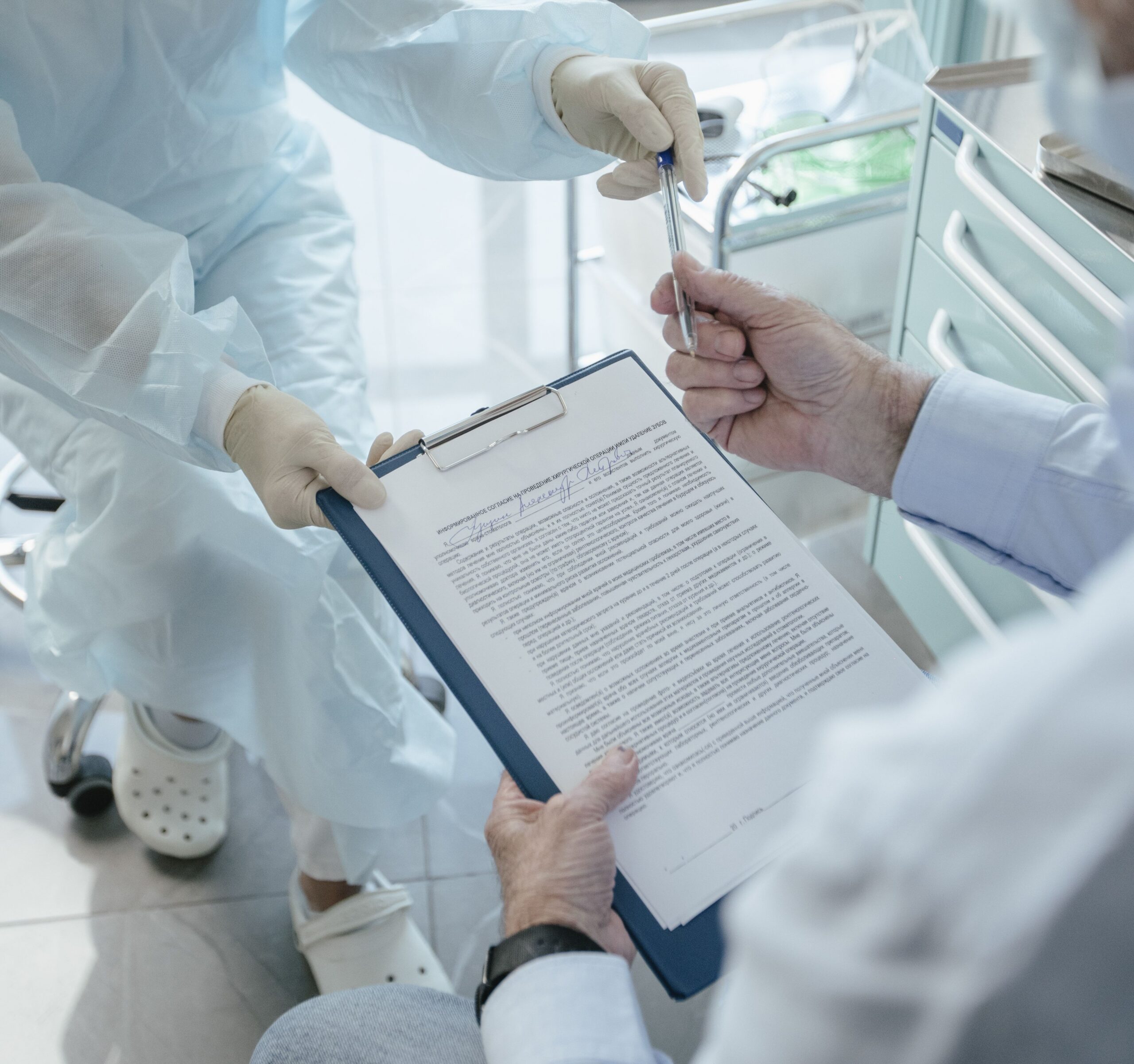
When the British Medical Association (BMA) voted to review and potentially reject the International Holocaust Remembrance Alliance (IHRA) working definition of antisemitism, it deepened the fears that South African-born Jewish healthcare workers in the United Kingdom (UK) have felt since 7 October.
Some say they now question whether Jewish patients will continue to receive impartial care in Britain’s National Health Service (NHS). But others believe the review offers an opportunity to improve how antisemitism policies are applied in increasingly polarised workplaces.
The vote, passed at the BMA’s annual representative meeting in Brighton in June, calls on the union to investigate whether the NHS should continue to use the IHRA definition. Delegates also backed a separate emergency motion calling for a pause in implementing recommendations from the recently published Lord Mann review into antisemitism and other forms of racism in the UK health system.
For Kayla*, a South African-born radiographer who works in a private diagnostic breast cancer unit in Luton, the vote reinforced concerns that prompted her to resign from her previous NHS post. After 7 October, she said, tensions in her department had become unbearable.
“On one particularly difficult day, I handed in my notice because I felt scared and unsafe,” she told the SA Jewish Report. “Management promised to eliminate the threats, mostly aggressive WhatsApp posts on our work groups, and to be fair, those did stop.”
She said the atmosphere nevertheless remained hostile. “I hated that I needed to take off my Hatzolah badge and any visible Hebrew from my car,” she said. “The internal dynamics with most of the Muslim colleagues I work with have been tangibly hostile.”
Kayla said an Israeli colleague had persuaded her to remain in her position for a time and “stand my ground”, but she had ultimately decided to leave. “I am lucky to have another role that I can develop, but I am so sad that I leave like this,” she said. Her experience has influenced other personal decisions. “My daughter will give birth in January and she will have a Jewish doula and midwife for sure,” she said.
The BMA’s decision has reignited a long-running debate over how antisemitism should be defined within British institutions. Supporters of the motion argue that the IHRA definition can discourage legitimate criticism of Israel and create uncertainty around free speech. Opponents argue that it is the world’s most widely adopted definition of antisemitism and provides an essential framework for recognising discrimination against Jews.
South African-born consultant paediatrician David*, who has worked in London since 2011, believes weakening the definition would send the wrong message at a time when many Jewish healthcare workers already feel vulnerable. “As an expat, you always look at institutional protections to gauge how welcome you truly are in a country,” he said.
“The BMA prioritising a review to weaken an antisemitism definition while our own colleagues are admitting they hide their identity at work sends a terrifying message.” David rejected claims that the IHRA definition suppresses legitimate political debate.
He said the definition explicitly allows criticism of Israeli government policies provided that criticism is not expressed in antisemitic terms. “Restricting or weakening the definition risks legitimising workplace harassment and ostracism against Jewish healthcare professionals,” he said.
Barry*, a 68-year-old who emigrated from Cape Town to Birmingham in 1986 and became a professor of medical ethics, views the debate through the lens of South Africa’s history. “We left South Africa because institutional rules were manipulated to serve political whims,” he said. “When the BMA treats a foundational framework for Jewish safety as up for debate, it signals that our security within the British establishment is entirely conditional.”
Barry said reviewing an established definition of antisemitism during a documented rise in anti-Jewish incidents demonstrated poor institutional leadership. “You don’t redesign the seatbelt while the vehicle is actively rolling over just because a few passengers complain that the strap feels restrictive.”
Others say the review should not automatically be viewed as an attack on Jewish staff. Talia*, a South African-born clinical psychologist working in Manchester, supports examining how the IHRA definition is applied. She stressed that rising antisemitism remained a serious concern, but believes implementation of the definition has sometimes discouraged legitimate discussion about the Middle East.
“Coming from South Africa, I know how critical open, democratic debate is for a healthy society,” she said. “We can absolutely protect Jewish NHS staff from genuine discrimination, which we must do, without creating an environment where healthcare workers are penalised for expressing ethical anxieties about geopolitical conflicts.” She said many NHS employees had become anxious about discussing the Middle East because they feared disciplinary action.
Ronnie*, who moved from Johannesburg to London in 2015 and now manages workforce diversity, equity, and inclusion programmes for a NHS mental health trust, also believes the current system can be difficult to apply consistently. “In human resources and trust management, we need policies that are practical, not ideological battlegrounds.
“Right now, the IHRA framework is handled with anxiety rather than understanding. A review shouldn’t weaken protection. It should make it workable for managers to actually protect staff on the ground.” Ronnie said many NHS managers lacked the specialist knowledge needed to adjudicate complex complaints involving the Middle East. “When a policy is too complicated or politically charged for a middle manager to enforce consistently, the policy fails,” she said.
Despite those differing views, many South African Jews working in Britain agree that antisemitism inside healthcare has become more visible since October 2023. Jewish birth worker BJ Woodstein, who lives in Norwich, said the BMA vote left her feeling vulnerable both professionally and personally. “It feels like betrayal. It is shocking and frightening. I feel vulnerable as a patient, parent, and birth worker. How will I be treated? Will I receive impartial care?”
Woodstein said prospective clients had withdrawn after discovering she was Jewish, while others questioned her views on Israel during consultations. “We may be moving towards a scenario where Jewish people only see Jewish doctors, nurses, midwives, and surgeons because of increased fears,” she said.
Dr Fiona Sim, a public health physician and former chair of the Royal Society for Public Health, described the BMA vote as “awful”.
The Jewish Medical Association also condemned the decision, arguing that the BMA had no mandate to challenge a definition of antisemitism that has been adopted by the British government, NHS England, universities, local authorities, and numerous other institutions.
The BMA vote does not automatically change NHS policy because the union cannot direct the government or NHS England. However, it has exposed deep divisions within Britain’s medical profession about how antisemitism should be defined and addressed.
For many South African Jewish expats working in the NHS, however, the debate is no longer simply about policy. It’s about whether they can continue to feel safe and protected in the healthcare system they serve every day.
*Names changed to protect identities.





Sara Gon
July 2, 2026 at 3:46 pm
Who is the UK medical association to decide whether to accept or reject the IHRA definition of antisemitism?