World
Where does Andy Burnham, the new British prime minister, stand on Israel and antisemitism?

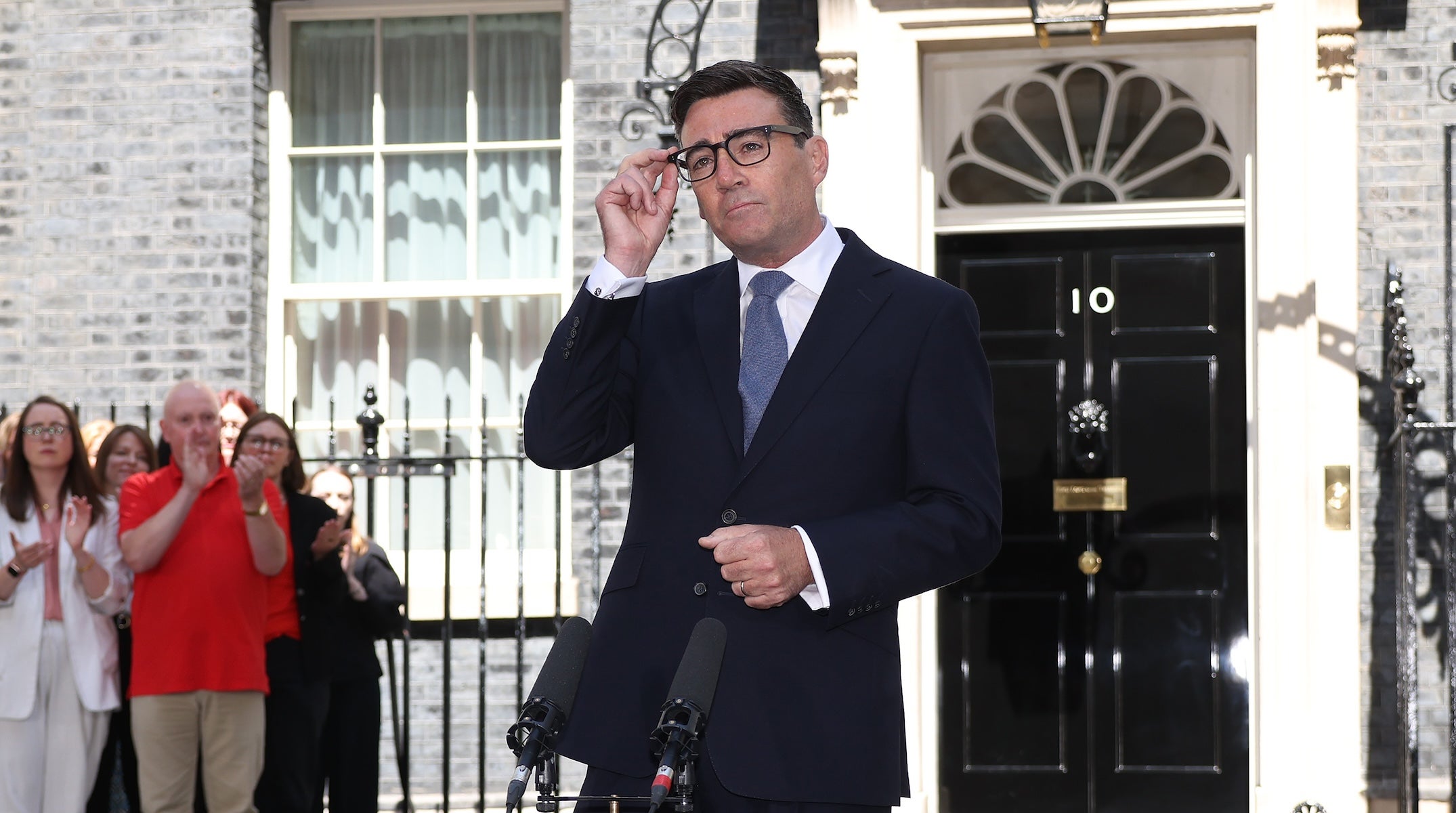
JTA – Andy Burnham officially became Britain’s new Labour prime minister on Monday, replacing Keir Starmer, who resigned following the party’s disastrous showing in local elections in May.
Starmer left behind a mixed record on antisemitism. He purged the party of its image as hostile to Jews under former party leader Jeremy Corbyn. But at the same time, attacks against Jews in Britain have risen in the aftermath of the 7 October Hamas terror attack on Israel, and uncertainty is at a high.
Starmer’s successor has spent much of his political career over the past decade cultivating close ties with Britain’s Jewish community. As the former mayor of Greater Manchester, home to one of Europe’s largest Jewish populations, Burnham frequently spoke out against antisemitism, attended Holocaust commemorations, and worked closely with Jewish communal organisations.
Yet in the lead-up to his installation as prime minister, Burnham also signalled a shift in Labour’s mainstream position on Israel and Gaza, including support for greater pressure on Israel.
Burnham’s comments about Labour’s leadership contest prompted a sharp rebuke from the Board of Deputies of British Jews and the Jewish Leadership Council, which expressed “significant concerns” over his framing of Gaza and Israel’s war with Hamas. The umbrella groups also said they welcomed his commitment to tackling antisemitism.
Here is a look at some of Burnham’s views on the subjects and how they might impact his party’s policies going forward.
Early support for Israel and a two-state solution
During Labour’s 2015 leadership contest, Burnham said at a Jewish community debate that his first foreign trip, should he win the Labour leadership, would be to Israel. He opposed a boycott of Israel, asking, “What message would it send?”, while stating that he supported a negotiated two-state solution.
In a questionnaire sent to him that year by the Palestine Solidarity Campaign (PSC), he also stated that he supported “two states living side by side in peace, and recognised by all of their neighbours”. However, he added that he supported “an end to occupation and illegal settlement building by the Israelis, and an end to the rocket and terror attacks by the terrorist group Hamas”.
He also made it clear at the time that he did not support West Bank settlements, telling the PSC, “Labour recognises that the settlements and their continued expansion remain key obstacles to resolving the conflict, as [then party leader] Ed Miliband has said, they are both illegal and immoral.”
Labour’s antisemitism crisis
Burnham was vocal about tackling antisemitism when the Labour Party became embroiled in allegations of antisemitism under Corbyn’s leadership between 2015 and 2020.
Corbyn had in 2012 defended a mural depicting hook-nosed Jewish bankers playing Monopoly on the backs of exploited workers. He later said he regretted the defence. He also called representatives of Hamas and Hezbollah “friends”.
Burnham told the Board of Deputies in 2019 that Labour had failed to deal with antisemitism complaints “firmly, quickly, and decisively” and warned that the party had lost the confidence of many Jewish voters.
“It is inconceivable to me that a party which has prided itself on its record on racism could have become embroiled in an antisemitism crisis,” he said.
In 2020, the UK’s Equality and Human Rights Commission found Labour had committed unlawful acts of harassment and discrimination related to antisemitism.
7 October and rising antisemitism
In the aftermath of the 7 October attack, Burnham issued a statement with his deputy mayor saying, “We condemn without reservation the appalling attacks in Israel by Hamas. Nothing justifies the taking of innocent lives in such a barbaric and indiscriminate manner.”
He also stated that “Israel had a right to defend itself, and protect its citizens, in line with international law”.
He told the Jewish community that he had spoken with Greater Manchester’s chief constable, who assured him there would be an increased police presence alongside Jewish community organisations. Burnham said local leaders were “determined that all our communities in Greater Manchester will be kept safe” and that “we will never tolerate any form of hatred on our streets”.
Manchester synagogue terror attack
Barely two years later on Yom Kippur 2025, Manchester became the target of a major terror attack, outside Heaton Park Hebrew Congregation. Two people were killed amid a police response.
“Manchester stands together and we will not allow division in our communities,” Burnham said, visiting the synagogue soon after what he described as an attack on the entire city.
Golder’s Green ambulance attack
Burnham spoke out in April when four Hatzola volunteer ambulances were set ablaze in London’s heavily Orthodox Golders Green neighbourhood. “This is another terrible incident that will concern Jewish communities in London and in Greater Manchester who have faced appalling antisemitic attacks in recent months,” he said.
Recent comments on Gaza
Burnham has been critical of Israel’s military campaign in the aftermath of 7 October. He doubled down in a leadership campaign video released last week and took his own party to task.
He condemned Hamas and once again rejected antisemitism, but he argued Britain should “do more to put pressure on the Israeli government”, including considering further restrictions on arms exports and action against illegal West Bank settlements.
“I know many people feel that at the start of Israel’s military action in Gaza, my party didn’t get it right, and I am sorry about that,” he said. The party was “too slow to call for a ceasefire”.
He called images from Gaza “a scar on our collective conscience”.
His comments reflect a parliamentary push across the board that Britain should do more to take action against Israel, including supporting a ban on all Israeli goods coming from the West Bank ‒ something that Ireland and other European countries have been pushing for.
In his video, Burnham stopped short of describing Israel’s actions as “genocide”, saying that such a determination should be made by international courts.
Jewish communal reaction
The video drew a swift response from the Board of Deputies of British Jews and the Jewish Leadership Council. Burnham had seen “first-hand the links between hatred of Israel, antisemitic extremism, and deadly violence against British Jews”, the groups said.
They urged Burnham and other political leaders to “show the utmost care in their rhetoric” at a time when antisemitism in Britain had become “more normalised, more extreme, and more violent”.
British Jews will watch closely how Burnham balances his longstanding engagement with the Jewish community and his increasingly critical stance toward the Israeli government.
The Campaign Against Antisemitism’s chief executive, Gideon Falter, read aloud an open letter to Burnham on Monday calling on him to take a stand against the rise in antisemitism in the country. “Your legacy will not be remembered solely in terms of tax rates and hospital waiting times,” Falter said. “It will be whether Jews were murdered or thrived in Andy Burnham’s Britain.”
Board of Deputies president Phil Rosenberg congratulated Burnham on X, and welcomed the new prime minister’s “early commitment to tackling antisemitism” and that the Board “will work with his administration towards the UK playing its strongest role in global peace and security”.
Sir Ephraim Mirvis, the country’s chief rabbi, posted a photo on X of himself and Burnham and offered a blessing. “He assumes the immense responsibility of leadership at a time of great challenge, both at home and abroad,” Mirvis said. “May he be blessed with the wisdom, strength, and good judgement to keep our country safe and may his service bring prosperity and harmony for all.”