


OpEds

7 October inquiry can go ahead already

Israelis have voted, but who will form the next government remains uncertain. So does the answer to a question that ran through the campaigns: who will investigate the failures surrounding 7 October?
The hostages have been brought home, the living and the dead. But their return hasn’t settled arguments over the government’s handling of their captivity, whether deals could have brought them back sooner, or who bears responsibility for delays in securing their release.
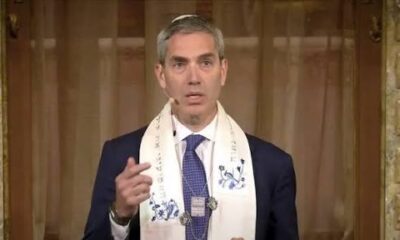
Lieutenant Colonel (Res.) Dr Amir Blumenfeld worked with the families of hostages during their loved ones’ captivity, assessing the risks to the hostages’ health and calling for their return. He previously headed the Trauma and Combat Medicine Branch of the Israel Defense Forces (IDF) Medical Corps. For him, the dispute goes beyond who wins an election or forms a coalition. A credible investigation, he believes, is essential to rebuilding trust in Israel’s leaders and institutions. Leaving those failures unresolved risks allowing feelings of betrayal to deepen the country’s polarisation and mistrust.
“On the Saturday before the election, I attended the rally at Hostage Square in Tel Aviv,” he says. “Every speaker was either directly affected by 7 October or a family member of someone murdered or taken hostage. They all expressed the same anger and disbelief: three years after the massacre, Israel has still not established an independent, comprehensive national inquiry into what happened.”
Such an inquiry, he argues, could help separate facts from competing political accounts. “The trauma is shared, but the story we tell about it has split.” Blumenfeld chairs SAHAR, an organisation providing online emotional support, and spoke to the SA Jewish Report in his personal capacity. “Above all, the families are waiting for the truth,” he says.
The election may have opened a way to begin that investigation without waiting for a new government. Last week, Gadi Eisenkot, the former IDF chief of staff who leads Yashar, announced that his party was preparing legislation to establish a state commission of inquiry. Yashar won 21 seats, making it the second-largest party after Prime Minister Benjamin Netanyahu’s Likud. But Eisenkot’s Jewish opposition bloc holds only 48 of Parliament’s 120 seats. He needs support beyond it to form a government. Before the election, Eisenkot promised that an inquiry would be the first decision of a government he led. But does he need to become prime minister to help establish one?
Hebrew University constitutional law professor Barak Medina says Parliament has another route. Under the conventional state commission model, the government establishes the inquiry and defines its scope. The president of the Supreme Court appoints its members, with a serving or former Supreme Court or district court judge as chair. Another route exists through the State Control Committee of the Knesset, Israel’s Parliament. It requires an appropriate comptroller’s report and committee support.
But Knesset members (MKs) could also change the law. The election determines who sits in Parliament; coalition negotiations determine who forms the government. The new Knesset is scheduled to take office on 10 November, after which its members can advance legislation even while coalition talks continue. Lawmakers would need to establish the committees to consider an inquiry bill and secure enough votes to pass it. Parties could support an investigation without agreeing to govern together. To do that, Medina expects MKs to propose a law specifically establishing a 7 October commission, rather than give Parliament a general power to establish commissions. The law would also specify what investigators must examine. “I believe that the Knesset has the power to enact such a law,” he says.
An earlier attempt failed. Netanyahu’s coalition rejected a similar bill from Yesh Atid MK Meir Cohen in July. It proposed appointments by the Supreme Court president, which Netanyahu opposes in favour of political selection. That rejection ordinarily prevents a similar proposal returning to a vote within six months, although the Knesset speaker can permit an earlier vote if circumstances change. Medina considers the election results and the government’s caretaker status sufficient grounds. Whether Eisenkot will follow Cohen’s model remains unclear. His team had not responded to a request for clarification at the time of writing.
The outgoing government remains in office until a successor takes over, but its caretaker status limits its freedom to act. Medina explains that court rulings generally restrict it to necessary decisions that cannot wait. The court has not specifically ruled on establishing a commission, although he considers those restrictions applicable. Medina expects Eisenkot to try forming a government and turn to legislation if that effort fails. That is his assessment, rather than a timetable announced by Eisenkot.
For Blumenfeld, the cost of waiting extends beyond politics. “Establishing the facts, understanding what went wrong, and acknowledging responsibility are necessary first steps towards rebuilding trust and beginning the healing process in Israeli society.” He argues that those whose conduct could be investigated must not influence appointments. “I believe it must be a formal state commission of inquiry, with members appointed by the president of the Supreme Court, as provided for under Israeli law.”
How far investigators could look matters too. Yashar’s programme calls for examining the preceding decade and the conduct of the war. Medina expects similar subjects in legislation, including political responsibility. That scrutiny could reach people demanding an inquiry. Eisenkot commanded the IDF from 2015 to 2019 and later served in Israel’s wartime leadership. Decisions during his command could fall within an investigation covering the preceding decade.
The IDF has conducted internal inquiries, but those do not provide the comprehensive examination of political and military responsibility campaigners seek. A state commission can compel testimony and documents, identify failures, and recommend changes. It cannot convict anyone of a crime.
Bereaved families don’t all agree: some oppose the judiciary-appointed model. Blumenfeld doesn’t suggest an inquiry can repair everything. “Its findings may not convince everyone. But its process must be one that Israelis across the political spectrum can recognise as fair and credible. We don’t have to agree on everything to rebuild a shared future. But we must be able to trust that the truth matters to all of us.”
- Paula Slier is an international journalist, war correspondent, and speaker who has reported from conflict zones across the Middle East, Africa, and Europe. Her work focuses on geopolitics, modern conflict, information warfare, and the battle for truth.