


OpEds
Joburg may be broken, but its people and spirit are not

At 07:00 on Monday 2 November, Johannesburg was doing what Johannesburg does best these days. Not working.
Rubbish hadn’t been collected in the city for three or four weeks. I was chasing an electricity outage in Linksfield, while residents elsewhere complained about water pressure.
Technically, I was unemployed. My five-year term on the city council had ended, and I hadn’t yet been elected for another one. It turns out that being unemployed as a ward councillor involves much the same workload, just with less job security.
And in an hour, we were supposed to start getting people out to cast their special votes.
A fitting start to election week.
This was the final stretch of a campaign that had begun in September 2025. More than 300 coffees with residents, four or five community meetings a week, registration drives that exceeded their targets, and countless hours behind the scenes.
There’s a perception that a councillor’s job on election day is to wear a party shirt, stand behind a table. and smile at people.
I wish.
Election day is an exercise in logistics and troubleshooting. Checking stations, monitoring queues, getting voters to the polls, coordinating volunteers, and anticipating the next thing that will go wrong. And because Johannesburg doesn’t suspend its collapse for an election, you’re still dealing with the normal service delivery problems.
Special voting began with Orange Grove opening 20 minutes late because the Independent Electoral Commission (IEC) area manager was running behind.
But Tuesday afternoon showed me another side of the IEC.
At 17:30, I was following one of our presiding officers around the neighbourhood. We still had a few special votes outstanding, and this incredibly dedicated woman was determined that those residents wouldn’t lose their opportunity to vote.
Meanwhile, her boss, the area manager who seemed perpetually late when it mattered, arrived at the voting station and was furious to discover it hadn’t been packed up. Our presiding officer stood her ground. Those residents had a right to vote, and she was determined to get to their homes.
This is the calibre of people at our voting stations in Ward 72. Real public servants who understand that their responsibility isn’t simply to follow a timetable, but to serve our democracy.
Unfortunately, not everyone at the IEC demonstrated the same commitment.
Then came Wednesday. The uncollected bins were still visible around our voting stations, and I was still fighting Monday’s electricity outage.
By 10:00, we had another problem. The previous evening, I’d asked the IEC area manager whether she had a plan to ensure all ballot papers would be delivered before voting stations opened. No response.
On election morning, both I and the IEC’s own presiding officers warned that stations had received insufficient ballot papers. As stocks ran down, we raised the alarm again. Eventually, the area manager stopped answering calls, including those from her own presiding officers.
The necessary supplies weren’t arriving, and one by one, all four voting stations in Ward 72 ran out of ballot papers.
Consider the absurdity. We’d spent more than a year registering voters, encouraging participation, and getting people to voting stations. And when they arrived, the organisation responsible for the election didn’t have enough ballot papers.
We begged residents to remain in the queues. Some had been waiting for hours. A few left in frustration, but almost all returned. People had every reason to be angry. Yet they weren’t prepared to surrender their vote.
And that brings me to something about election day that I struggle to explain.
For five years, I’ve interacted with the people of Ward 72 as residents. For the past year, I’ve also interacted with them as voters. But on election day, something changes.
There’s excitement in the air. People are warmer, conversations are richer, and there’s a sense of shared purpose you don’t quite experience on an ordinary Wednesday. People who would normally stop you to complain about a pothole are suddenly excited to tell you they’ve voted.
And there’s something slightly strange about me on election days.
Queues make me happy.
On an ordinary day, a queue usually means something isn’t working. At a voting station, provided it’s moving, it’s one of the most beautiful things you can see. Morning queues are expected. Afternoon queues are special.
At around 15:00, I was standing outside Summerwood Primary School. The queue was consistently 40 or 50 people deep, but moving. People were going in, people were coming out, and more residents kept arriving.
I stood there watching, feeling an enormous sense of nachas. That wonderful feeling of pride and joy you get from seeing people you care about doing something special.
And quite unexpectedly, I found myself tearing up a little.
After five years of working with this community, through endless outages, water cuts, and municipal battles, there they were. Still showing up. Still participating. Still believing their voices mattered.
It was one of my favourite moments of the campaign.
By 20:57, our gazebos were packed away, counting teams briefed, and I was sitting on a bollard outside Glenhazel Primary School. Three minutes remained before voting closed, and I wasn’t going anywhere in case another voter arrived.
My smartwatch chose that moment to suggest I relax, because apparently I was showing signs of stress. Very helpful. Thank you.
In 2021, we finished counting at around 02:15.
This time, at about 03:00, a counter told me they were finished and just needed to complete the audit. Excellent, I thought.
Then we waited.
And waited.
At around 04:30, the results finally came through.
Of Ward 72’s 13 538 registered voters, 64.3% had turned out.
The DA won all four voting districts, receiving 89% of the ward vote. Glenhazel and Summerwood both exceeded 91%.
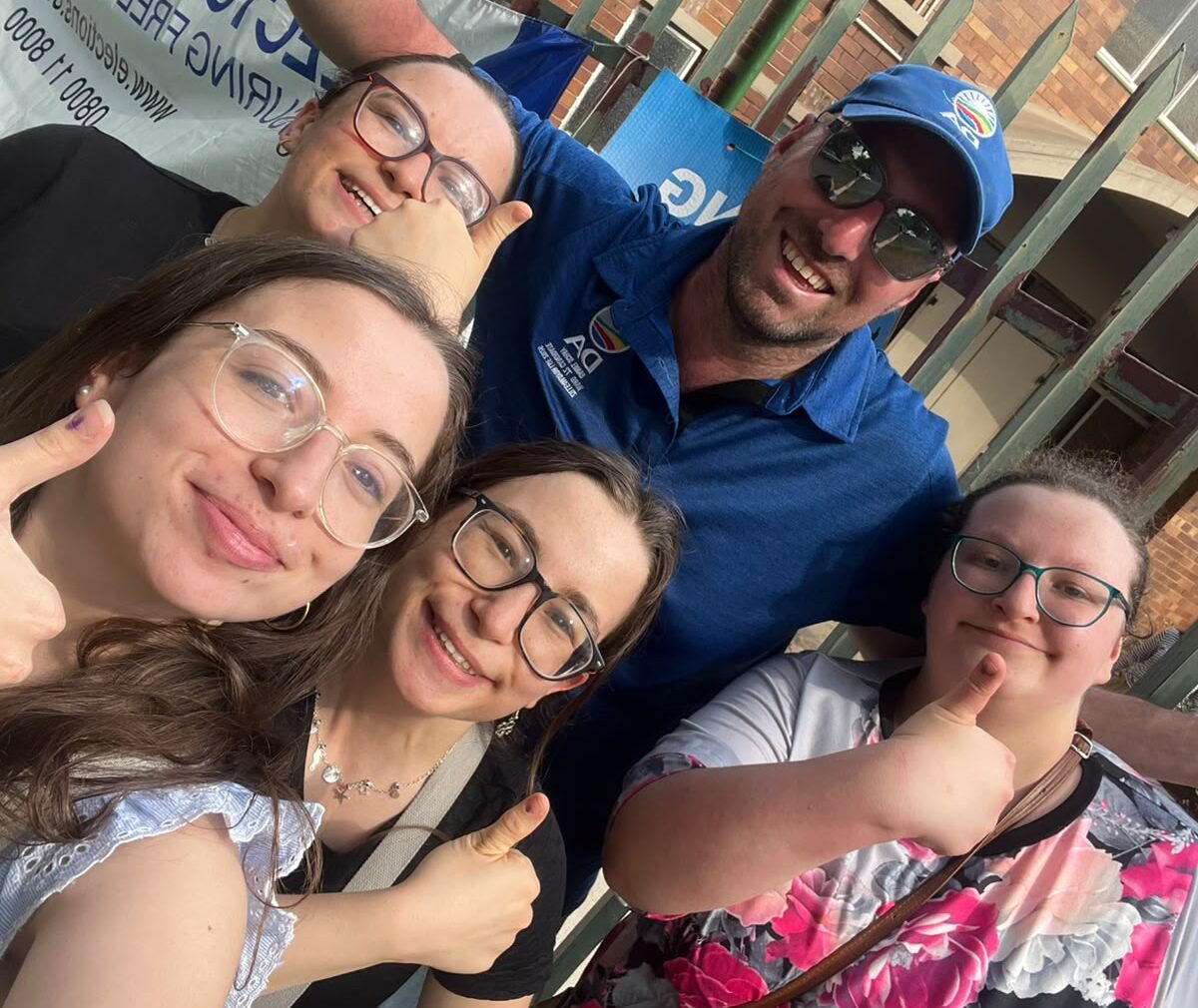
I was obviously delighted. But elections aren’t won by candidates standing under gazebos. They’re won by volunteers who give up their time, teams who knock on doors, and residents who turn up to vote.
And despite everything that went wrong, our residents turned up.
At 04:35, I sent a video thanking them and sharing the results.
By 05:00, I was in bed.
More than a year of campaigning. Hundreds of coffees. Thousands of conversations. Registration drives, special votes, power outages, and an IEC that somehow managed to run out of ballot papers.
All culminating in a 04:35-in-the-morning video and a pillow.
Apparently, I’d been rehired.
- Daniel Schay is a member of the City Council of Johannesburg, serving as the Democratic Alliance Shadow MMC of Development Planning and Ward Councillor for Ward 72.