


OpEds
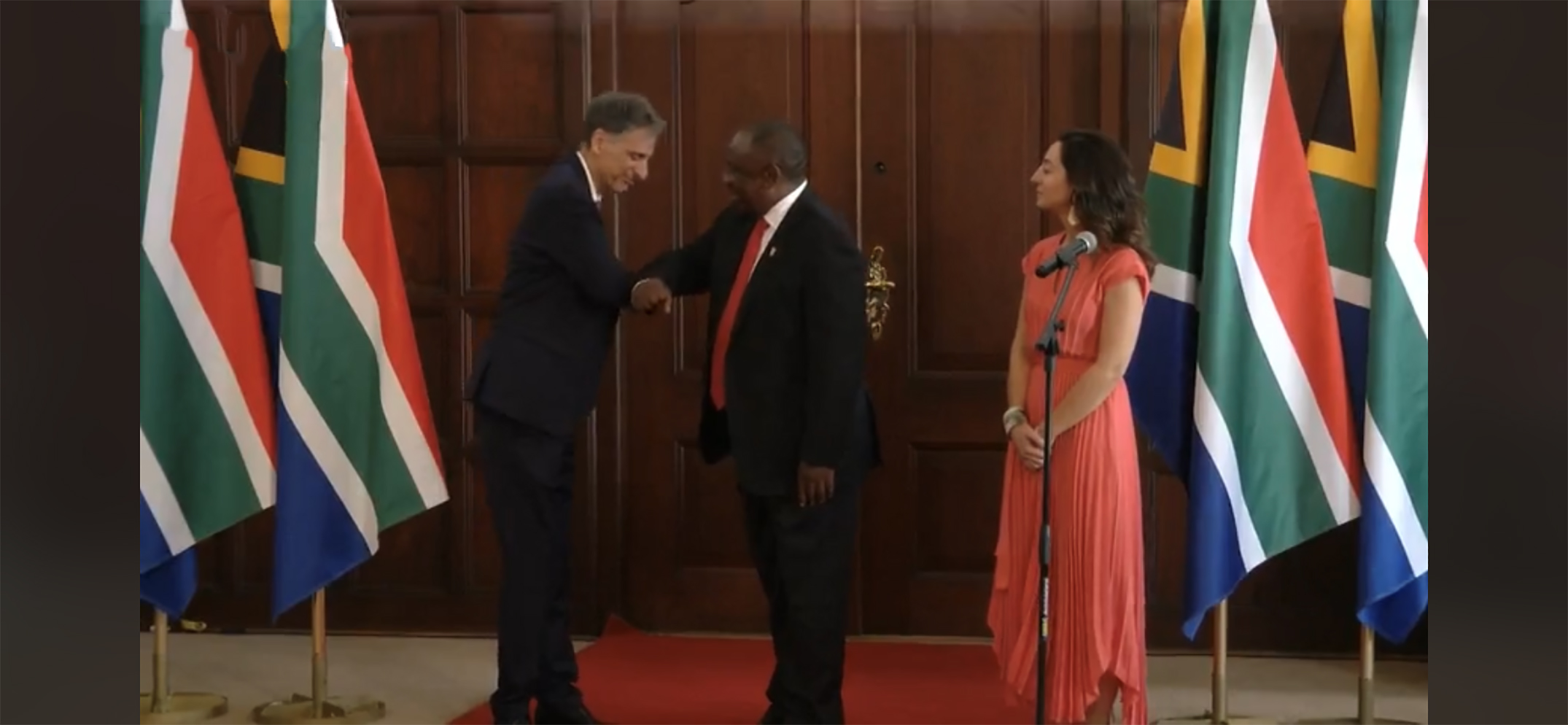
SA achieves nothing by having no diplomats in Israel

Three years have passed since South Africa withdrew its remaining diplomats from Israel. But the deterioration in relations began much earlier. In May 2018, Pretoria recalled Ambassador Sisa Ngombane following the deaths of dozens of Palestinians during mass demonstrations and violent confrontations with Israeli forces along the Gaza border. He was never replaced.
South Africa has now gone eight and a half years without an ambassador in Israel. What, exactly, has this achieved?
The 2018 recall followed a December 2017 decision by the ANC to downgrade South Africa’s embassy in Israel to a liaison office, in support of the Palestinian cause. The ANC wanted the downgrade implemented immediately. Yet in March 2019, President Cyril Ramaphosa told Parliament that the government was still working out how to do it. He cited concerns about Palestinian self-determination while acknowledging South Africa’s responsibility to engage with all parties.
The following month, then International Relations and Cooperation Minister Lindiwe Sisulu announced that the liaison office would have no political, trade, or development cooperation mandate. But in January 2022, under her successor, Dr Naledi Pandor, the department defended maintaining formal diplomatic ties with Israel, arguing that a presence there enabled South Africa to work with international partners on the Palestinian question.
To me, this suggests a government more certain about the message it wanted to send than how the decision would work in practice. Pretoria wanted to put pressure on Jerusalem, but also recognised the value of keeping diplomatic channels open.
By November 2023, Pretoria had gone further. A month after Hamas’s 7 October attack and amid Israel’s subsequent military offensive in Gaza, South Africa recalled its remaining diplomats for consultations, citing the civilian death toll and humanitarian crisis in Gaza. The Department of International Relations and Cooperation still lists its embassy in Israel as closed, with both the ambassadorial and chargé d’affaires posts vacant.
That decision made South Africa’s position clear, but it also reduced opportunities for Pretoria to raise concerns directly with Israeli officials. Condemning a country’s actions and maintaining diplomatic relations with it are not mutually exclusive. I have spent much of my career speaking to people whose actions I strongly opposed. Engaging with them has never meant agreeing with them.
After Palestinian Hamas operative Ahlam al-Tamimi was released from an Israeli prison in the 2011 Gilad Shalit prisoner exchange, I travelled to Jordan to interview her. She had driven the suicide bomber to the site of the 2001 Sbarro pizzeria bombing in Jerusalem, which killed 15 people, including seven children. I also approached Frimet Roth, whose 15-year-old daughter, Malka, was murdered in the bombing. She refused to participate in my report featuring Tamimi, telling me there could be no “moral equivalence” between her daughter and the woman involved in the bombing. I understood her objection, but interviewing Tamimi didn’t mean excusing her actions, nor did I intend to suggest that the perpetrator and victim were morally equal.
That experience nevertheless reinforced something I strongly believe: speaking to someone isn’t the same as endorsing them. Governments, like journalists, sometimes have to deal with people whose actions they disagree with, condemn, or even abhor.
Keeping an ambassador in Israel wouldn’t have meant South Africa approved of Israeli government policies. Nor would it have prevented Pretoria from condemning those policies or taking legal action.
In December 2023, South Africa brought a case against Israel before the International Court of Justice (ICJ), alleging violations of the Genocide Convention in Gaza. Israel denies the allegations. The court hasn’t ruled on whether genocide occurred, and proceedings continue. The case is significant, but South Africa didn’t need to withdraw its diplomats to bring it.
If the withdrawal was intended to put pressure on Israel, how effective has that pressure been?
Israel has maintained relationships elsewhere on the continent, including Kenya, Rwanda, Ethiopia, and Ghana. So, the recall didn’t isolate Israel from other African governments, and there is no clear evidence that it changed Israeli policy.
Commercial relations have also continued. Figures reported by Israel to UN Comtrade, the United Nations database of international trade statistics, show that Israeli exports to South Africa fell from approximately $287 million in 2017 to $158 million in 2025. That’s a decline of about 45% in US dollar terms. But exports had fluctuated before the ambassador’s recall, and rose again in 2021 and 2022 despite his absence. South Africa continues to import Israeli machinery, chemicals, medical equipment, and pharmaceuticals, while exporting goods to Israel. The figures cannot establish how much of that decline, if any, was caused by the ambassador’s absence.
The diplomatic consequences have been more direct. In January 2026, South Africa expelled Israel’s chargé d’affaires, Ariel Seidman. Israel retaliated by declaring South Africa’s representative to the Palestinian Authority, Shaun Byneveldt, persona non grata and ordering him to leave. He was based in Ramallah. The episode showed how a dispute with Israel could complicate Pretoria’s own efforts to represent Palestinian interests. Keeping an ambassador would have preserved a channel for raising concerns and dealing directly with Israeli officials.
Consider South Africa’s relationship with Russia. Following the escalation of the Russia–Ukraine war in February 2022, Pretoria maintained diplomatic relations with Moscow, arguing that engagement could contribute to resolving the conflict. In February 2026, that engagement produced a practical result. Ramaphosa raised the plight of 17 South African men, recruited to fight alongside Russian forces, directly with President Vladimir Putin. The governments cooperated to secure their release from military contracts. By 26 February, 15 had returned home, with arrangements continuing for the remaining two. South Africa’s embassy in Moscow remained involved in assisting those still there.
Russia and Israel are very different relationships for South Africa, but the Russia example shows why keeping diplomatic channels open can matter.
South Africa’s opposition to Israeli policies is clear. Its ICJ case has given that opposition a legal dimension. But the benefits of withdrawing its ambassador remain much harder to establish. South Africa has spent eight and a half years demonstrating its willingness to distance itself from Israel. The unanswered question is whether that distance has given it greater influence, or simply left it with fewer ways to exercise the influence it had.
- Paula Slier is an international journalist, war correspondent, and speaker who has reported from conflict zones across the Middle East, Africa, and Europe. Her work focuses on geopolitics, modern conflict, information warfare, and the battle for truth.