





News
UWC confers honorary doctorates on Israel critics

Jewish organisations and academics are criticising the University of the Western Cape (UWC) decision to confer honorary doctorates on four prominent figures who have taken an anti-Israel stance.
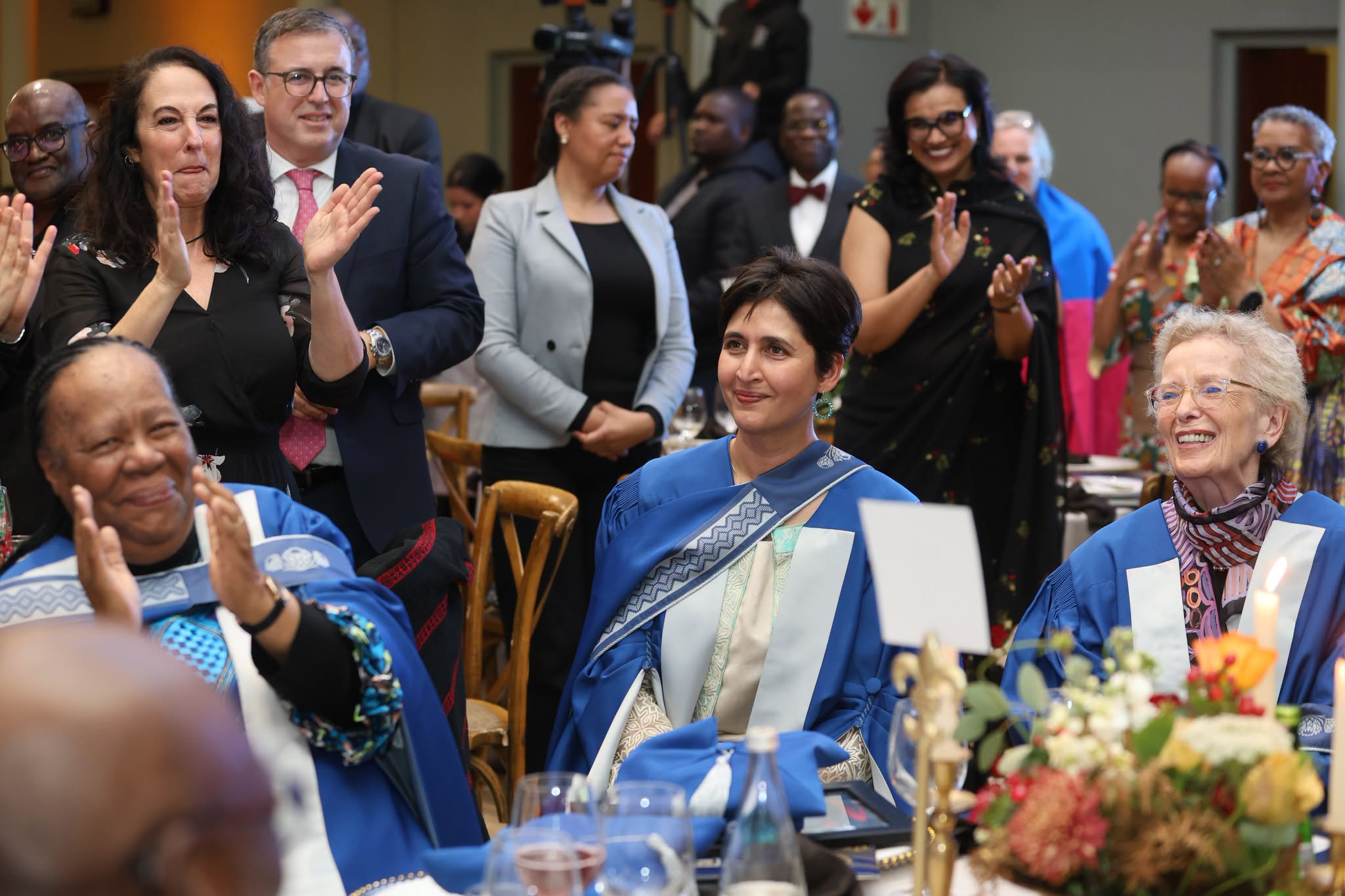
UWC honoured former Cabinet minister Dr Naledi Pandor, former Irish President Mary Robinson, lawyer Adila Hassim, and Francesca Albanese, the United Nations (UN) Special Rapporteur on the occupied Palestinian territories, at a ceremony on Friday.
The university says they were recognised for their distinguished contributions to human rights, international law, scholarship, public service, and social justice. The doctorates have nevertheless prompted questions about whether UWC is using its institutional standing to endorse the recipients’ anti-Israel positions.
David Benatar, emeritus professor in the University of Cape Town’s Philosophy Department , said an honorary doctorate can be understood as an endorsement.
“While universities sometimes award honorary doctorates for academic accomplishments, at least as often they award them for other achievements,” he said. “When a university awards an honorary degree, and especially when the accompanying citation mentions particular activities of the recipient, the awarding of the degree should be seen as an endorsement of those activities.”
Benatar said UWC’s public statements about Hassim, Albanese, and Pandor indicated that their positions on Israel formed part of the reason for the awards. He said the awarding of the doctorates reflected what he described as ideological hostility to Israel across South African higher education.
“This can be expected to contribute to the alienation of the vast majority of South African Jews,” Benatar said.
A South African Jewish professor who asked to remain anonymous, said universities usually subjected candidates to nomination, selection, and careful vetting. The professor said one consideration was whether an award might embarrass the institution.
“An honorary degree is a statement by the university,” they said. “It’s an exchange: the university honours you, and in turn some of your aura rubs off on the university.” The professor said the UWC awards appeared to constitute a political statement.
Benji Shulman, director of the Middle East Africa Research Institute, also questioned the institutional effect of the awards. “UWC has a long history of supporting radical extremist politics.”
He said the four recipients had all been involved in parts of the UN that had been hostile to Israel at different times. “The doctorates are designed to highlight the work of these individuals and burnish their credentials for further activism in this regard,” he said.
The executive director of the South African Zionist Federation’s Cape Council, Joshua Schewitz, said three of the four recipients had records that he believed should concern a university.
He highlighted Robinson’s role as secretary-general of the 2001 World Conference against Racism in Durban. The conference became deeply controversial over antisemitism and disputes surrounding Israel.
He also pointed to Albanese’s work as UN Special Rapporteur on the situation of human rights in the Palestinian territories occupied since 1967. Albanese was placed on the United States Treasury’s sanctions list in July 2025.
Pandor was South Africa’s minister of International ReIations and Cooperation from 2019 to 2024. During her tenure, South Africa brought its case against Israel, under the Genocide Convention, before the International Court of Justice (ICJ).
Hassim was lead opening counsel for South Africa in that case in January 2024. The ICJ has issued provisional measures in the case, but hasn’t made a final ruling on the merits of South Africa’s “genocide” allegations.
UWC has stressed that the awards shouldn’t be reduced to the recipients’ positions on Israel. Gasant Abarder, UWC’s media spokesperson, told the SA Jewish Report that the university followed established governance processes. “Nominations are considered by the Honorary Degrees Committee, recommended through its Senate, and ultimately approved by Council,” he said.
Abarder said the recipients were recognised for contributions to human rights, international law, scholarship, public service, and social justice. He pointed to Pandor’s decades of public service and Hassim’s work on constitutional and socio-economic rights.
Hassim’s career includes work on HIV treatment, basic education, mineworkers’ rights, and the Life Esidimeni tragedy. She is an evidence leader at the Madlanga Commission of Inquiry into political corruption.
UWC also rejected the suggestion that honouring people who advocate for Palestinian rights raises questions about Jewish safety or inclusion.
“Such a framing conflates advocacy for Palestinian rights and criticism of the actions and policies of the occupying State of Israel with hostility towards Jewish people,” Abarder said. “These aren’t equivalent.”
The university said its position was consistent with its history and its commitment to opposing apartheid, occupation, and structural injustice. In 2024, UWC announced its academic disengagement from Israeli institutions. That decision followed a June 2024 motion endorsed by the UWC Council, Senate, Convocation, and Student Representative Council. In October 2025, UWC required bidders for a sportswear tender to provide a signed certificate confirming “non-affiliation with the State of Israel”.
UWC said the requirement was aligned with its decision to disengage academically from Israeli institutions. The SA Jewish Report previously reported that the university’s Palestinian Solidarity Association had also posted material relating to the 7 October Hamas attack and Israel on its social media accounts.
Images circulated by the association have also shown UWC graduates wearing Palestinian-themed graduation items from the company Freedom Scrubs.
UWC also posthumously honoured anti-apartheid activist Charlotte Maxeke and women’s rights activist Mandisa Monakali, while mathematician Professor Emeritus Loyiso Nongxa received an honorary degree. Its citation for Robinson highlights her career as a lawyer, Ireland’s first woman president, and UN High Commissioner for Human Rights.
Pandor’s citation emphasises her career in education, Parliament, government, and international diplomacy. Hassim’s citation focuses on almost three decades of legal work advancing constitutional rights, healthcare, and social justice.
Albanese’s citation describes her as an internationally recognised legal scholar and human rights expert whose work has focused on international law, forced displacement, and the rights of refugees and occupied populations.
For critics, the question is whether a university’s decision to honour them also communicates approval of their political positions. It raises questions about how universities use their institutional authority when recognising public figures whose positions on Israel are deeply contested.
The issue also touches on whether universities that describe themselves as inclusive can maintain space for disagreement over Israel while taking institutional positions on the conflict.





Raymond Esterhuizen
September 6, 2026 at 6:35 pm
Pandora. What have you ever done for the poor Blacks not connected to religion in this country? Prove your contribution to advancing free black education. What do you really know about the middle East, about Isis, Hamas, Liberia. See the oil blackmail of the world. Does all the Arab world support Palestine. What about the rich of the United Emirates?
Amorel Abrahams
September 6, 2026 at 10:14 pm
May God curse UWC. I will pray against UWC and hope that real Christians won’t study there anymore or send their children there. Israel never started this war. Why not condemning Hamas? It’s a disgrace! To think that I also studied there at a time.
Baltus le Roux
September 7, 2026 at 11:56 am
Perhaps there should rather be looked at removing the beam from our own eye before we try to remove the splinter from another. But for a tertiary institution to set such an example if this is true is disheartening. Fortunately there are many tertiary institutions that focus on what they are supposed to do. For now, UCT has been removed from my family’s option list.
sandy bezuidenhout
September 7, 2026 at 12:03 pm
Sandra Bezuidenhout has there been a reporter or journalist thats done an indepth investigation into Pandor’s child hood. Her schooling history and later studies experiences. Something about her anti Jewish stance seems strange.
Paddy B
September 7, 2026 at 3:04 pm
I wont mention Pandora for fear of throwing up. As for honorary doctorates for this makes me feel like doing just that. I stand with Israel.