


News
Violent unrest in France deepens Jews’ fears

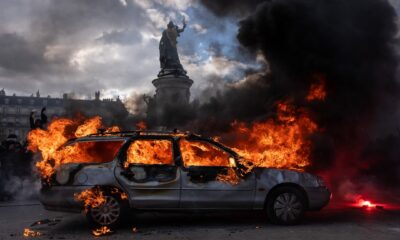
South African Jews living in France are fearful for their future there after days of unrest in which streets were set ablaze, businesses damaged, and a Paris synagogue vandalised.
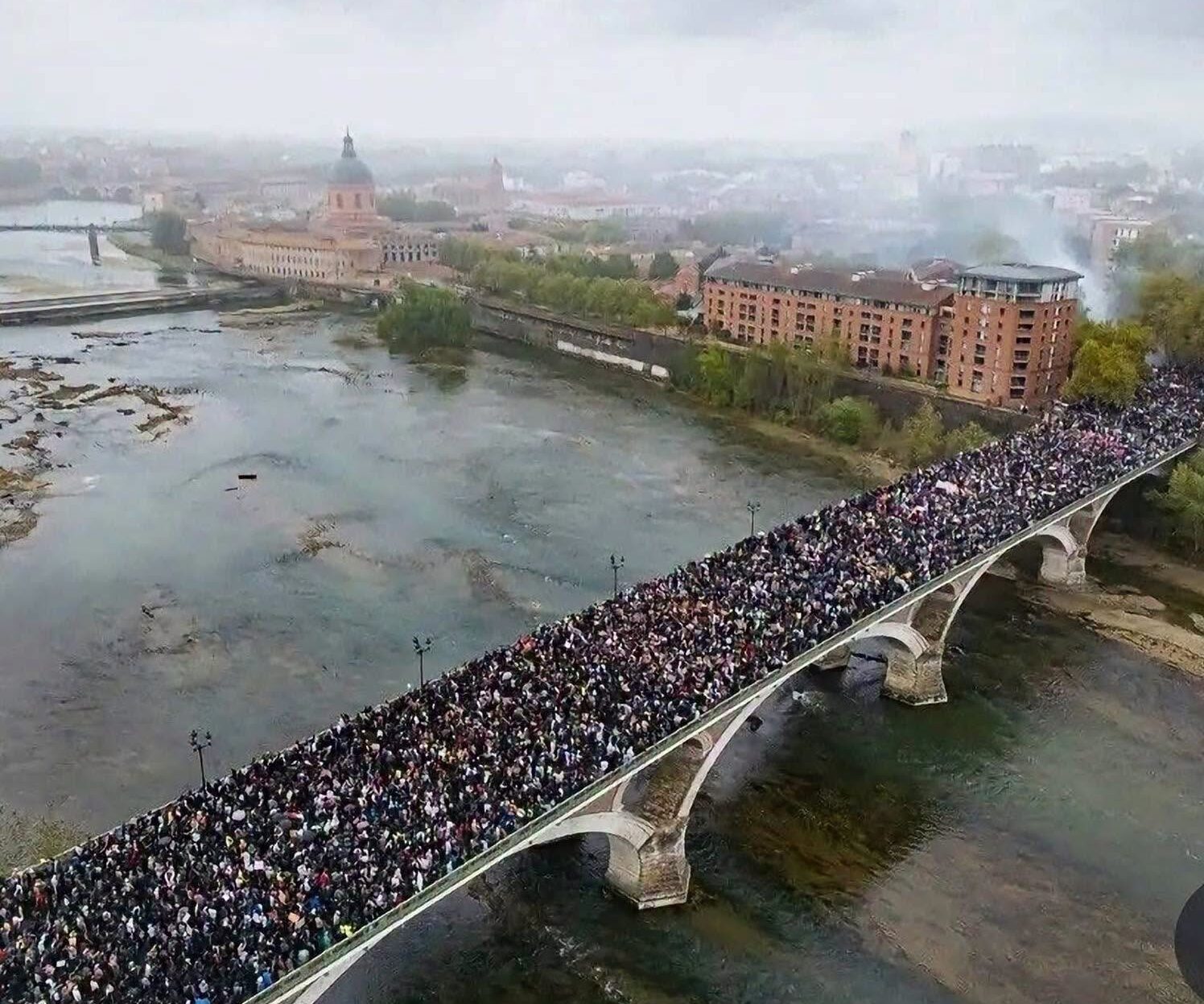
The rioting has spread across major cities, including Paris and Marseille, amid protests initially driven by dissatisfaction with school conditions and the rising cost of living. More than 2 400 people had reportedly been arrested by Monday 19 October.
While French authorities have blamed radical left-wing groups and criminal elements for the violence, Jewish residents are also concerned about antisemitism and the increasingly polarised political climate.
Debbie*, a former Johannesburg resident who’s been in Paris for 12 years, lives in the 19th arrondissement, close to the Ohalei Yaakov synagogue. The congregation’s temporary place of worship was broken into during the unrest.
She described watching the violence unfold from her balcony. “In Joburg, you lock your gates and watch the crime. Here in Paris, you lock your shutters and watch the state lose control,” she said. “I stood on my balcony on Saturday night, watching flares go off down the street, and I thought, ‘Is this Europe, or is this a scene from 1980s South Africa?’”
The vandalism at the synagogue was particularly distressing.
“When we heard Ohalei Yaakov down the road was broken into and the siddurim were scattered all over the sanctuary floor, my stomach dropped,” she said.
Authorities have yet to establish whether the attack was antisemitic or opportunistic theft during the wider unrest. “But when you’re a Jew in France today, you don’t have the luxury of giving the benefit of the doubt. The psychological blow is the same whether it was targeted or not,” she said.
The Service de Protection de la Communauté Juive, France’s Jewish community protection organisation, said there was no evidence that Jewish institutions or businesses had been deliberately targeted in the rioting. The investigation into the synagogue incident is continuing.
In the meantime, it’s intensified safety concerns among Jewish residents. Debbie said she had become increasingly cautious about her son’s appearance in public. “It breaks my heart that I left South Africa to give my kids a secure future, and now I’m hiding their identity in the middle of Paris.”
Laurent Lamy, who has lived in Paris for most of his life, other than the years he lived in South Africa in the 1990s, said he had witnessed the destruction at close quarters. He lives in central Paris, near an area affected by the unrest.
He described shops being broken into and streets filled with police confronting demonstrators. Tear gas and clashes disrupted ordinary activities, including access to local businesses.
Lamy is also concerned about the wider climate facing French Jews.
“We’ve seen lots of antisemitic comments, and there were lots of Palestinian flags among the rioters,” he told the SA Jewish Report. He added that antisemitic rhetoric had been a growing concern since Hamas’s 7 October attack on Israel.
Lamy believes France’s current crisis reflects long-standing difficulties in addressing social grievances and implementing political reforms. “The real problem here is that in France it’s extremely difficult to reform anything,” he said. “Any time you want to reform anything, people go to the streets and start rioting, and then the government backs down.”
He also expressed concern about growing political polarisation and what it might mean for Jewish communities.
Debbie says the uncertainty has prompted conversations among friends about whether to remain in France. “Community WhatsApp groups are buzzing non-stop: Should we stay? Should we head to Israel? Should we go back to Cape Town?” she said. “Everyone is carrying an exit strategy in their back pocket.”
Mark*, a former Cape Town resident who has lived in Marseille for six years, described a city struggling to contain the violence. Marseille has one of France’s largest Jewish communities and a substantial Muslim population. Businesses across the city were damaged during the unrest.
As a trauma surgeon and researcher, Mark said the consequences of the violence were visible beyond the political arguments surrounding it. “From the hospital floor you don’t see political ideologies. You just see burnt skin, fractured limbs, and young kids choking on tear gas,” he said. “The city felt completely unhinged over the weekend.”
Mark warned against relying on social media accounts that present the destruction as a coordinated campaign against Jewish businesses.
“On social media, people are spinning narrative wars, claiming only Jewish shops were gutted or that it’s an organised intifada against us,” he said. “When you walk down the Boulevard des Dames, the destruction is raw and chaotic. Kosher delis, phone repair shops, clothing boutiques, all smashed up side by side.”
However, he stressed that this didn’t negate the fear within the Jewish community. “Even if a brick was thrown blindly by a teenager, the fear it creates is 100% real.”
Laura Constantini, who grew up in Paris before moving to South Africa a year ago, said her relationship with France had changed significantly since the 7 October attacks. With her parents still living in Nice, she was shocked by footage of the recent violence.
“I’ve seen my apartment on videos, and the building and my street destroyed, and it really shocked me,” she said.
Constantini said she had experienced social repercussions for supporting Israel after 7 October. Some friends had stopped speaking to her, while comments directed at her had left her feeling unsafe.
“I was supporting it because my family was there and I was worried,” she said of her support for Israel. “For me, that was my identity more than anything.” She said her father had been assaulted while returning from synagogue wearing a kippah.
Constantini believes the current unrest is entangled with wider political disputes and demonstrations supporting the Palestinians. She distinguished between the right to protest and the antisemitism she believes has been part of some demonstrations.
The unrest has placed pressure on President Emmanuel Macron’s government. Authorities have faced questions about their preparedness, while officials have condemned the violence and promised a stronger response.
Online, the unrest has fuelled further concern. A monitoring report by the Combat Antisemitism Movement identified more than 1 300 social media posts blaming Jews or Israel for the French riots. The posts reportedly included conspiracy theories and calls for violence against Jews.
The claims circulating online have added another dimension to the concerns of French Jewish communities.
For those interviewed, the immediate concern is safety, but the longer-term question is whether France is a place where they can build secure lives. The unrest may subside, but the effects extend beyond the damage to buildings and businesses. People are questioning whether the country can restore public order while confronting the antisemitism and political divisions that have made some Jews feel increasingly vulnerable.