Voices
A week of reflections: Australia, Lekota, and the Jewish story of 702

This week, I’m writing from Australia, where I’m visiting family. While here, I’ve had the privilege of meeting with Daniel Aghion KC, president of the Executive Council of Australian Jewry. Daniel and I spoke frankly about the well-being of the Jewish community in Australia following the horrific Bondi attacks.
What struck me most was learning that there’s been a broad understanding in Australia that importing foreign conflicts into local discourse breeds division and hate. While this awareness is particularly evident there, it’s a lesson every diaspora community needs to internalise.
Remembering Mosiuoa Lekota: A friend to our community
Last week brought deeply saddening news: the passing of Mosiuoa Lekota, a courageous freedom fighter, distinguished statesman, and devoted public servant.
Lekota earned his place in South African history through his significant role in the struggle against apartheid and in ushering in our democratic dispensation. He went on to hold numerous important positions, including serving as the first premier of the Free State. Whether from within the ruling party or later from the opposition benches, he devoted himself tirelessly to representing the South African people and advancing their well-being.
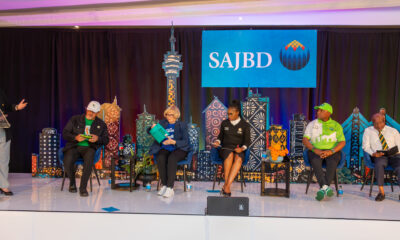
Over many years, Lekota was a warm and steadfast friend to the Jewish community. Jewish leaders met with him on frequent occasions and could always rely on his support, wisdom, and constructive counsel. He participated in many significant Jewish communal events, including speaking at South African Jewish Board of Deputies (SAJBD) conferences and at multi-party debates organised by the Board to engage and inform the Jewish community ahead of national and local government elections. Lekota recognised and respected the Jewish community’s connection to the State of Israel, and his approach to this and related matters was consistently fair, balanced, and constructive.
In an era when such fairness and balance have become increasingly rare, Lekota’s example stands out as a reminder of what principled leadership looks like. He understood that one could engage in robust political debate about the Middle East without demonising South African Jews or questioning our place in this country. He embodied the values of our Constitution, treating all citizens with dignity and respect regardless of their background or beliefs.
The SAJBD extends its sincere condolences to the Lekota family and to Lekota’s many friends and colleagues across the political spectrum. Our national director, Wendy Kahn, was honoured to give a eulogy at his memorial in Soweto on Wednesday, as we mourn his loss alongside our fellow South Africans and pay grateful tribute to his memory. May his example of principled leadership, fairness, and genuine friendship across communal lines serve as a model for those who follow.
The Jewish chapter in 702’s story
Last week saw the launch of a book on the history of radio station 702, The Story of 702: In Touch, In Tune and Independent. The book was co-authored by SAJBD professional David Saks, an expert on South African Jewish history.
Like so many quintessentially South African stories, 702’s origins include a Jewish chapter. The station was founded by the Kirsh brothers, Natie and Issie, originally as a music station based in Bophuthatswana. When it later shifted to talk radio, it became, as David explains, part of a “cultural revolution” that brought communities into conversation with one another.
In this light, the SAJBD vice-president, Mary Kluk, was hosted on the channel for a frank and challenging discussion on Jewish identity and antisemitism. The interview was an example of the power and impact of talk radio at its best, engaging, open, and insightful.
Many of us have vivid memories of the station and the central role it played in creating a platform for the difficult, meaningful debates that shaped the period, our transformation into democracy, and that continue to define our South African experience.