Voices
Othering and belonging

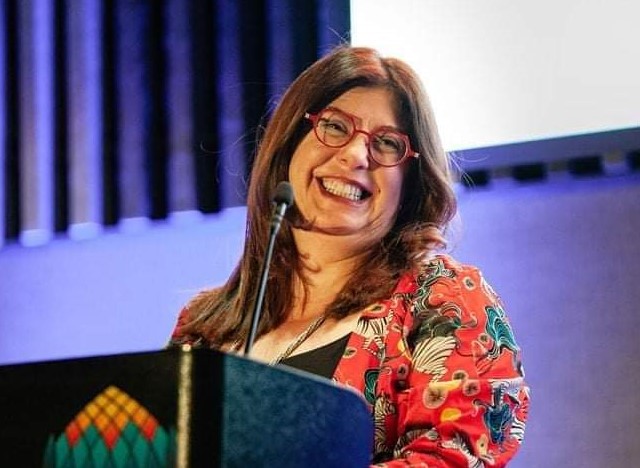
I had the privilege last week of representing the Jewish community at the State of the Nation Address (SONA). I attend this annual event with a sense of profound gratitude for our democracy and, having witnessed the apartheid years, acute awareness of how far we have travelled as a nation. That we are invited every year and represented at SONA as the Jewish community carries deep significance. Our inclusion offers living proof, not that any should be needed, of the integral place our community holds in this nation.
This moment feels especially poignant given recent events at Roedean School, where its leadership suggested to us, incorrectly, that government policy mandates excluding Jews from public spaces. It emphatically does not.
Yet while a small group of parents of Roedean clearly mischaracterised the government’s stance, the assertion that the school’s actions aligned with national policy deserves serious reflection. We can no longer deny what has become painfully evident: the government’s hostility toward Israel does indeed affect the rights and lived realities of South African Jews.
We are South African. We are Jews. We belong. We will not conform or leave any part of our identity at the door to become acceptable or to placate those made uncomfortable by our authenticity. Conditional acceptance of our community, provided we disavow political or nationalist beliefs, is no different from accepting Jews only if we remove our kippot. Zionism isn’t an addendum to our peoplehood, nor is it conditional. It is integral to who we are as a people. We must reject and resist all attempts to transform our national movement into a slur, a basis for discrimination, or an embarrassment for its adherents. The Roedean incident has taught us an uncomfortable truth: you cannot surgically separate Zionism from Judaism and pretend that attacks on the former leave the latter unscathed.
We are so heartened to have seen the apology from Roedean. Among other things, it acknowledges that scheduling issues weren’t the cause for the cancellation, and that, notably, the school rejects antisemitism and all forms of discrimination or prejudice, and that it is committed to combatting antisemitism, racism, and discrimination. These acknowledgements matter deeply, both in naming the discrimination that was initially denied, and in pledging to address it. The statement concluded with a call to build bridges between our communities, which is a sentiment I wholeheartedly support.
The liberal, secular laws governing our society form the very foundation upon which we practice our culture and religion. These laws and the rights they secure: freedom of worship, speech, and association, demand our vigilant protection. We must remain conscious of our own contribution to the ethos and practice of multiculturalism, that same framework under which we have secured our freedoms and communal identity. We cannot allow ourselves to be othered, as happened at Roedean, just as we must never other the fellow religious, cultural, and national groups comprising this country. Our community must practice the inclusion and acceptance we demand of others. To be Jewish and South African is to inhabit uniquely both those identities and the many shared values that they encompass. This isn’t a contradiction, it is who we are as a community and as a nation.