





OpEds
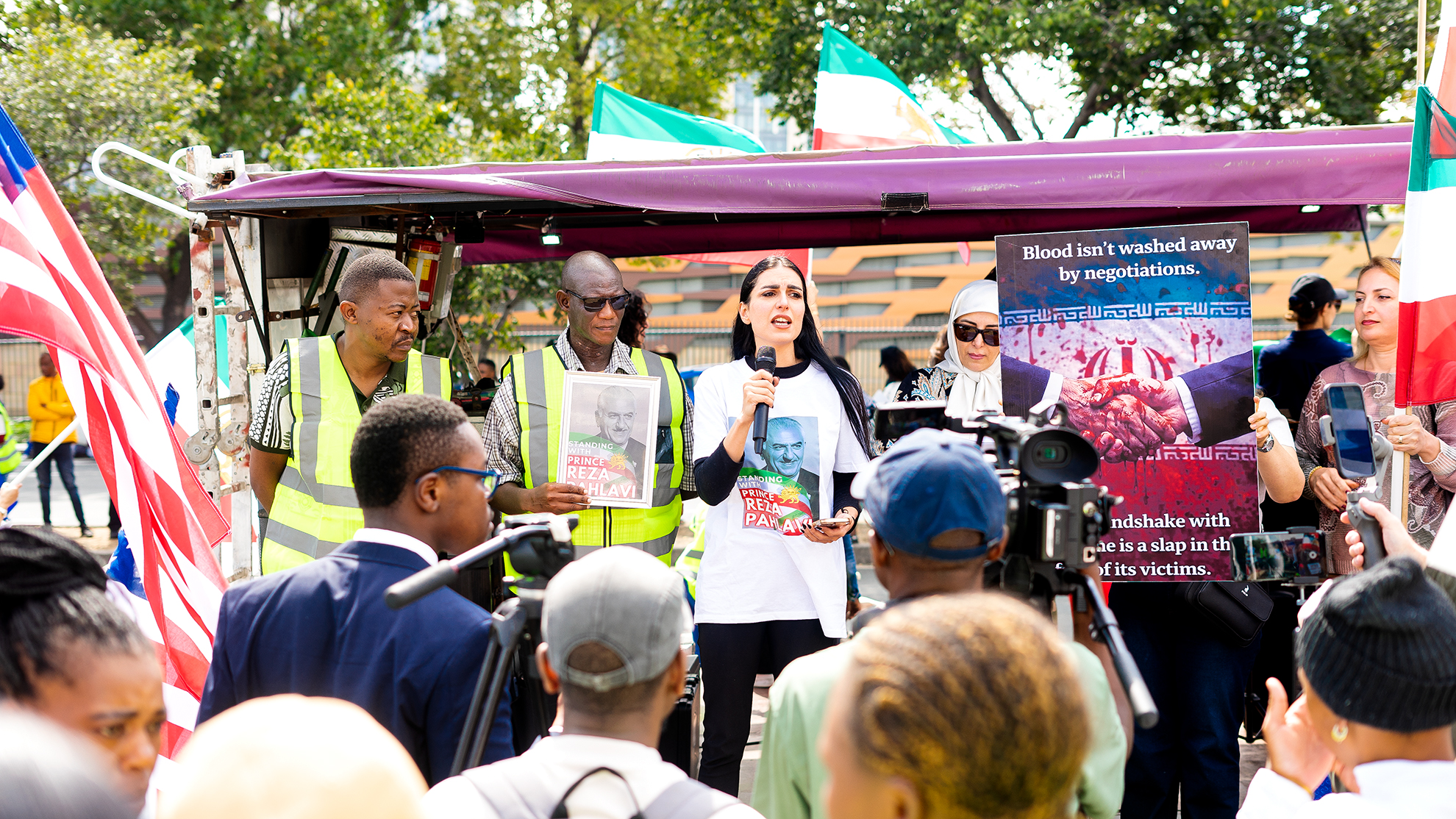
Seven hundred voices, one cry: Free Iran

On 16 April, far from Tehran but bound to it in heart, nearly 700 people gathered outside the US consulate in Johannesburg. Iranians stood alongside South Africans of every background ‒ Christians, Jews, Muslims, people of all races and faiths ‒ united by something simple and urgent: the demand that the Iranian people be free.
For many of us, this wasn’t a political gathering. It was personal.
We held signs calling for a “Free Iran”, simple words, but heavy with longing, loss, and hope. Something new also appeared in our hands, “Am Iran Chai.” Not just a slogan, but a declaration. That we are still here. That like the Jewish people, we refuse to disappear. That no regime built on fear, violence, and erasure will ever succeed in stripping us of who we are, our history, our identity, or our future.
There was something deeply moving about the space we created together. South African Jews stood with Iranian exiles. Pastors from South African Friends of Israel stood beside Muslim voices of conscience. The South African Jewish community showed up with conviction and compassion, as they so often do, and the South African Zionist Federation was present, steadfast in its support. In a world that feels increasingly fractured, this gathering felt like a glimpse of what solidarity can look like when it is rooted in truth rather than politics.
We sang. We prayed. We spoke. And above all, we remembered.
Sam Nik, an Iranian peace activist, reminded us what is at stake. She asked us not to look back decades, but just three months, to when ordinary Iranians took to the streets with empty hands and full hearts, demanding nothing more radical than dignity and basic human rights. What they were met with was not dialogue, but violence. Not reform, but repression.
Her words landed heavily because they were lived. They were raw. They were real.
She spoke of a regime that fears its own people so deeply that it silences them, cutting internet access, crushing dissent, erasing voices. A regime that invests more in proxies and militias than in its own citizens. A regime that has spent nearly half a century teaching hatred outward while tightening its grip inward.
And yet, even in that darkness, there is defiance.
There is the Iranian woman who removes her hijab in protest. The student who dares to speak. The worker who refuses to stay silent. The families who mourn and still demand answers. And there are those of us in the diaspora, carrying their voices across continents because they cannot safely speak for themselves.
Standing at the consulate in Johannesburg it was impossible not to feel the echoes of other struggles. South Africans know what it means to confront injustice and to fight for dignity. The Jewish community knows what it means when the world looks away, and why it cannot afford to.
That is why this moment of unity matters. Because the Islamic Republic’s repression at home and its hostility abroad aren’t separate issues. They are part of the same worldview, one that denies people their basic rights, whether it’s the right of Iranians to live freely in their own country, or the right of Christian and Jewish people to live safely in theirs.
Peace in the Middle East cannot be built on denial. It cannot be built on the erasure of history or the rejection of entire peoples. It begins with recognition ‒ of truth, of rights, of each other.
As we closed the gathering, we sang the South African national anthem. It wasn’t just a gesture of gratitude to the country we now call home. It was a statement of belief ‒ that coexistence is possible, that justice is possible, that freedom is possible.
But belief alone isn’t enough.
The international community, including our government here in South Africa, must begin to draw clear lines. Engagement with Tehran cannot come without conditions. There must be accountability for the repression of its people, and there must be a willingness to accept the existence of other nations, including Israel, as part of any serious path to peace.
For those of us who demonstrated, this isn’t a distant issue. It’s our families, our friends, our country. We may live in South Africa now, but our hearts remain tied to Iran, to a version of it that is still waiting to be born.
And until that day comes, we will keep showing up.
We will keep speaking.
And we will keep believing that one day, the words we chanted in the streets of Johannesburg will no longer be a demand but a reality, and Iran will be free.
- Shervin Ghorbani is an Iranian-born analyst and commentator based in South Africa with deep expertise in Persian history, geopolitics, and contemporary affairs. He left Iran as a teenager and maintains close personal and familial ties to the country.





Rowelyn Louw
April 23, 2026 at 10:06 pm
Free Iran now!!! Hands off the Iranian people!!!
james curlewis de Ville
April 24, 2026 at 1:17 pm
Trump and Israel must free Iran.They have suffered long enough.If the republicans dont win the next election America will fall under the worthless Dems.
yitzchak
April 28, 2026 at 6:10 am
خداوند شما را برکت دهد و نگه دارد
May G-d bless you and keep you (in Persian)