Featured Item
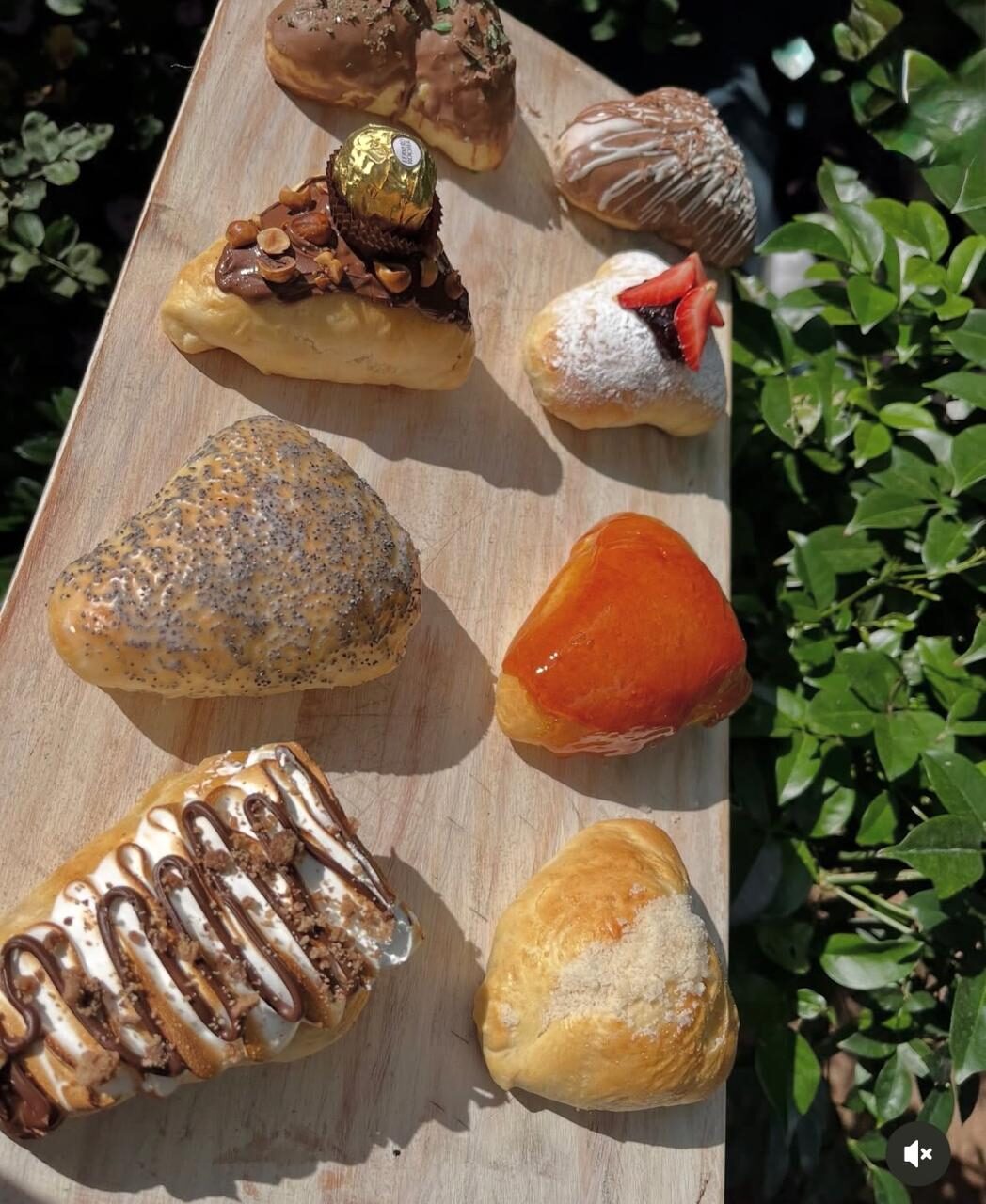
Arise, authentic, yeasted SA hamantaschen!

In much of the Jewish world, Purim means crisp, cookie-like hamantaschen, buttery triangles filled with poppy seed (mohn), jam, or chocolate. But in South Africa, the story is a little different. Here, many families still roll, knead, and patiently wait for their hamantaschen dough to rise, keeping alive a distinctly yeasted tradition that sets the community apart.
It may be hard to believe for those around the world, however, that the “South African hamantaschen” use the original way of preparing the Purim treat, one that existed before the availability of commercial leaveners like baking powder and baking soda.
According to Noa Nisell of the ANU – Museum of the Jewish People, Eastern European Jewry originally prepared hamantaschen with yeast. It was only with the advent of commercial leavening agents such as baking powder and baking soda that preparation time was reduced from days to hours, prompting many Ashkenazi communities in North America and Europe to adopt the quicker, easier method.
The pastry itself dates back to 16th-century Germany, where it was known as Mohn-Taschen, “poppy seed pockets” (mohn meaning poppy seed and tash meaning pocket). German Jews later adapted both the pastry and its name, transforming it into hamantaschen, “Haman’s pockets”, which were allegedly full of bribe money.
When South African Jews travel overseas during Purim, they are shocked to find that their favourite Purim treat doesn’t exist.
When baker Shira Liebe Shar went to Israel for the first time seven years ago, she was dismayed to find only the biscuit version of hamantaschen, or as they call them in Israel, “oznay Haman” (Haman’s ears).
“I was excited to sink my teeth into a delectable, soft hamantaschen, and where better to find traditional Jewish treats than Israel, right? Well, I was confused when all I could see on numerous bakery shelves were these triangular-shaped cookie-looking things. With jam centres, they were clearly hamantaschen, but the cookie crust wasn’t the kind I had ever seen. I figured that the type of soft hamantaschen I wanted had to be found somewhere, but I had no such luck.”
In South Africa, we have opted to keep the yeasted dough that carries a lot of tradition. Bakers and non-bakers alike remember mixing, rolling, and forming the hamantaschen with their mothers and grandmothers, and have got so used to preparing them in this way, a different version isn’t even considered.
“The reason why we probably prefer the yeast hamantaschen over the biscuit version that they tend to use overseas is that it’s what we’re used to,” said author and food editor Sharon Lurie. “It’s the same in any Jewish household – if your mother made chopped liver coarse, you preferred it that way, hence the favourite saying, ‘You need to get my mother’s recipe’. Others made it smooth, so today, we get a choice at most delis: smooth or coarse chopped liver.”
Said Heidi Feldman from the Family Bakehouse, “Yeasted hamantaschen was what our grandparents made generations ago. Many other countries have dropped the tradition because of the inconvenience of making them fresh and because they have a short shelf life. They have to be made the night before or on the day itself, which causes a lot of pressure on the bakery.”
When baker and oleh Les Seidel made aliya about 40 years ago, he was disappointed not to find the hamantaschen that he remembered making with his mother and grandmother back in Johannesburg. So, in 2008, he left his job as a computer programmer and started his dream of owning a bakery in the back of his home in Karnei Shomron. And so, when Purim came around, one of the first things he decided the bakery would do was bake the hamantaschen from his youth, making his bakery the first in Israel to make this kind of hamantaschen.
“After conducting some research into the matter, I discovered that indeed, yeasted hamantaschen wasn’t the sole domain of South Africa, but rather originated in Russia and Eastern Europe. Anyone who emigrated from there to other places in the world took with them this family tradition,” he said. “Strangely enough though, I couldn’t find a single bakery in Israel that made yeasted hamantaschen, even though many in this country are of Eastern European and Russian origin.”
Seidel said that in the past two weeks, he has made about 2 000 hamantaschen. The most popular fillings are the ones he wanted to replicate the taste of home – mohn and cheese.
“People tell me it tastes exactly as they remember from South Africa, which isn’t surprising, because the recipe comes from my bobba. She passed it down to my mother, and every Purim morning in Joburg, we’d wake up to the yeasty smell of dough that had risen overnight. At dawn, my mother would shape and bake it. It was never my recipe, it was hers. The same authentic South African recipe, unchanged. People say it’s the real McCoy,” he said.
Megan Gordon, a Johannesburg home baker, said, “There’s absolutely nothing wrong with offering a cookie version. Ultimately, it comes down to tradition, texture, and personal preference. However, I have found that the majority of my customers consistently ask whether I make yeasted [bread-style] hamantaschen. This suggests that their preference is influenced not only by taste, but by familiarity and expectation.”
Though there is some discussion about the dough of the hamantaschen, the filling is equally important. Said Gordon, “I honour the tradition my family raised me with – the classic mohn, jam, chocolate, and cheese that feel authentic and rooted in Purim. Those flavours carry memory, nostalgia, and heritage.”
Lurie said that with the ever-changing food landscape and availability of more unique flavours like Lotus Biscoff, Nutella, or even halva, there’s nothing like the traditional flavours, with her favourite being apple.
“We wouldn’t eat mohn because my brother said it was crushed ants, so that was the end of that flavour, and we always melted more apricot jam and suctioned it up into a syringe and squirted it into the jam hamantaschen because bakeries never put enough jam in.
“Hamantaschen are fun as well as significant. We should remember that we defeated Haman. Recognition of hamantaschen being in the shape of his hat is to remind our children that we don’t tolerate hatred. That said, we also have fun, and this is a subtle way of reminding them that we have – and always will – survived and thrived to tell the tale,” said Feldman.