News
Rare pro-Israel breach spotlights broader media bias

The Broadcasting Complaints Commission of South Africa (BCCSA) last week reprimanded the South African Broadcasting Corporation (SABC) for failing to include a Palestinian perspective in three Gaza flotilla interviews. This highlights the imbalance which exists in reporting on the Israeli-Gaza war in which the Israeli side has been almost non-existent, experts say.
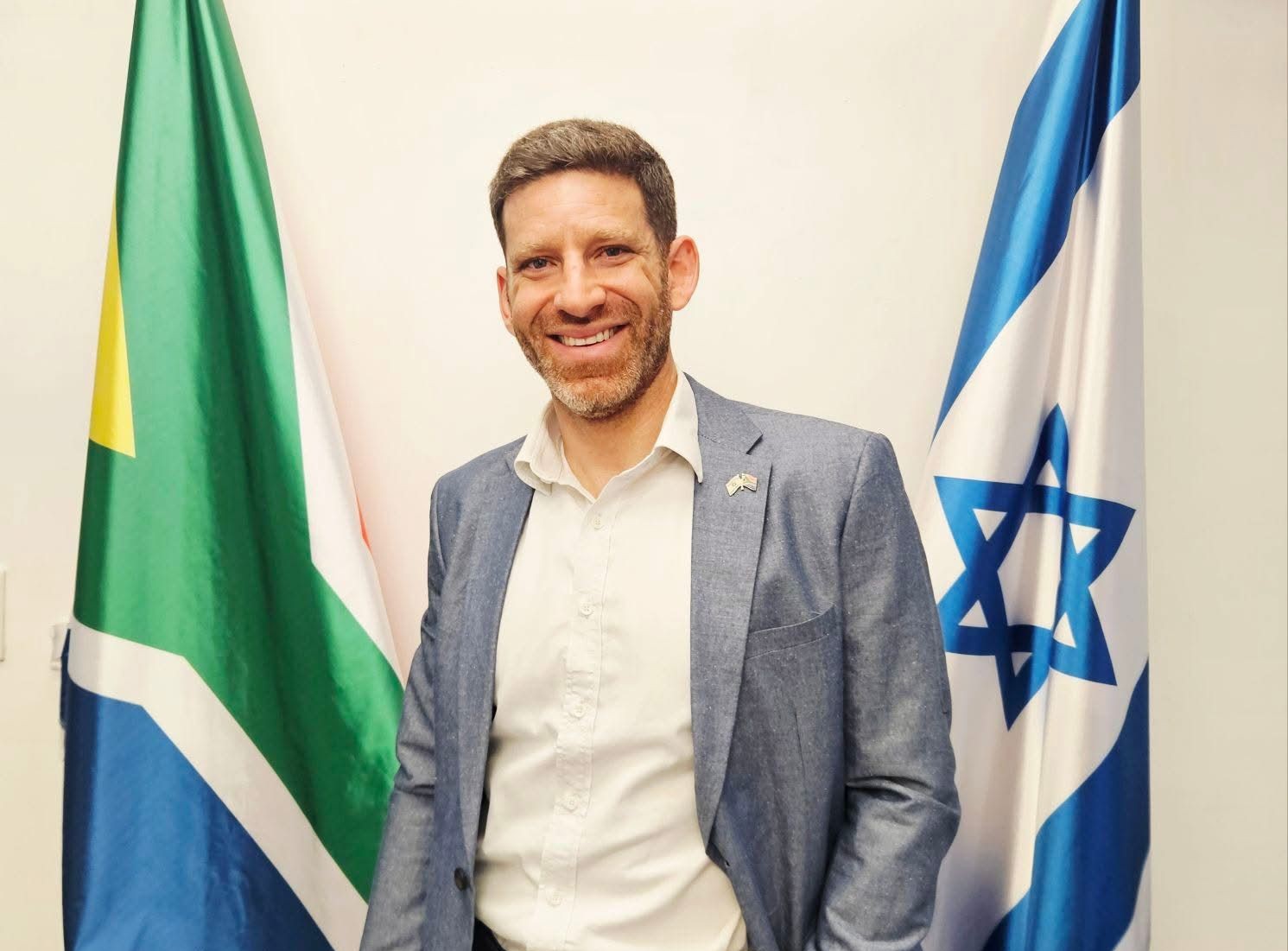
The rare interviews took place in October 2025 with former deputy Israeli ambassador to South Africa, Ariel Seidman – who the government recently kicked out of South Africa – speaking of the flotilla to Gaza being marketed as humanitarian aid, but actually “Hamas operations”.
The commission reprimanded the SABC for not achieving balance within a reasonable period and in a comparable programme slot. It didn’t order a right of reply, the removal of content, or additional airtime.
Director of Digital Communications at the Israeli Ministry of Foreign Affairs and recent visiting ambassador to South Africa, David Saranga, said the embassy was seldom approached for comment. “The number of cases in which they approach the embassy in order to get our official line is limited, if at all,” he said.
He also couldn’t recall interviews with Israelis who had survived the 7 October 2023 attacks or with the families of those who had been kidnapped or killed. “The last thing you can say about the South African media in general is that they are balanced,” Saranga said.
Advocate Mark Oppenheimer said the specific ruling, however, was limited to a technical balance requirement and didn’t amount to a finding of bias. “The Broadcasting Complaints Commission’s judgement makes a very narrow finding. It doesn’t hold that the SABC was biased, nor does it order a right of reply or the removal of any content,” he said.
“The only breach identified was that, in relation to three specific broadcasts about the flotilla incident, the SABC could have included an opposing Palestinian voice within a similar time frame and slot.”
The South African Jewish Board of Deputies (SAJBD) monitors balance in local coverage, engaging with the media on an ongoing basis and approaching editors for a right of reply when coverage crosses into antisemitism or excludes opposing perspectives.
“We have successfully taken matters to the BCCSA and secured rulings in our favour,” said Deputy Director Charisse Zeifert, citing a June 2024 ruling in which a radio host was required to apologise for incorrectly describing the International Court of Justice proceedings as a judgement.
She said the Board’s approach was to engage directly with media before escalating complaints to regulators, and that it also placed opinion pieces in multiple platforms to ensure that its position was heard. “With regard to the SABC and its various platforms, we have observed a strong resistance to accommodating different voices,” Zeifert said.
She said a recent study analysing guests on SAFM found that the overwhelming majority were anti-Israel, some were neutral, and very few were pro-Israel, and said the Board was seeking further engagement with the broadcaster on the issue.
Zeifert said the dismissal of SABC anchor Juliet Newell from a programme after she challenged a comparison between Gaza and a concentration camp illustrated the pressures journalists could face. “While many journalists are fair-minded, there is a perception of intimidation and fear of cancellation within some newsrooms.”
South African organisations involved with former Israeli hostages and Israeli experts on the war in Gaza said they had real difficulty in getting local media to agree to interview them.
Public relations officers Michelle K Blumenau and Simone Lipshitz, told the SA Jewish Report that despite extensive media networks and approaching hundreds of contacts, they encountered sustained resistance when trying to secure coverage. “For two seasoned practitioners who are accustomed to placing stories, it’s genuinely dispiriting,” they said.
They described an incident in which a radio producer who had hosted a pro-Israel guest said she was required to compile an internal report explaining why a voice that didn’t align with the government’s position had been given airtime. They also said attempts to secure in-depth human-interest coverage for visiting hostage families were largely unsuccessful, and that some journalists declined to view footage from the 7 October 2023 attacks.
A separate complaint to the BCCSA over the removal of an interview with Oppenheimer from Newzroom Afrika’s YouTube channel argued that taking down the clip eliminated a substantive legal perspective while leaving online coverage that was overwhelmingly critical of Israel.
In its response, the BCCSA said decisions about whether to publish or remove online material fell within a broadcaster’s editorial independence, and that the code applied to content that had been broadcast not to the availability of videos on digital platforms.
The flotilla ruling acknowledged that the SABC had carried a range of perspectives on the war over time, but found that this didn’t remove the obligation to ensure balance when a specific incident was the focus of a particular programme. Clause 13 requires reasonable efforts to present opposing views within a reasonable period and in a comparable format when controversial issues of public importance are discussed.
For the South African Zionist Federation, the decision actually clarified that balance couldn’t be achieved by relying on the broader news cycle. For the SAJBD, which says it is frequently approached to give an alternative perspective in broadcast discussions, the issue extends beyond a single programme to the overall distribution of voices across the media landscape.
Zeifert said these challenges weren’t unique to South Africa, and pointed to international studies that had identified similar patterns while noting that the local media environment wasn’t uniform and that new platforms were emerging with a commitment to fair reporting.
The SABC hasn’t been ordered to change its editorial policies. The commission’s interpretation of clause 13 is likely to be cited in future complaints involving coverage of the Israel-Hamas war and other contested issues where the question of when and how opposing perspectives must be included remains central.