

Lifestyle/Community
Can we separate books from their anti-Israel authors?

They transport you to magical places, humanise foreign cultures, make your heart beat faster, and open your mind. But when the authors of the books we love issue antisemitic statements, refuse to have their books translated into Hebrew, or accuse Israel of “genocide”, how do we approach their work?
“Even a stinker like Hitler didn’t just pick on them for no reason,” a beloved children’s author once said.
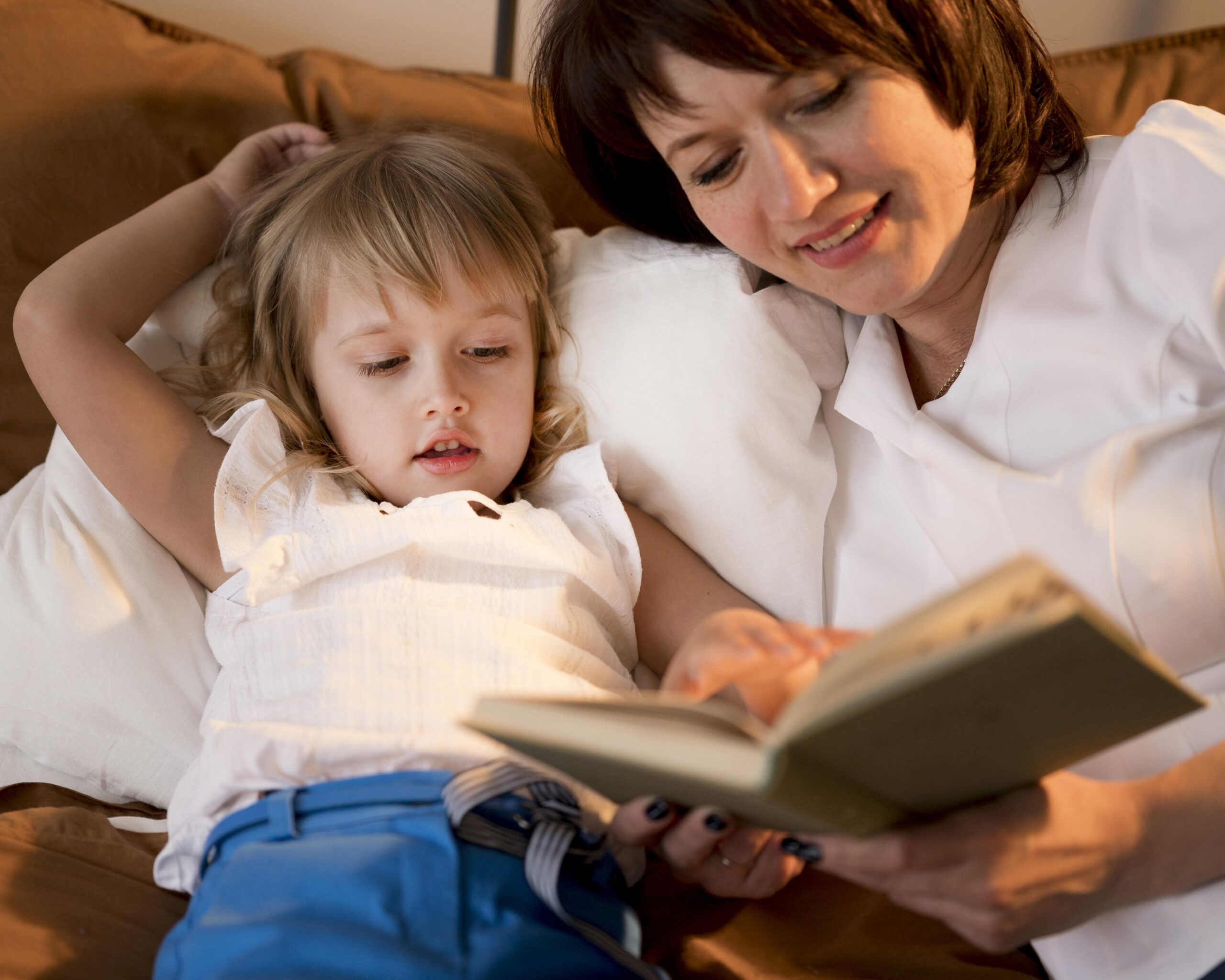
With his tales from a magical chocolate factory to a great glass elevator to a giant peach, British author Roald Dahl continues, even posthumously, to capture the imagination of generations of young readers. But the man himself was well-known for his anti-Israel and antisemitic views, an aspect of his personal story currently being explored on Broadway in the critically acclaimed play Giant. While his family issued an apology for his antisemitic statements in 2020, this came 30 years after his death.
Highlighting the transformative power of books like Dahl’s, World Book Day took place on 23 April. Yet in a climate where anti-Israel sentiment informs the attitudes of many leading arts and culture figures, it’s often hard to ignore the politics of authors we previously celebrated. This has increasingly become an issue since 7 October but as is the case with Dahl, there have long been prominent writers with antisemitic or anti-Israel leanings.
“So many writers in the 19th and early 20th century in England were antisemitic,” says academic and editor Dr Marcia Leveson. These include the Bloomsbury writers, including the likes of Virginia Woolf, EM Forster, and TS Eliot. In a world where “cancel culture” is rife – where we denounce public figures based on their socially “unacceptable” views – should we ignore the work of such literary greats?
“No,” argues Leveson. “What is gained? And how much is lost? There is no comparison.”
“Roald Dahl doesn’t express his antisemitism in his writing, so why deprive children of his wonderful imagination?” she says.
Publisher, editor, and host of The Book Mark on ChaiFM, Batya Bricker agrees. “The delight of Charlie and The Chocolate Factory. Or The Twits,” she says. “I wouldn’t want to have missed out on that, despite Roald Dahl’s odious reputation. For me, the story sits apart from the author’s views and choices.”
International bestselling author Joanne Fedler, a South African based in Australia, has a different perspective. “There is a deep paradox and mystery in the fact that hateful racists can produce works of great craftsmanship, some may even say of beauty. But I think there’s a difference between a work with soul or heart, and one that is simply ‘masterful’. Each of us has to grapple with the pull of appreciation against the discernment of our moral values. There are as many great writers steeped in humanity, tolerance, and open-mindedness as there are bigots.”
Yet, we cannot expect all the artists whose work we consume to adhere to our moral code and values, Bricker argues. “An accomplished author is merely a master of words and expression, not necessarily a role-model for living. Yet, as with all reading, the reader must be critical of what is read and what is consumed. Is it true? Is it laced with bias? With rhetoric?”
Bricker says that closing yourself off to brilliant writing or thought-provoking work is counterproductive, ultimately hurting you more than the author you’re trying to punish. This is also the case in consuming the work of more contemporary writers like Booker Prize-winning author Arundhati Roy, she says. Roy, a prominent Israel critic, recently withdrew from the Berlin International Film Festival when jury members suggested art should be separated from politics in addressing the Gaza war.
“I have been deeply enriched by reading Roy’s recent memoir,” says Bricker, “even if I don’t support her politics, or some other, unrelated choices she has made in her life. Admiring her work doesn’t mean I admire all of her.”
But Fedler says her thinking around this issue has changed. “Before social media and the cult of celebrity politics, it was easier to separate art from its creator,” she says. “But since 7 October, the waters have parted for me on many fronts.
“I can no longer watch movies with Susan Sarandon, Javier Bardem, or Mark Ruffalo [in them]. And I will no longer purchase or read books by authors who are openly antisemitic or have been vocal in ways I have found disturbing in the past few years.” This includes Irish author Sally Rooney, an active member of the Boycott, Divestment, Sanctions movement, who, in 2021, refused to sell Hebrew translation rights for her novel to an Israeli publisher. “There are enough books by authors I respect. I now go out of my way to buy books by Jewish authors. As readers, we can choose whose thoughts we want to consume and careers we want to support.”
Fedler, however, believes that nothing constructive is achieved by cancelling or censoring anyone. As a Jewish author, she has been subject to hatred. “Before 7 October, my Jewishness was ‘on the side’ of my literary identity. Then I was doxxed as part of a Jewish WhatsApp group of creatives. We were labelled the ‘Zio-600’ and called ‘genocidal baby killers’. It was a gross misrepresentation of who I am, what I stand for, and my values. But it has clarified for me that my Jewishness is at the centre of who I am. Everything I write is the result of 5 000 years of persecution and survival. I cannot influence or change how others perceive me. If I am cancellable, unpalatable, unacceptable because I am Jewish, I offer them … Roald Dahl and Sally Rooney.”
As victims of past and current boycotts ourselves, contemplating our approach to the work of those with whom we disagree has this added element. “One thinks of the Nazi banning of Jewish books, plays, art, and people,” says Leveson. “Where does it stop? Why ban or boycott things you don’t like? You can read and disagree or feel uncomfortable, but that’s your choice.”
Bricker agrees, stressing the dangers of closing our eyes to thought-provoking ideas and different ways of thinking. “Surely we have to read all sorts of views to know what we ourselves think?”
Nevertheless, she and Leveson argue for the need to call out those who spread lies or messages of hate, overt or subtle. “Where something written deliberately incites hatred, is untruthful, or propagates action against Jews and/or Israel – other than expressing the author’s viewpoint, which may be different from yours – you have a right to object,” says Leveson.