Lifestyle/Community
How to break the doomscrolling spiral

What begins as simple scrolling through social media easily spirals into hours upon hours of consuming distressing headlines, arguments, and negativity, otherwise known as doomscrolling.
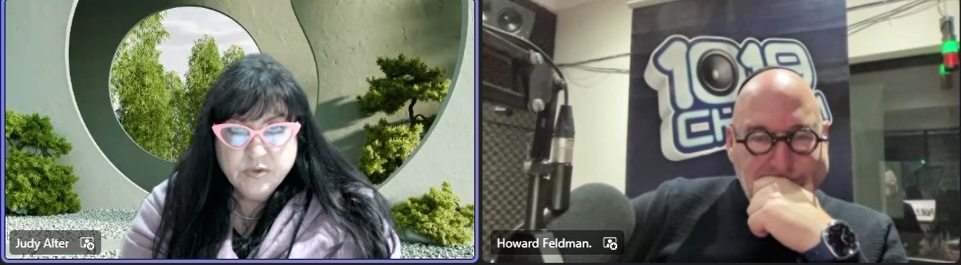
Talk show host and columnist Howard Feldman and psychologist Judy Alter, in a webinar hosted by the Chevrah Kadisha on 13 May, discussed how easily we’ve gotten sucked into doomscrolling, especially over the past two and a half years, but there are ways to combat this horrible habit.
“If you’re looking for some kind of reassurance or certainty, it’s highly likely your phone is not going to give that to you,” said Alter. “We have to be much more creative in terms of reading a book, going for a walk, meeting a friend, having a play date, calling somebody, doing the things that give us the real space of growth and connection.”
Alter said that doomscrolling provides a kind of chewing gum for the brain, which means that while it is interesting, it’s not useful, and can even be harmful to mental health.
Although it may seem that we are getting more and more connected to the world around us by scrolling, it is more often making us feel less and less in control.
“So the purpose of constantly checking is to make us feel better. And the result of the check is that we feel worse. And then when we feel worse, we need to check again to feel better. And so it becomes this endless vicious cycle of getting momentary satisfaction. And then going back to that place where we have to compulsively check, hear about it, speak to people about it, watch the news on a loop,” she said.
“We actually think that the dopamine that we get isn’t from the scrolling itself; it’s actually from the anticipation of finding something.
“It’s coming from the knowledge that you’re going to be able to scroll. It’s coming from the search. It’s coming from curiosity. Once we get that dopamine, we think that it will set us, but actually, it dysregulates us. And so once we dysregulate, we need more dopamine,” she said.
Alter likens doomscrolling to an addiction “because it activates certain chemicals in the brain that compel us, almost in an obsessive way, to do more and more of it. So it’s really about having a very hard think, taking a look at ourselves, and deciding what we’re going to read, what we’re going to allow, and what we’re going to start to turn away,” she said.
This is often difficult to do because that process has started to impact us and increase our level of anxiety.
“The problem with doomscrolling is that the more we scroll, the more we believe that scrolling is the solution to the anxiety we feel when we don’t scroll. And the difficult thing is that with any mild addiction, we get relief. We feel relief in the first few seconds. And then, of course, we read the news. It’s bad news, it’s personal, it’s a lie. And we begin to feel bad again. And so we set up the cycle again to look for other pieces of information that don’t corroborate that, which will help us to get relief,” she said.
“In the doomscrolling and in terms of our dopamine and our cortisol, we actually set up a cycle where it becomes compulsively repetitive. And that in itself will create more and more ill health.”
If you doomscroll long enough, you’re going to get all kinds of untrue things spouted at you, and the difficult part is that it’s interspersed with bits of true information. “And what that does to the brain is that it makes us believe everything. Because that’s the best lie, isn’t it? The best lie is when you intersperse it with the truth,” Alter said. “The brain isn’t very good at distinguishing between reading about danger and feeling as if we really are in a dangerous situation. So when we read about danger, the brain automatically puts us into a state of stress.”
Alter emphasised, though, that there is a difference between excessive scrolling and doomscrolling. The main difference is in how we feel after we get the information.
“If you can read the news and you don’t have to, then reread the news and you feel informed, and you hear what’s going on, and you move away and go and do another activity, you’re probably just checking out what’s going on in your world,” she said.
“If you’re doomscrolling and you feel worse afterwards, and feel like you need to find more information and feel more down, more distressed, if you’re feeling like you have to phone somebody or ask somebody, or you’re going to check again in a little while, then that’s doomscrolling, and that’s not healthy for you.”
Alter set up a few rules to keep us from doomscrolling. The first is to stop scrolling in bed. “Because you go in to check one thing, and then three hours later, you know the particular hardships of 15 different countries that are at war, what they’re saying, and the time has flown by. And that’s going to the blue light and the actual information, and that process stops sleep. And we’re pretty aware, for the most part, of how we’re affected if our sleep gets impacted upon,” she said.
Another rule is to set up a designated time for scrolling, so the constant checking is replaced with scheduled checking.
“The minute you start the algorithm of doomscrolling, you’re going to be pounded with that algorithm. So if you counterbalance your diet of bad-news scrolling with how to knit a jersey, how to cook a great lasagne, and whatever else may or may not interest you, it resets your algorithm.”