Lifestyle/Community
A grandfather’s story becomes The Boy in the Barrel

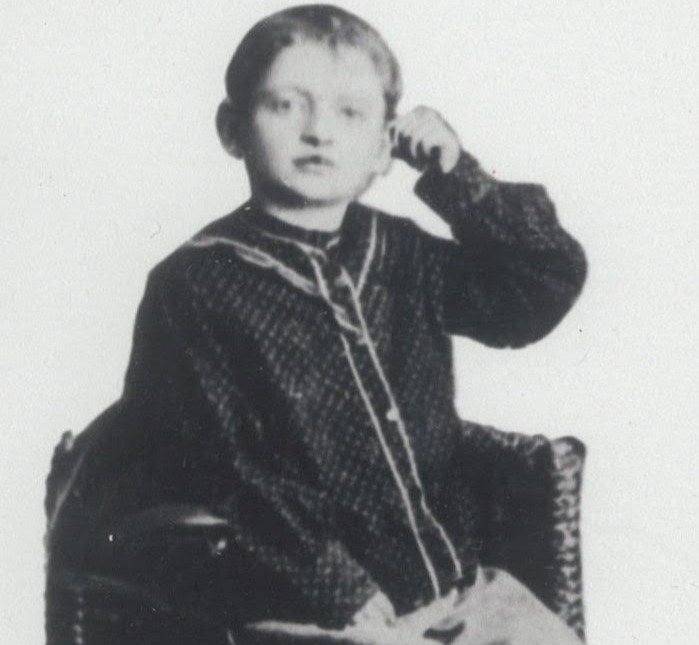
For as long as he could remember, South African expat Eric Lieberman knew the story of how his grandfather Izzy had come to South Africa, fleeing Vilna with his father in 1889. And how the father somehow vanished, leaving the boy to fend for himself.
Lieberman’s own father, aunts, and uncles repeatedly told how Izzy was able to make a life for himself in this new country, and about the people he met along the way. Even though he wasn’t an author, Lieberman set out some 30 years ago to write the story of his grandfather. It has finally become the book The Boy in the Barrel, released in April.
“With all the family stories, something was unsettling and unresolved, as though a voice had been silenced too soon and was still waiting to be heard. Over time, that feeling deepened into a sense of responsibility. I wasn’t just drawn to the story; I felt compelled to follow it, to understand it, and ultimately, to tell it,” he says.
Based on the true story of Izzy Lieberman, The Boy in the Barrel tells the fictionalised story of how, when Izzy is seven years old, he flees the pogroms with his father, Abraham, to start a new life in Cape Town, but is separated from him in the chaos of the port and left to fend for himself. Growing up on the streets, he survives alongside other homeless boys, before heading to the Kimberley diamond fields, where he endures years of hardship. More than a decade later, Izzy arrives in Johannesburg, and is unexpectedly reunited with the family he thought he had lost, discovering that even the abandoned can find their way home.
Eric Lieberman, who grew up in Johannesburg, was educated in both public and private Jewish schools and earned a Bachelor of Commerce degree, though his interests extended beyond academics. A lifelong musician, he performed as a professional drummer before moving to Los Angeles nearly 40 years ago and building a career in real estate. Alongside his work and music, he has pursued a passion for magic.
In order to create the novel, he also had to learn the art of writing. The process started with collecting all the interesting stories from his childhood. He then began putting them together, along with the historical context.
“What went into the writing was far more than research or craft. It became an emotional excavation. I found myself immersed not only in historical detail, the textures of Cape Town in 1899, and the looming shadow of the Anglo-Boer War, but also in the inner life of a child: the confusion, the fear, the fragile hope. Trying to inhabit the perspective of an eight-year-old boy, alone in a foreign land and believing he had been discarded, required a kind of imaginative empathy that was both demanding and, at times, overwhelming,” he says.
The novel took a long time to come together, as Lieberman had to manage family life, his career, and writing the book. Unfortunately he wasn’t able to release it before his father, Robert, passed away three years ago. But his dad did read the manuscript.
Lieberman says he wanted to ensure that the story was as close to the real-life experience of his grandfather as possible, but he had to use creative licence to make the story fit together.
“There were gaps that couldn’t be definitively filled, moments where the record went silent, and imagination had to step in carefully, respectfully. Striking the balance between truth and storytelling, between what is known and what is felt, was one of the greatest challenges.”
There were also practical frustrations: chasing down elusive details, verifying conflicting accounts, and occasionally realising that a beautifully written passage had to be cut because it strayed too far from the emotional truth of the story.
“Sometimes the line between writer and subject blurred; the act of telling his story became, in subtle ways, an act of understanding my own. I had set out to reconstruct a past, but I found myself also uncovering something present and deeply human,” he says.
“Amid the gravity of the subject, there were unexpected moments of lightness. At times, the characters ‒ particularly in their small, human details ‒ would surprise me. A gesture, a turn of phrase, even a scene that unfolded with an almost stubborn insistence on humour, reminded me that even in the darkest circumstances, life retains its unpredictability. There were moments when I would step back from the work and find myself smiling, even laughing, or crying, at something I hadn’t planned but somehow felt entirely true.”