





OpEds
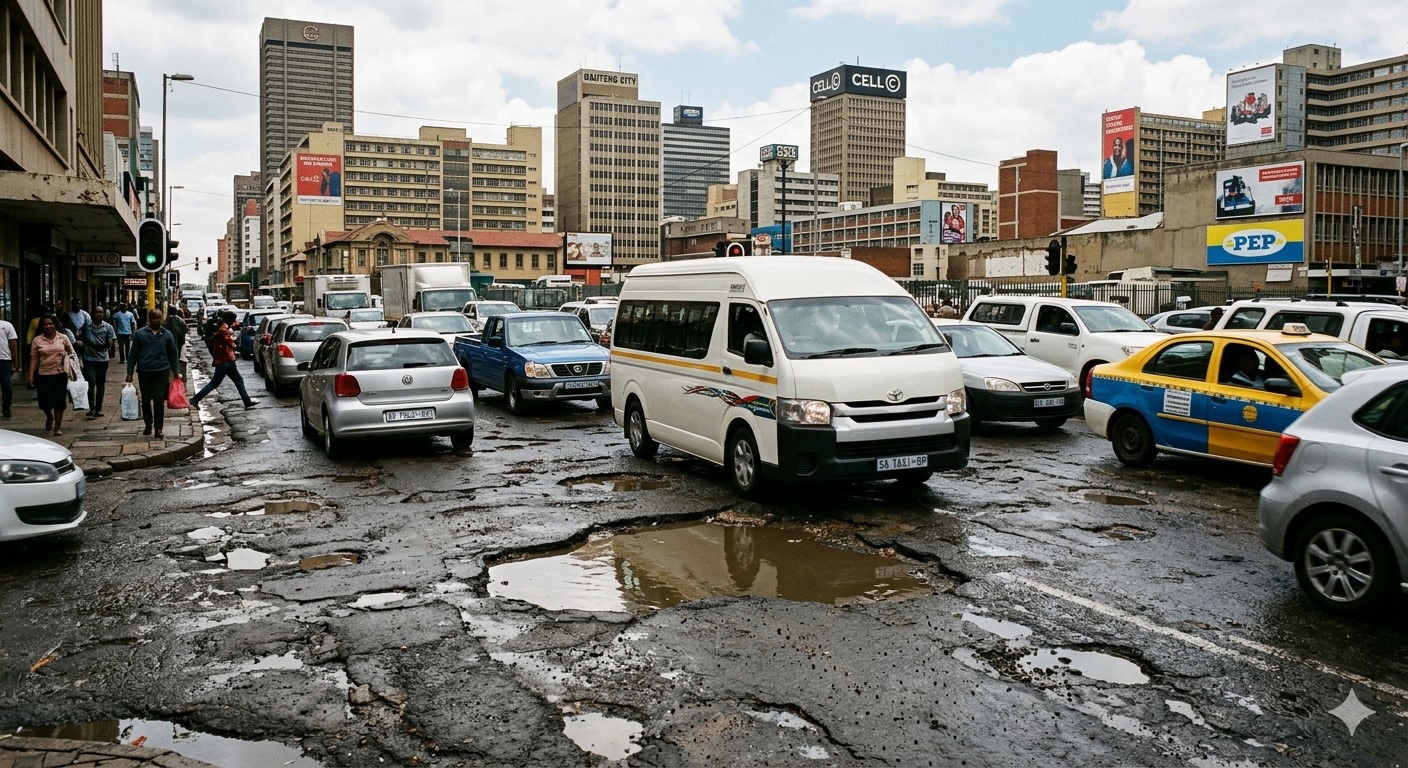
Joburgers want a city that’s golden, not holey

Finance Minister Enoch Godongwana’s recent letter to Johannesburg Mayor Dada Morero was, by the standards of South African intergovernmental relations, extraordinary. It stated plainly that the City owes creditors R25.2 billion while holding only R3.9 billion in cash, a shortfall exceeding R21 billion.
“This is a marker of severe financial distress,” Godongwana warned. That’s Treasury-speak for: Johannesburg is effectively broke.
The mayor insists the City is not legally bankrupt, at least not yet. Technically, he is correct, but the distinction between legal form and financial reality is wearing thin. The current ratio ‒ a basic measure of whether an entity can meet its short-term obligations ‒ is well below the crucial parity level of 1. In fact, the City now has cash on hand to cover only 9.3 days’ worth of expenses, well below the 30-90 day level required by National Treasury.
The City has been forced to borrow short-term money just to try to keep the lights on ‒ at least intermittently. Meanwhile, the roads crumble, the pipes leak, and the billing system sends out statements that bear only a passing resemblance to reality.
The immediate trigger for the latest crisis was a R10.3 billion wage deal signed with municipal workers in November 2025, rushed through ahead of the G20 Summit, without proper authorisation. This represents an 8.3% increase in employee-related costs – more than double inflation. Godongwana has told Morero this cannot be afforded and threatened to withhold R8 billion in national government grants for the City if it is not reversed.
But the wage deal is a symptom, not a cause. The deeper rot runs through every line of the budget. A third of the City’s revenue is eaten up by administration costs – mostly salaries. Money allocated for upgrading much-needed public infrastructure sits unspent ‒ by December, the City had used barely a quarter of its annual infrastructure budget. Moreover, repairs and maintenance expenditure remain well below National Treasury guidelines, compounding an infrastructure backlog now visible in every potholed road and burst pipe.
And then there is the waste. Staggering, almost unbelievable waste. Nearly a third of all the electricity the City buys from Eskom never reaches a paying customer. It disappears through ageing cables, illegal connections, and outright theft. Water is no better. Roughly half of the water pumped into the system generates no revenue at all. The city is haemorrhaging billions of rand every single year.
The November municipal elections may be the most consequential vote Johannesburg has seen in a generation. Helen Zille and the Democratic Alliance (DA), which polls suggest could emerge as the largest party, have been remarkably successful at turning Johannesburg’s decline into a political issue that can no longer be ignored. But exposing the collapse is easier than reversing it. The next administration, whether DA-led or ANC-led, will inherit a city running out of cash, credibility, and time. Turning Johannesburg around will require far more than snorkelling in potholes or abseiling off Ponte. It will require a programme of financial stabilisation, which will upset almost every organised interest group in the city.
Start with fixing municipal services. The electricity and water losses aren’t just an operational embarrassment, they are the City’s single biggest untapped revenue source. Public-private partnerships structured around loss reduction, with private operators paid from the efficiency gains they deliver, could unlock billions without requiring massive upfront capital expenditure. City Power and Johannesburg Water need genuine commercial autonomy, independent boards, and an end to political interference.
Next, the bloated bureaucracy needs to shrink: fewer entities, fewer cadres, and an honest reckoning with a wage bill that is consuming the budget from the inside out.
The City also sits on large amounts of land and property that it neither uses nor maintains effectively. Long-term concession agreements, ground leases, joint developments, and selective asset sales could generate infrastructure capital without additional borrowing. Cities around the world, including Cape Town, have effectively used these models to fund renewal and expand infrastructure capacity.
Finally, and probably the least popular: revisit rates. Johannesburg’s property rates collections underperform relative to the City’s economic footprint. Residents are far more likely to accept higher rates if they are accompanied by visibly improved service delivery. They will not accept paying more for the same dysfunction.
Cities don’t collapse all at once. They decline gradually, then suddenly. Godongwana’s letter was a warning shot that we are fast approaching the free-fall phase. A new administration in November with a credible financial turnaround plan is our last realistic chance to avoid it. We want a City of Gold, not a city of holes ‒ financial or otherwise.
- Michael Kransdorff is the chief executive of the Institute for International Tax and Finance and is a Harvard-trained development economist.







yitzchak
May 15, 2026 at 9:06 am
if i understand water and electricity revenues from paying residents are not ring fenced. i.e. utilities collected do not go directly to the suppliers., instead filtered and aggregated into the JCC general purse. So once the juggling in the finances are sorted I.e. burocrats are first at the trough, suppliers last.
I hope the semigration from Gauteng hasn’t taken DA votes with it.
I sold a house last year… am still waiting for my refund from the JCC a real bardak!
James Duncan
May 16, 2026 at 3:00 pm
It ain’t gonna happen, Zille’s ridulous publicity stunts notwithstanding. Joburg is finished….