News

Israel supporters join protest for freedom of religion

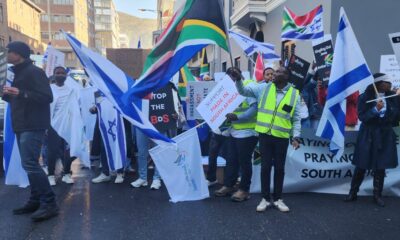
The Israeli flags waving above thousands of Christian protesters marching to Parliament in Cape Town last Thursday, 13 November 2025, represented a shared commitment to a single constitutional principle: freedom of religion.
The demonstration, organised by the South African Church Defenders (SACD) to oppose the government’s proposed regulation of churches, had an active presence from the South African Friends of Israel (SAFI), underscoring that the fight for religious autonomy is a non-denominational issue that has an impact on all faith communities, including the Jewish community.
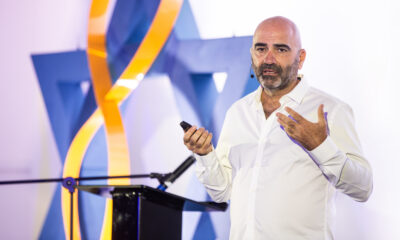
SAFI Executive Director Daniel Yakcobi emphasised the Jewish community’s vested interest in the march against state regulation. Though the proposal targets Christian organisations, the principle of governmental oversight, if established, could easily be extended to other minority faiths, including Judaism, he said.
Yakcobi said that the proposed regulatory framework, which critics fear would require faith leaders to obtain a licence to practice, would constitute an infringement on religious freedom. This measure, he said, is fundamentally an attempt at control, and any attempt to restrict the religious practice of one community ultimately threatens all of them.
“The regulation of churches would inevitably also affect synagogues,” Yakcobi said, positioning SAFI’s involvement as a proactive step to protect the Jewish community’s constitutional rights. The core concern among opponents is that legislated “self-regulation”, even if couched in protective language, amounts to a dangerous erosion of the independence of all religious institutions.
The march on 13 November was the culmination of mounting opposition to the efforts by the Cultural, Religious and Linguistic (CRL) Rights Commission to implement a new oversight mechanism for religious organisations. The CRL’s initiative, known as the Section 22 Committee, arose from a 2017 report on the commercialisation of religion and abuse of people’s belief systems. The commission asserts that the committee is merely a peer-review mechanism designed to facilitate a voluntary “self-regulatory” framework aimed at promoting accountability and curbing abuse within churches.
However, the Christian community, represented by the SACD and supported by legal advocates like Freedom of Religion South Africa, views the initiative as an unconstitutional attempt to establish state control over the internal life and affairs of the church. Opponents argue that existing laws dealing with crimes such as fraud, assault, and other misconduct are more than sufficient to address wrongdoing by any individual, including a religious leader, provided they are properly enforced. They contend that applying a regulatory blanket to the entire sector based on the excesses of a few charlatans unfairly infringes on the constitutional rights of the majority.
The Western Cape Provincial Christian March to Parliament drew an estimated 4 000 Christians, who came from across the province to present a memorandum to Parliament. The memorandum was received by Dr Zweli Mkhize, the chairperson of the National Portfolio Committee on Co-operative Governance and Traditional Affairs, who promised march leaders an opportunity to address the committee formally on their concerns. Beyond opposing the regulatory framework, demonstrators demanded the immediate dismissal of CRL Rights Commission Chairperson Thoko Mkhwanazi-Xaluva over previous statements critics believe demonstrate an anti-faith bias.
For the South African Jewish community, one of the most significant aspects of the event was the open display of Israeli flags throughout the procession. It was a powerful illustration of the connection and solidarity between the Christian Zionist community and the Jewish community in the country.
Adam Kepkey, a march participant, said the presence of the Israeli flag wasn’t accidental, it symbolised a shared faith heritage and the emphasis placed on historical roots in Israel. This expression of philosemitism and solidarity serves as a strong public signal of Christian support for the Jewish state, particularly in the face of the South African government’s increasingly critical foreign policy towards Israel.
Kepkey highlighted the appreciation the Christian community holds for the Jewish people globally. He pointed to the Jewish community’s significant contribution to nations in various fields, including science, agriculture, and technology. He also cited the historically disproportionate number of Nobel Prizes awarded to Jewish individuals as evidence that this small community has consistently acted as a “blessing to the nations”.
“Wherever Jewish people have gone, they come to build, they come to contribute,” Kepkey said, concluding with a message of support for the Jewish state. “We want to say that we appreciate the Jewish people in South Africa, all over the world, and in Israel. We pray for them, we stand with them, and Israel will never be destroyed. Israel forever!”
SAFI’s presence at the march was a measured response to protect the interests of the Jewish community. Its involvement reinforces the importance of protection for religious freedom for all South Africans, regardless of denomination. When questioned about future participation in the campaign, Yakcobi said SAFI would assess its involvement in anti-regulation events on a project-to-project basis.
He also reassured the South African Jewish community about the safety of their constitutional rights in the current political climate. The government of South Africa isn’t representative of the majority of the population when it comes to the principles of religious freedom and freedom of association, Yakcobi said, which remain protected constitutional rights. The collective effort at the march, unifying diverse communities in defence of these fundamental freedoms, demonstrates that civil society is robustly defending these rights.