News
‘A shift we can feel’: South African Jews in London respond to ambulance attack

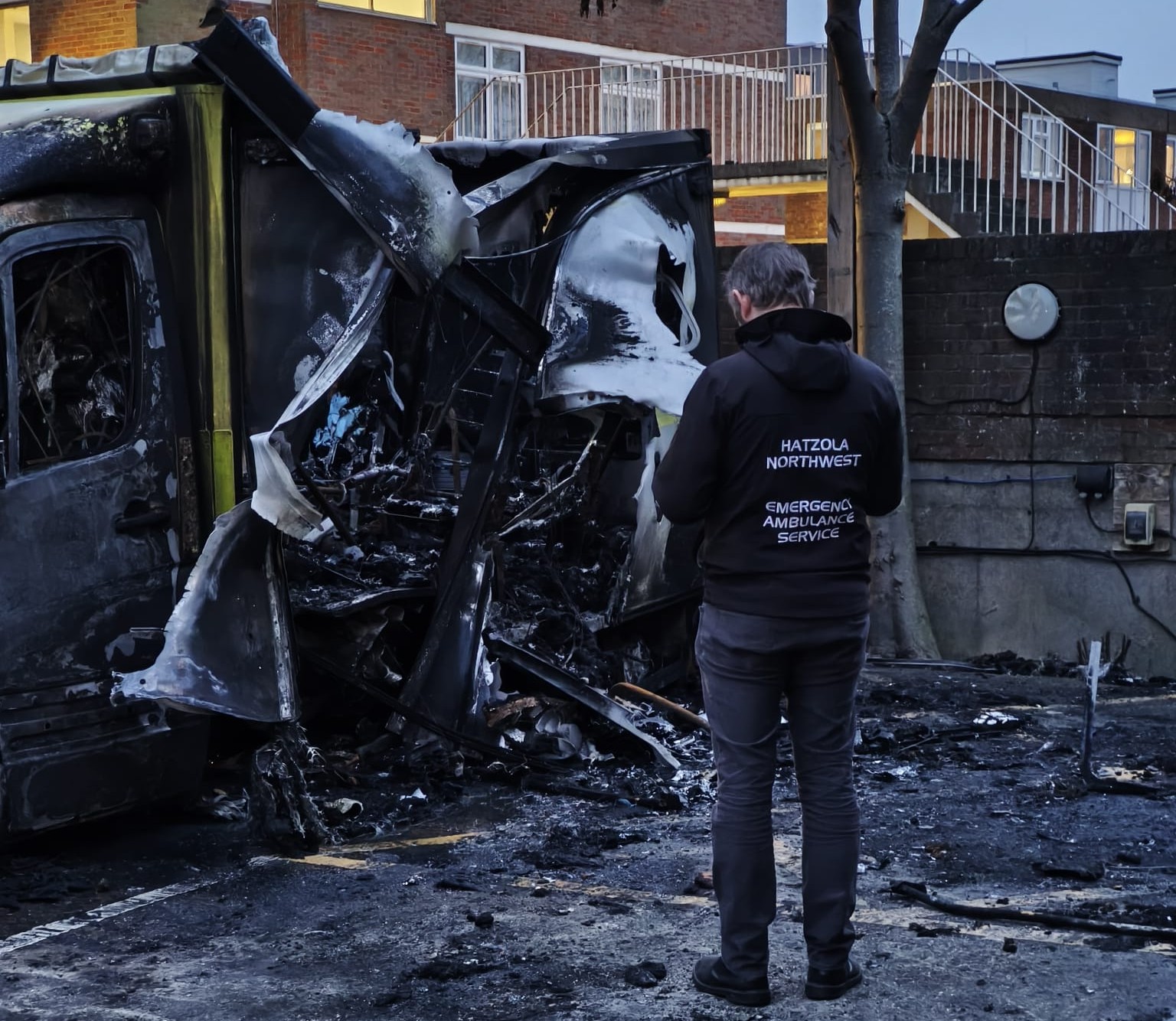
“It’s something shocking … but no-one is shocked,” was how South African-born Rabbi Sandor Milun described the firebombing of four Jewish community ambulances in the early hours of Monday morning outside Machzike Hadath Synagogue in Golders Green, North West London.
Milun, a member of the shul’s board, described the incident as both shocking and, in a troubling sense, expected. He brought up the series of recent attacks on Jewish communities globally that have created a sense that such violence was inevitable.
However, this suspected antisemitic hate crime, has horrified one of the United Kingdom’s most established Jewish communities and deepened fears amid a sustained rise in antisemitism since 7 October 2023.
The attack targeted vehicles belonging to Hatzola, a volunteer emergency medical service that responds to calls across London and serves both Jewish and non-Jewish residents. The fire broke out near a synagogue and communal buildings, and according to those on the scene, came dangerously close to causing far greater destruction.
Milun said the intensity of the blaze nearly led to catastrophic damage. Flames spread towards the synagogue, with fire entering the building itself. The flames were drawing closer to bookshelves of siddurim near the shul’s entrance, which if they grabbed hold of the books and timber, would have caused the shul to burn down.
“It was literally probably a minute or two away from catching on to the bookshelves. If that happened the shul would be down now,” he said, recounting how someone entered in the early hours of Monday morning and managed to extinguish the flames inside. Unfortunately, the shul sustained damages to its roof and stained-glass windows were cracked.
Political leaders responded swiftly. The United Kingdom’s Prime Minister, Sir Keir Starmer, described the incident as a “deeply shocking antisemitic arson attack” and expressed solidarity with the Jewish community. Sadiq Khan, London’s mayor, called it a “cowardly attack” and confirmed that police patrols in the area had been increased.
Two men, aged 47 and 45, were arrested on Wednesday 25 March in London on suspicion of arson with intent to endanger life.
For Hatzola, the immediate priority has been maintaining operations. Despite the destruction of four ambulances, the organisation continued to respond to emergencies throughout Monday. “Our phones haven’t stopped, our volunteers are responding to call-outs, and our service continues unbroken,” said Laurence Blitz, Chair of Trustees for Hatzola UK. He added that support from the London Ambulance Service and St John’s Ambulance, as well as government commitments to replace the vehicles, had enabled continuity.
Amy Lazarus, who moved to Golders Green from Johannesburg three years ago with her husband and children, said the incident had shaken what had long felt like a secure environment. “We all feel a bit shaken and a bit more on alert,” she said, describing Jewish neighbourhoods in London as something of a protective bubble that had now been punctured.
She drew parallels with life in South Africa, where strong community infrastructure can create a sense of safety within defined areas. “You feel safe because you know you’re in a bubble,” she said, adding that the attack had disrupted any such sense of certainty. Despite this, she said daily life continues, and visible expressions of Jewish identity haven’t changed. “Do I feel scared to go to shul? No. Does my son wear a yarmulke in public? Yes,” she said.
Stephanie Daleski, originally from Johannesburg and living just 500 metres from the scene, described waking to sirens on Monday morning and learning of the attack with alarm. “I was absolutely shocked … but this isn’t the first time something like this has happened,” she said, pointing to a pattern of incidents since 7 October, including vandalism and graffiti targeting Jewish businesses.
“It’s an incredibly scary time to be a Jew,” she said, adding that the sense of uncertainty is particularly acute for those who moved to the United Kingdom seeking stability. “You think, where to from here?”
She also stressed that the impact of the attack extends beyond the Jewish community. Hatzola’s services are used widely, and the destruction of ambulances affects emergency response capacity for all residents.
Paul Berger, who has lived in London for 25 years after moving from South Africa, described the attack as a turning point. “This ambulance attack feels like a marked shift from the disguised anti-Israel sentiment to unashamed blatant anti-Jewish attack,” he said.
He said that while Jewish life in North West London has long been vibrant and supported by strong communal organisations, the incident has unsettled that sense of normality. “We’ve always felt safe and secure,” he said, adding that the attack has left many questioning what the future holds. “Many of us remain concerned for the future of British Jewry and whether our kids are likely to make a life for themselves here.”
Milun linked the attack to a broader climate in which hostile rhetoric has become more visible and, in his view, more tolerated. “When you allow hate speech … it becomes normal and the next thing from speech is action,” he said, calling for stronger and more decisive government measures.
He also raised concerns about security disparities, noting that Jewish institutions often rely heavily on volunteers rather than formal protection. He described standing outside synagogues without adequate means of defence and said this was no longer sustainable.
The South African Jewish Board of Deputies expressed solidarity with the London community and described the attack as part of a wider pattern. “We are devastated and horrified at this act of violence,” said national chairperson Professor Karen Milner, referencing a series of recent incidents targeting Jewish institutions in the United Kingdom. She said that while condemnation from political leaders is important, broader and more coordinated action is needed to address rising antisemitism.
The attack comes at a time when antisemitic incidents in the United Kingdom have surged, with Jewish organisations reporting unprecedented levels of abuse, threats, and vandalism in the months following 7 October. Security groups have increased patrols and coordination with police, and additional measures have been introduced at Jewish schools and synagogues.
Despite these efforts, residents say the nature of the Golders Green attack represents a significant escalation, targeting not only individuals or property, but critical community infrastructure. For Hatzola, the focus remains on continuity and resilience. Blitz emphasised that community life has not stopped. “Our schools are open, our shuls are full, our shops, cafés, and restaurants are busy; life goes on,” he said.
Yet for many, the sense of unease persists. Milun described a community grappling with uncertainty. “It’s a real hollow feeling to feel you’re under attack,” he said, noting that conversations about leaving the United Kingdom have become more frequent in his community.
For now, Golders Green remains a central hub of Jewish life in Britain. But the burning of four ambulances has left both physical damage and a deeper psychological impact, raising difficult questions about safety, belonging, and the future of Jewish communities in the United Kingdom.