


World
JD Vance refuses to disavow Tucker Carlson

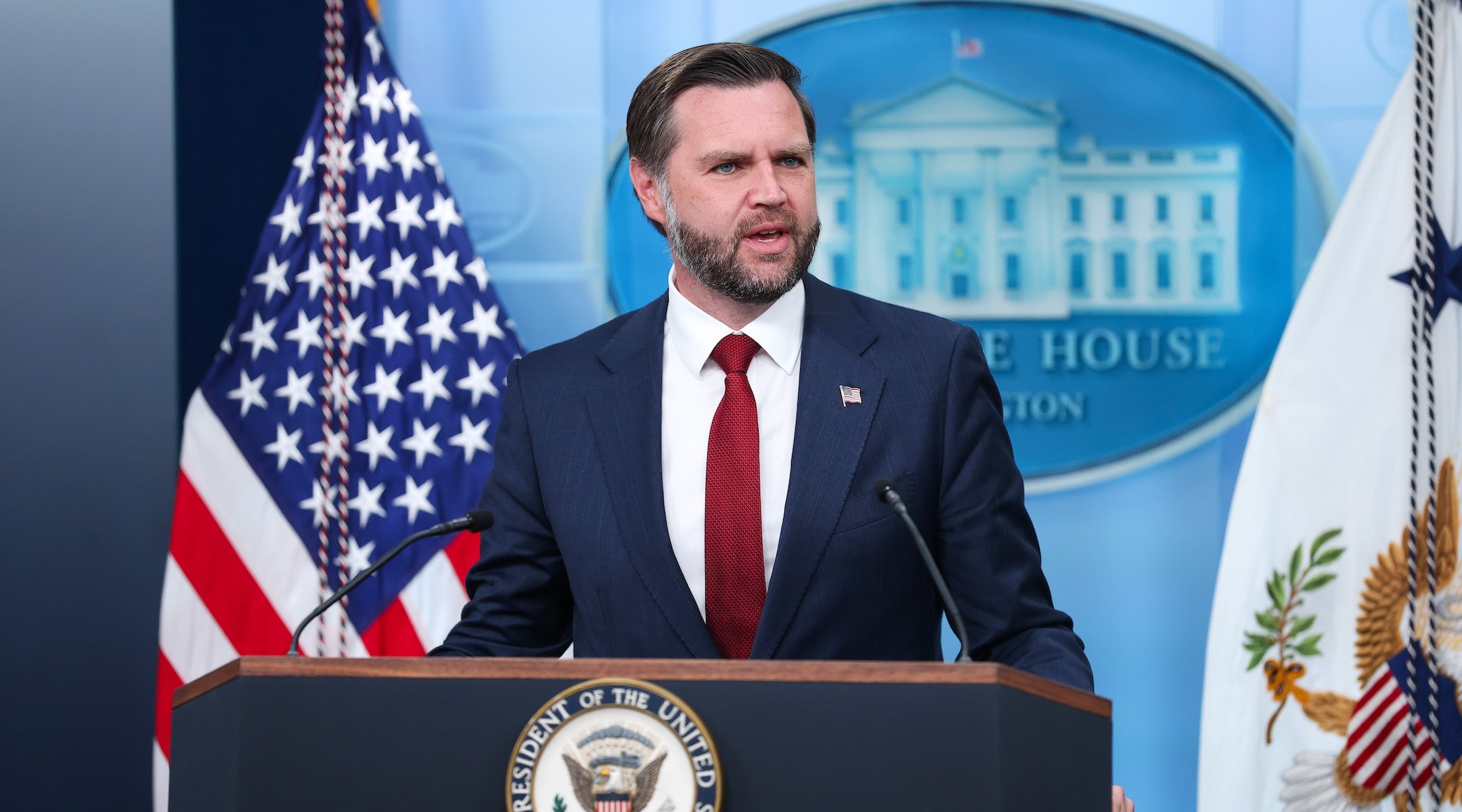
JTA – United States Vice-President JD Vance acknowledged that he has “political disagreements” with Tucker Carlson, the former Fox News personality who has spread antisemitic conspiracy theories and sparked a rift within the Republican Party.
But that won’t impact their friendship, Vance said during a press conference on Thursday at the White House.
“Everybody knows that Tucker Carlson and I are friends, and I think it’s very obvious that Tucker has said some things that I disagree with,” Vance said.
He pointed to Carlson’s criticisms of Vance’s boss, President Donald Trump, as well as Carlson’s suggestion that he would rather Democratic progressive Abdul El-Sayed wins Michigan’s US Senate seat than Republican Mike Rogers, as examples of where they disagree.
“Tucker is a friend despite the fact that we disagree on a number of things. And I’m not going to play the game where I throw friends under the bus because I have political disagreements with them,” Vance said.
His refusal to disavow Carlson comes days after he appeared in a closed-doors session in Las Vegas before hundreds of Republican Jewish Coalition (RJC) members, some of whom have indicated that they would prefer Secretary of State Marco Rubio to Vance as Trump’s successor in 2028.
His RJC appearance started and ended with standing ovations for the vice-president, and he spoke about the importance of the US-Israel relationship and denounced antisemitism during the 35-minute conversation. He angered a number of attendees and Jewish conservatives, however, when he sidestepped a question about Carlson and other controversial right-wing podcasters.
On Thursday, a reporter asked Vance about “those who are uneasy” with his close relationship with Carlson and believe that he is avoiding addressing questions about it.
“I’m not avoiding anything,” Vance countered.
After declining to distance himself from Carlson, Vance said that his refusal to do so should be a model for how other Americans engage in discourse across lines of disagreement.
“If you have a disagreement with someone politically – even over a deeply held issue – you should still be friends with that person, because the whole republic depends on people of different perspectives being able to talk to one another,” Vance said.