


World
Red tape, haircuts, and hugs: Thousands of lone soldiers gather in Tel Aviv for ‘Errands Day’

JTA – TEL AVIV – Two soldiers in uniform slowly approached one another. One exclaimed, “Hey bro! So great to see you!” as they embraced, their loud backslaps echoing across the expansive room in a display of physical strength and camaraderie.
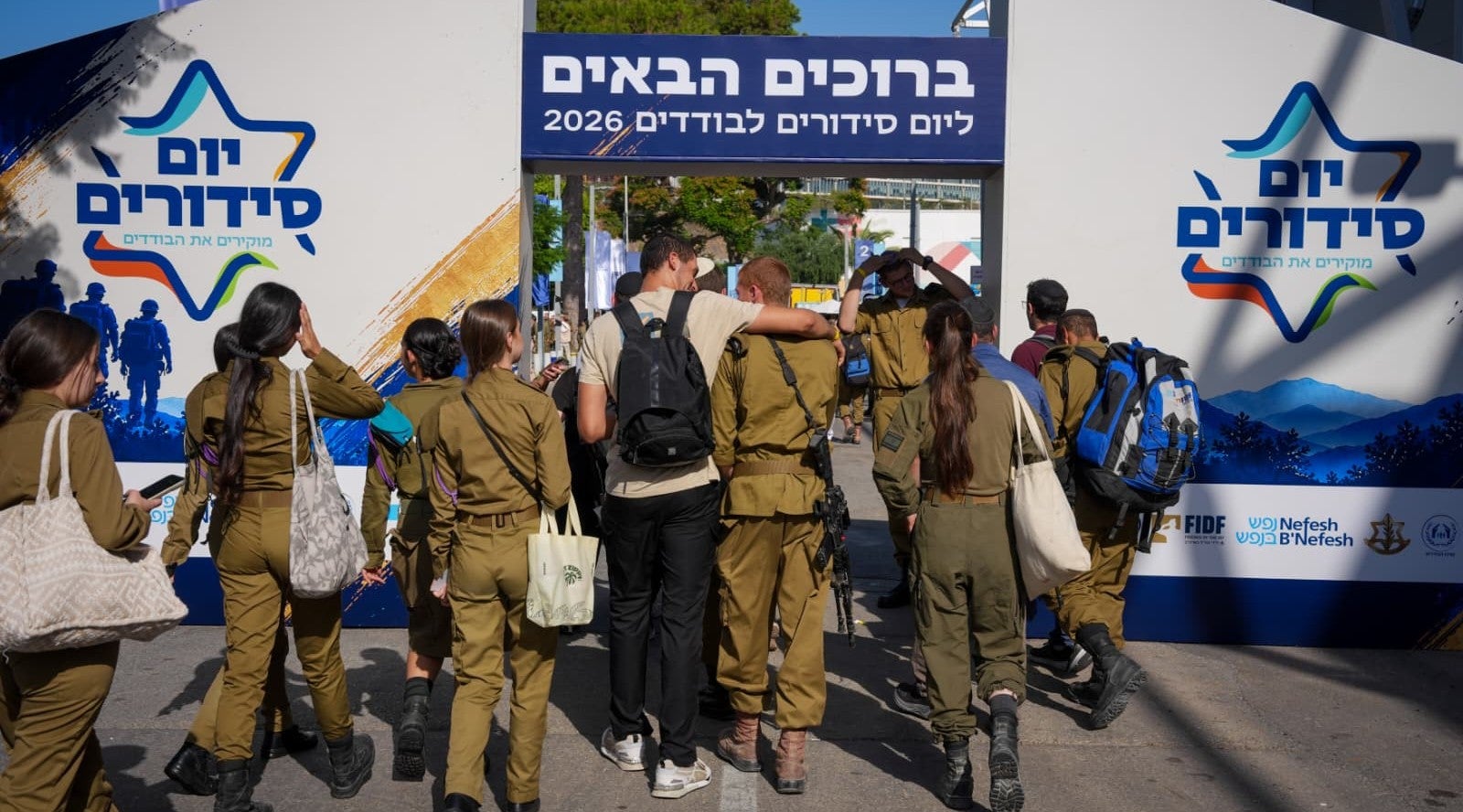
This exchange among friends was one of many at Expo Tel Aviv on a Thursday last month, where thousands of lone soldiers of the Israel Defense Forces (IDF) gathered for Yom Siddurim (Errands Day), an annual event that enables both active and reserve soldiers to tackle mountains of bureaucracy in a single space. Throughout the day, some 9 000 soldiers roamed around more than 70 stalls, which included representatives from government agencies, banks, non-profit organisations, and even a barber.
Two of the convention centre’s massive buildings were filled with throngs of young women and men in uniform. Lines flooded into the parking lot, where some attendees were taking driving tests in order to receive their Israeli driver’s licences, one of many everyday errands that can be difficult to schedule during active army duty.
Inside, one area was devoted to converting foreign driver’s licences, offering eye exams and photos. Israel’s Population and Immigration Authority operated 20 stations, issuing identity cards and passports. Elsewhere, soldiers could seek help with Bituach Leumi, Israel’s National Insurance Institute, as well as receive guidance on rental assistance, bank accounts, and legal questions. Volunteer seamstresses repaired uniforms.
The event, held for the ninth time, was organised by the Friends of the IDF (FIDF)-Nefesh B’Nefesh Lone Soldiers Program, in partnership with the Mofet Unit of the IDF Manpower Directorate and the Association for Israel’s Soldiers, as part of the IDF’s annual Lone Soldier Appreciation Week. The event is designed to help lone soldiers, those who serve without the support of immediate family in Israel, fast-track necessary bureaucratic tasks.
“The young men and women who make aliya and are required to serve in the IDF demonstrate a remarkable commitment to the State of Israel and to the future of the Jewish people,” said Shraga Weissmann, director of the Lone Soldiers Program. “Their contributions deserve more than our admiration, it carries with it a responsibility to ensure they have the support they need throughout their time in uniform. Yom Siddurim is an incredibly meaningful way we can help lone soldiers manage their day-to-day needs and remind them that they are supported every step of the way.”
Every year, more than 7 000 lone soldiers serve in the IDF, including more than 3 200 new-immigrant soldiers from across the globe who have moved to Israel and are then required to draft. There are also more than 4 000 native-born Israelis who serve but do not have close family support to help them throughout their service. Over the past decade, the Lone Soldiers Program has assisted more than 20 000 lone soldiers.
Many of those attending this year’s Yom Siddurim were between 18 and their early 20s, taking on military service at an age when peers overseas are beginning university or establishing careers. Among the new immigrants, the decision to come to Israel was a deeply personal one.
Sergeant J, 20, from New Rochelle, New York, moved to Israel two years ago – the 7 October attacks made him want to contribute directly to protecting Jewish lives, he said. “I want to give my time, I want to give my service,” he said. “If I can save at least one person, it’ll be okay.”
L, also 20, left Paris at 18. She said antisemitism had contributed to her sense of not belonging in France, and described coming to Israel as a decision to build her life in the country she regarded as her own. “I would be sitting on the train and feel that this isn’t my place,” she recalled. “I put my whole life in a suitcase.”
Religiously observant, L attended a Jewish school in Paris, but didn’t learn Hebrew until she arrived in Israel, through ulpan classes at a religious preparatory programme. Military service developed her Hebrew further. Now a combat soldier, she said the work could be tiring and difficult. “We know why we’re doing this,” she said, describing her wish to protect the country and its residents.
Staff Sergeant Shin, a Nahal Brigade soldier from Florida, arrived a month before 7 October to attend Keshet Yehuda, a religious preparatory programme in the Golan Heights. He said he was debating whether to enlist but the attacks settled that question for him. After completing the programme, he was drafted into the army.
Shin has served for two years and two months. Asked whether he was counting down, he answered, “I’m counting up.” His explanation was straightforward: “I’m enjoying my time in the army.”
Weissmann explained that while there are more than 3 000 lone soldiers from around the world currently on active duty, there are thousands more former lone soldiers who are serving in the reserves while building their new lives in Israel. To accommodate the reservists – many of whom have served hundreds of days since 7 October – the event allocated an entire building to them. Most of these reservists are around ages 25 to 30, and the event offered them access to more “advanced” services such as assistance with employment, applying to university, and obtaining a mortgage.
L came to Yom Siddurim looking for help with housing, bills, and finding out which benefits she could receive. She added that the hardest part of her service was being away from her parents. Sharing a home with new roommates in Netanya, she has built friendships with people in both military and national service. “Instead of family, I have friends here,” she said. “Even if I’m a lone soldier, I’m never alone.”
Maintaining contact with family abroad is another part of the support offered to lone soldiers. Weissmann said Operation Hug, also a partnership of Nefesh B’Nefesh and FIDF, has helped more than 1 700 parents travel to Israel to see their serving children during the war. Operation Hug has also expanded support for parents trying to understand their children’s experiences from overseas.
Sergeant Shin came to Yom Siddurim to get his driver’s licence and to reunite with friends. “Friends from all over,” he said. “Friends I drafted with. Friends that I met along the way.” Living in Modi’in with his “adopted” family while his parents, grandparents, and three siblings are in the United States, he described feeling welcomed in Israel and meeting people who helped him live independently.
Outside the convention centre, the atmosphere had something of a tailgate before a college football game. Staff served hamburgers and hot dogs, while foosball and air hockey tables, surrounded by music from the loudspeakers, drew soldiers onto the grass.
Mental health support was also featured at the event, including a booth from the IDF Lone Soldier Center, which provides a wide range of financial, logistical, and emotional support programmes for lone soldiers, and the IDF Casualties Directorate, which helps wounded soldiers navigate support systems.
Weissmann said their Lone Soldiers Program treats mental health support “like its physical first aid”. He emphasised that support continues after soldiers leave active service; for example, the Lone Soldiers Resilience Center in Tel Aviv, operated with FIDF and Sheba Medical Center, provides continued therapeutic care.
Looking to the future, L hopes to study law and become a lawyer. J, with about a year of service remaining, plans to study business at an Israeli university. Shin, who expected to finish in about six months, plans to stay in Israel, find work, and consider university. Voting in the election offered him another connection to the country. “Just another way of being part of Israeli society,” he said.
All of the lone soldiers interviewed said that seeing friends was a main reason they attended Yom Siddurim. But J’s account of what he had accomplished that day was more prosaic. “I got a passport, I got a driver’s licence, I got an international licence,” he said, adding, “I got a haircut.”
- This article was sponsored by and produced in partnership with Nefesh B’Nefesh. Founded in 2002, Nefesh B’Nefesh is dedicated to addressing the evolving national needs of the State of Israel through four key pillars: aliya, national service, national development, and Zionist education. In partnership with Israel’s Ministry of Aliyah and Integration, the Jewish Agency for Israel, Keren Kayemeth LeIsrael and JNF-USA, Nefesh B’Nefesh’s comprehensive support and social services have helped more than 95 000 North American olim to integrate into Israeli society. This article was produced by JTA’s native content team.