





Community
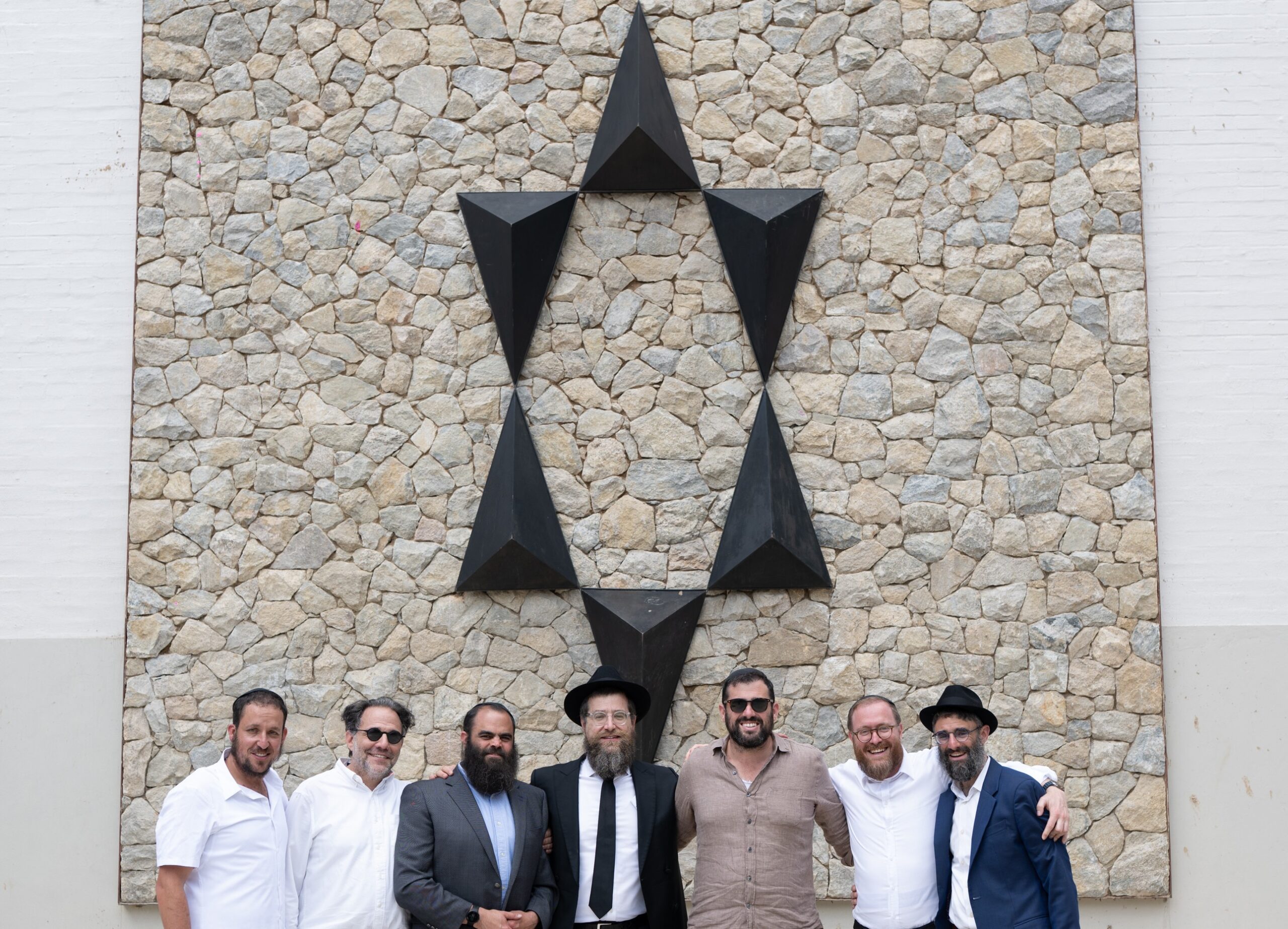
New Chassidim shul true to decades-old foundations

Decades after the original Chassidim shul that served as a spiritual hub for the community in Yeoville, Johannesburg, closed its doors, a new chapter began this week with the opening of a new shul at the HOD Centre in Orchards.
The Chassidic community celebrated the opening of the new shul on 23 November, the culmination of an idea that started in 2021. The shul, which stands alongside the Sephardic shul at the HOD Centre, will honour traditions while providing a vibrant home for prayer, learning, and connection for generations to come.
Started in the 1930s, the original Chassidim shul was located near Ellis Park. However, as time went on, the city needed more space for the M1 and offered to relocate the shul further up the road. So, on 1 December 1963, the shul opened at a new location in Harrow Road, Yeoville, where it became a central hub for the Chabad-Lubavitch movement in South Africa.
The cornerstone was laid in 1963 by Henry Jacobson in memory of his parents, longstanding members of the Chassidic community.
Chairperson of the Torah Academy School Board, Yisroel Stein, said that during the 1970s, it served as a landing place for chabadniks who were in South Africa on shlichut.
“In February or March 1972, the Lipskars, Rebbe Mendel and Mashi Lipskar, arrived from New York, , marking the formal start of the Chabad – Lubavitch movement in South Africa,” said Stein, “This became the centre where the shluchim were gathered and where the teachings of Chabad spread. The shul quickly became a hub of joy and community, changing the lives of those who came, and that was just the beginning.”
As Yeoville started to deteriorate, Jewish people moved to the northern suburbs of Johannesburg, and the number of Chabad shuls around Johannesburg increased. The shul closed its doors in Yeoville in the 1990s. Its members started Torah Academy Shul on the premises of Torah Academy school, where it is still active.
“Many of us started in the Torah Academy shul, and over time, that became where most of the Chassidim families lived and that’s where the community settled,” said Stein.
Chassidim shul Rabbi Nesanel Schochet said that in 2006, members of the shul started a young adults minyan, and in 2012, Torah Academy Young Adults Minyan assumed the name Chassidim Shul.
“When we started, we were in a single classroom in the Torah Academy school. It started small, and thank G-d, we are where we are today. But though size often is a testament to confidence, size isn’t the secret of our success.”
He said the community had become unique in that more than 40% of its young couples were internationals. In these partnerships, one spouse often comes from abroad, from places like England, the United States, Canada, Australia, and many others, often more developed countries than South Africa is credited as being.
“Our community is built in the light of the Lubavitch Rebbe’s teachings. Many of our members have been shaped by those teachings, whether through education or involvement in the community. The shul has become a true home for them, offering opportunity and a foundation for growth within a uniquely Chassidic identity,” said Schochet.
These couples are drawn to the community’s warmth, spirituality, purpose, and sense of brotherhood, qualities that shine even in a city with relatively few established Jewish institutions. Over the years, Schochet said, this diverse group has grown into a beautiful, tightly knit family.
“We went from being graciously hosted on shared school premises to taking an enormous leap: having our own beautiful campus with spaces for learning, children’s programmes, youth accommodation, a sanctuary, and venues for events and gatherings,” said Schochet.
The new premises include the main shul building, and a youth hall for boys, with one for girls on its way designed by David Alsfine from Alsfine-Angus Architects.
Hanging in the garden of the shul stands the original foundation stone and Magen David from the Yeoville shul, which works in tandem with the shul’s logo of a tree of life.
“It’s a beautiful reminder that there’s a rich history, a view of history that’s still alive today,” said Schochet.
Stein has vivid memories of walking to the Chassidim shul from Orchards. He remembers the palpable warmth on Shabbos and yom tov, how stepping inside made people feel alive, embraced, and uplifted. Even as a young child of seven or eight, the Magen David struck him as profoundly symbolic. For many, he says, their connection to the shul changed their lives. It marked the beginning of something truly beautiful that continues today, and the foundation stone and Magen David still capture that feeling.
“Our history is now part of us in a physical sense. I want to make one very beautiful point, which is part of the design of the campus, that the foundation stone and Magen David are situated above the children’s playground in our campus,” he said.
