World
Rabbis tell Mamdani: this is not going well

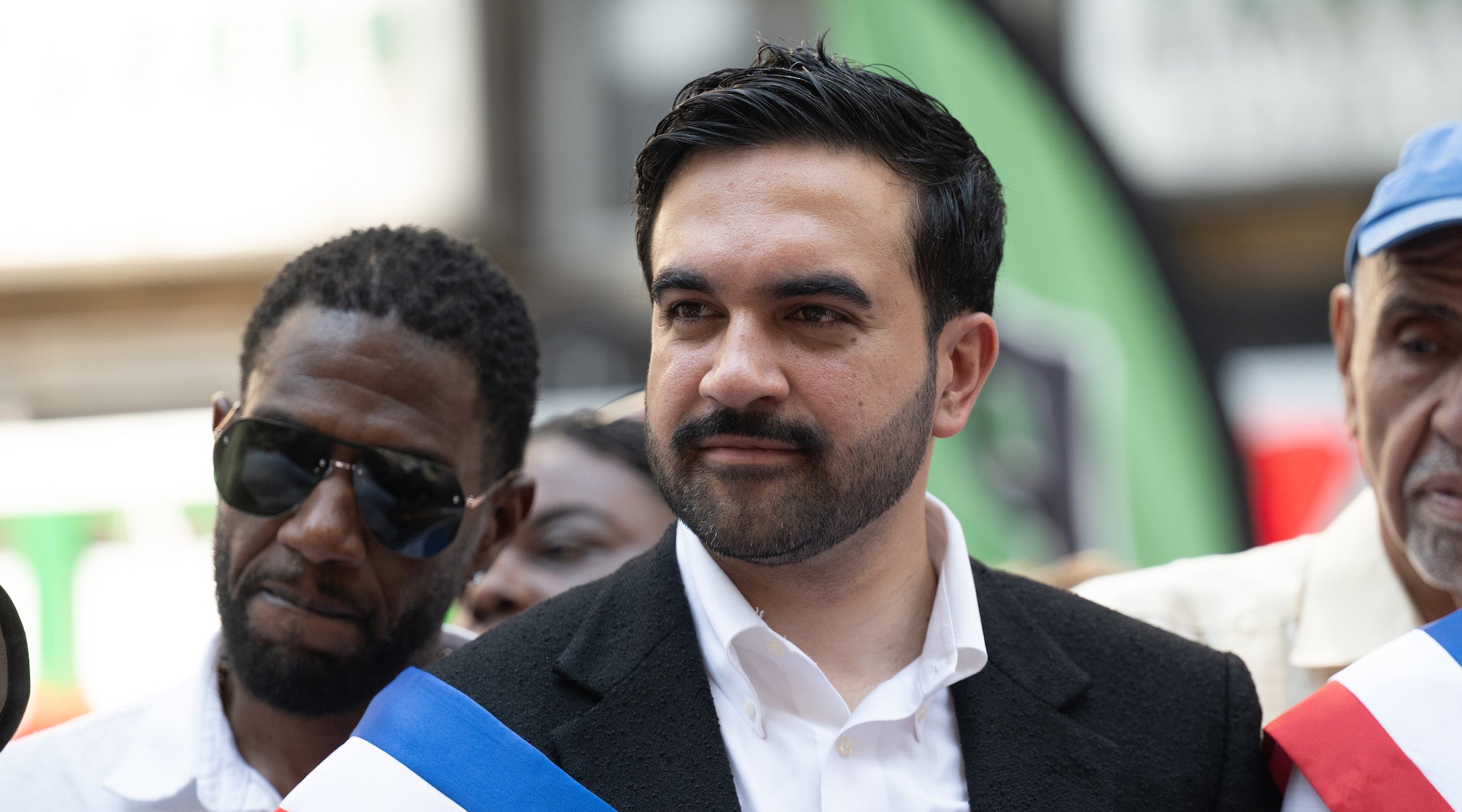
JTA – New York City Mayor Zohran Mamdani met a group of rabbis on Monday, 10 August, for a conversation that centred on concerns about the impact of his rhetoric on Jewish safety.
The meeting, which lasted roughly an hour, was initiated by Mamdani’s Office to Combat Antisemitism amid heightened tensions between the mayor and some Jewish New Yorkers over his increasingly sharp criticism of Israel and its government.
“We were there in our own unique voices to say to the mayor, this is not going well. The rhetoric about Israel, about its leader, the different issues, it comes across not as criticising a policy or some moment, it comes across as vilifying Israel, which we said is causing Jews in New York and probably elsewhere not just to feel less safe, but really to be at risk,” said Rabbi Rick Jacobs, the president of the Union for Reform Judaism and an attendee of Monday’s meeting.
Mamdani, an avowed Israel critic, has faced mounting scrutiny in recent months from Jewish leaders, including for his recent comments referring to lobbying organisation AIPAC (the American Israel Public Affairs Committee) as “monsters” and calling Israeli Prime Minister Benjamin Netanyahu a “war criminal” and the “architect of a horrific genocide against the Palestinian people”.
Following Mamdani’s attack on Netanyahu late last month, which came as he acknowledged he did not have the authority to arrest the Israeli leader, several critics of the mayor linked his rhetoric to a stabbing attack on two men, one of whom was visibly Jewish.
“No one was [at the meeting] trying to convince the mayor to change his views on Israel,” said Rabbi Jonathan Leener, leader of the Modern Orthodox Prospect Heights Shul, in an emailed statement to the Jewish Telegraphic Agency. “But there were certainly moments of tension and passion, particularly as people tried to convey how isolated and vulnerable many Jewish New Yorkers feel right now, and the extent to which some believe his rhetoric has contributed to that sense of vulnerability.”
Leener said he felt that the mayor was “genuinely engaging with us, acting in good faith, and listening carefully to our concerns, particularly our plea to help turn down the temperature”.
“Ultimately, I will judge him and his administration by their actions and by the results they deliver around making Jewish New Yorkers feel safe,” Leener added. “But I do applaud them for inviting us in, listening, and creating space for a candid and substantive conversation.”
Rabbi Rachel Timoner, whose Reform Park Slope synagogue, Congregation Beth Elohim, hosted Mamdani for a meeting with congregants during the mayoral race, said that while she didn’t know what the mayor’s next move would be, she hoped the meeting would be a “breakthrough moment”.
“The next time he criticises Israel, I would like to hear him in that moment simultaneously say, ‘The Israeli government is not the same as Jewish New Yorkers. It is not acceptable ever to take out your anger at the Israeli government against the Jewish people of New York. And if you are hearing me in that way, you are mishearing me. You are misunderstanding me,’” Timoner said.
Phylisa Wisdom, the executive director of Mamdani’s Office to Combat Antisemitism, told JTA in a statement on Monday that the group of rabbis included “several denominations, including Reconstructionist, Reform, Conservative, and Modern Orthodox, as well as unaffiliated groups”.
She said the meeting focused on “strategies to strengthen Jewish safety and belonging, maintain candid lines of communication, and collaborate on issues where we have shared values and goals”.
“It was an open, positive and constructive conversation,” Wisdom said. “Mayor Mamdani has and will continue to engage with Jewish life in New York City in order to meet the needs of our communities and reaffirm his commitment to the thriving of Jewish communities across the five boroughs.”
The meeting quickly sparked criticism from Rabbi Chaim Steinmetz, the leader of the Modern Orthodox Congregation Kehilath Jeshurun on the Upper East Side, who was not invited to the meeting and said the mayor should have worked with the New York Board of Rabbis to co-ordinate the roundtable.
“He could have reached out to the organised rabbinic community, but he chose not to because he was trying to pick a group of people that he thought might be more congenial to his particular politics,” Steinmetz told JTA.
Steinmetz, who has long been critical of Mamdani, said that while he had attended a meeting with the mayor previously, he believed the mayor was “absolutely insincere about caring about our concerns”.
Hours after the meeting, Mamdani posted on X a series of images of himself celebrating Pakistan’s Independence Day, a tribute that Leener said “reflects a broader pattern of double standards and the singling out of Israel”, referring to Pakistan’s expulsions of Afghans.
“Against that backdrop, I found it striking that the mayor felt comfortable publicly celebrating Pakistani Independence Day while choosing not to attend Israel’s Independence Day celebration in June,” Leener said. “The contrast reinforces a concern many of us raised in the meeting: that Israel is too often held to a different standard.”
As New York’s Jewish leaders look for signs that Monday’s dialogue will translate into action, Jacobs said he hoped the mayor would prioritise conversations across the spectrum of New York Jewry.
“I hope that the mayor will prioritise, as he seems to do in other communities, to be in conversation, in dialogue, in relationship not just with the people who are broadly supportive, but also those of us who have been publicly critical, as I have been, and I know others have been as well,” Jacobs said. “That’s the obligation of leadership.”