





National Jewish Dialogue
SA Jews leave their mark – and will do so wherever they are

“It takes a village to raise a child.” This is a truly fitting quote to describe the importance of community in general, and the South African Jewish community in particular, small in global terms, but of great significance within the broader Jewish diaspora.
Most South African Jews trace their origins to Lithuania and other parts of Eastern Europe, particularly within the Pale of Settlement in the Russian Empire. That included present-day Latvia, Belarus, Ukraine, and Poland. The vast majority, somewhere between 80% and 90% of South African Jews, are Litvaks, i.e. descendants of Lithuanian Jews. Arriving in dribs and drabs, by the middle of the 20th century, South Africa’s Jewish population had peaked to about 120 000.
Today, by contrast, the Jewish community here numbers much less than half, with some estimating between 50 000 and 70 000. That’s down from the 1970 population of about 118 000. It has since decreased by more than 65%.
And yet, our community punches far above its weight, exceeding expectations, and in areas over-achieving. This is because it has managed to maintain a strong religious and cultural coherence and a strong Jewish identity through the establishment of synagogues, schools, cultural organisations, and – that dreaded word that now has such negative connotations – Zionist movements. From all this infrastructure has resulted a vibrant, tightly-knit community determined not only to contribute to the growth and development of South Africa, but to prioritise religious education, cultural preservation, and political advocacy.
On a more practical level, the South African Jewish community is exceptionally well organised in its charitable work, from social welfare to elder care, and from mental health services to food distribution. In addition, those Jewish organisations that work for the broader community, irrespective of colour, creed, or belief, have given dignity to the adjective “Jewish”, one favoured by so many who have so little. This is a community that cares for its own and has built enduring systems to do so.
This sense of belonging and mutual responsibility creates a safety net – social, spiritual, and emotional – that’s rare even among diaspora communities.
This is in contrast to many other diasporic communities that assimilated rapidly. The Litvak ethics, values, principles, the norms and mores, must take credit for these successes.
Small in number but giants in the country’s commercial, intellectual, and political life, numerous South African Jews made remarkable strides in business, law, medicine, academia, and almost more importantly, in the anti-apartheid movement. At great personal risk, figures like Helen Suzman, Joe Slovo, and Albie Sachs displayed strong moral courage in exposing and opposing racial injustice.
The South African Jewish community displays a unique blend of historical depth, cultural richness, strong communal infrastructure, and a deep sense of identity and solidarity. To be a South African Jew is to be part of a global family, with shared roots and mutual recognition.
South Africa’s growing political instability, increasing crime rates, and hesitancy about the future of the country, starting in the late 1970s, led to massive emigration, resulting in a large and dynamic South African Jewish diaspora. Israel, the United Kingdom, Australia, Canada, and parts of the United States now boast South African émigrés strongly focused on community involvement, solid and resilient Zionist – there’s that word again – leanings, and high levels of Jewish and other literacy. Committed to Jewish education, traditional shul life, and disciplined communal structures, these attributes have enabled them to integrate seamlessly into existing Jewish communities, often becoming leaders and influencers.
Our émigré communities have taken on lives of their own, enriching their host communities by setting examples of how small but cohesive populaces can maintain religious and cultural continuity over generations; can support Zionist causes and participation in unified Jewish society even in the face of violence and protest; and can contribute their unique cultural voice which combines a legacy of struggle against injustice, a deep commitment to education and faith, and a global outlook.
Resilience and determination to overcome displacement as soon as possible add volumes to the success of our South African diaspora communities; and their influence is evident in synagogue life, educational initiatives, and philanthropic activity in their adopted countries.
Today’s world is marked by insecurity, uncertainty, chaos, and fragility, with the looming threat of multiple devastating wars. While antisemitism has reached its highest levels since the early 1940s, South Africa remains comparatively less overtly hostile than many other countries.
Despite this relative safety, emigration from the local Jewish community continues steadily. Yet, many Jewish families have chosen to remain, committed to building their lives here, believing that South Africa still holds immense potential and opportunity.
Should the community continue to shrink significantly – a possibility we hope remains unlikely – there is still a silver lining. Wherever South African Jews settle and establish new communities, they bring with them their distinctive values, traditions, and communal spirit. Their influence becomes woven into the fabric of Jewish life in those places. We will leave our mark, ensuring that the legacy of South African Jewry endures and enriches Jewish communities around the world for generations to come.
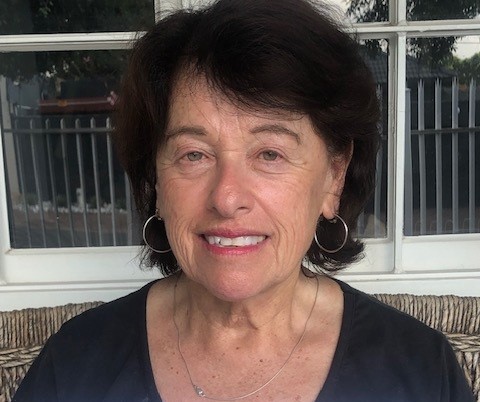
- Bev Goldman is a teacher, lecturer, editor of “Who’s Who of Southern Africa”, SAZF media head, SAICC Israel desk, National President of the UJW SA and consultant to the ICJW.



