OpEds
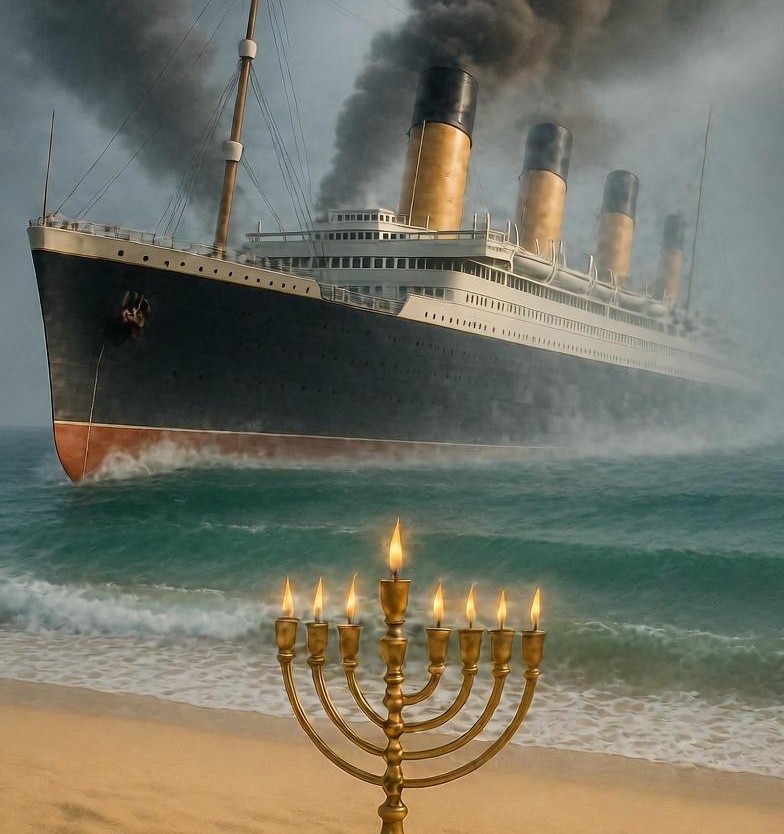
The end of deckchair Judaism – a lesson from the Bondi Beach massacre

We comforted ourselves with the fantasy that if antisemitism ever surged, it would show up slowly on the radar, giving us time to sip our tea and reposition our deckchairs. Instead, Bondi Beach on Chanukah was the iceberg that didn’t bother with introductions. It just tore into the hull.
The message could not be clearer: The era of “not getting involved” is over.
The ship has sailed, and if you’re still rearranging your seating, hoping the storm will pass, you’re going to get wet.
For years, many of us convinced ourselves that disengagement was an option. That if we kept our heads down, “didn’t make trouble”, or avoided awkward conversations, things might stay manageable. We created entire philosophies around our own silence. We called it balance, perspective, and pragmatism.
But Bondi Beach shattered the illusion. If Jewish families can be slaughtered on a beach in Australia, a place we associate with sunscreen, surfers, and overconfident seagulls, then the idea that any of us are distant from this reality is pure fantasy.
And while we’re here, let’s address a particularly delicate group: Jewish business leaders who suddenly develop acute moral back pain whenever asked to stand up. Those who murmur, “I have a responsibility to shareholders”, as if fiduciary duty excuses disappearing when their voices are needed most.
Their statements, so neutral they could have been written by a glass half-full Muizenberg weather forecaster saying, “It’s a perfect beach day, or would be if the wind dropped and it stopped raining.”
But history is not kind to neutrality. And “I didn’t want to upset the board” is not going to satisfy our grandchildren when they ask what we did during this period of rising Jew-hatred. Being a leader doesn’t reduce the obligation to speak. Quite the contrary.
Because here’s the truth. If we don’t stand up now, more will be asked of us later. Much more.
“Standing up” doesn’t require heroics. It doesn’t mean marching down streets or shouting into megaphones, unless you enjoy that, in which case, kol hakavod. It means the basics.
- When someone posts lies about Jews or Israel on a WhatsApp group, we don’t look away.
- When a colleague makes a snide remark at a meeting, we don’t pretend we misheard it.
- When misinformation is dropped into a conversation, we don’t tell ourselves, “It’s not worth it.”
- Because if it’s not worth it now, it will certainly cost us later.
And yes, it’s December. But the antisemites are energetic. They don’t take leave.
They don’t say, “I’m exhausted, I’ll hate Jews again in January.”
So we don’t get to switch off either.
One day, and that day will come, our children and grandchildren will ask us, “What did we do when the world turned on Jews again?”
And if our answer is, “Well, I didn’t want to cause drama on the WhatsApp group,” or “upset the board,” then we have failed them.
Bondi Beach is an SOS.
It’s a clear reminder that safety isn’t a spectator sport and that silence isn’t neutral. It’s a reminder that we cannot outsource responsibility to “the community”, “the leadership,” or “someone braver than me.”
We don’t have to be heroes. We just have to stop pretending that staying seated quietly on the deckchair is an option while the ship is clearly in trouble.
And yes, quoting Purim at a time like this, in the wake of a Chanukah massacre, is mixing up our festivals. But the message doesn’t expire just because the latkes are still in the fridge.
Mordechai’s warning to Esther echoes right now, louder than ever. “If you keep silent at this time, relief and deliverance will come from somewhere else. But who knows if you weren’t placed here for exactly this moment?”
The Jewish people will survive, we always do.
The question is whether we will step up, speak up, and stand up while the ship hits the iceberg. Or will we sit quietly on the deckchairs and pretend someone else was meant to act? It’s time to realise that we are no longer passengers. We’re crew.