





OpEds
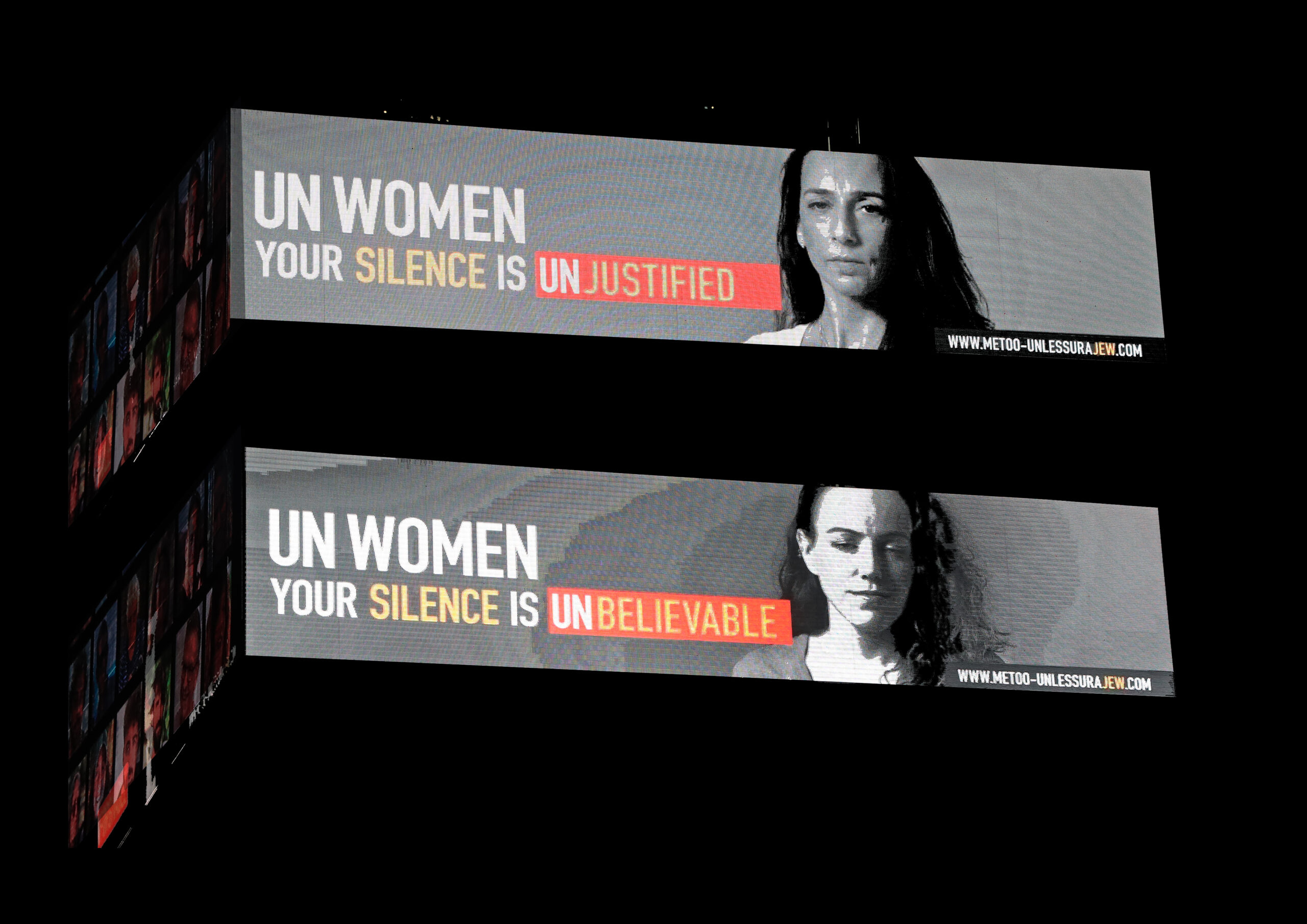
Outrage over UN envoy downplaying 7 October rape

Recently, Reem Alsalem, the United Nations (UN) Special Rapporteur on Violence Against Women and Girls, made headlines by claiming on X that “no independent investigation found that rape occurred on October 7”. Her remarks have provoked outrage, and rightly so, because they directly undermine well-documented findings from both the UN’s own fact-finding mission which led to the report by Pramila Patten as well as an independent analysis by the Dinah Project.
Here’s why Alsalem’s framing is deeply problematic, and why we must criticise it.
Pramila Patten, the UN Special Representative on Sexual Violence in Conflict, led a mission in early 2024 that produced a report stating there were “reasonable grounds” to believe that Hamas committed rape, gang rape, and sexualised torture during the 7 October 2023 attacks at the Nova festival and surrounding areas. The mission reviewed more than 5 000 photos and many hours of video. They also conducted in-depth interviews with eyewitnesses, first responders, released hostages, and healthcare providers. They documented patterns that are strongly suggestive of sexual violence, for example, bodies – mostly women – found partially or fully naked from the waist down, with hands tied, many shot in the head.
The report explicitly notes its limitations in that Patten’s mission wasn’t a criminal investigation and didn’t have prosecutorial powers. Crucially, they didn’t interview any victim of sexual violence as those who survived were at that time too traumatised to speak about their abuse. These findings aren’t speculative but the verified results of a UN-led fact-finding investigation.
The Dinah Project, a collective of Israeli legal, gender, and human rights experts, published a separate, in-depth report in July 2025 titled “A Quest for Justice”. Its research strengthens and deepens what Patten found, framing the 7 October atrocities not as spontaneous chaos but as tactical, systematic sexual violence.
It documents at least six locations where sexual violence was reported – the Nova festival; Route 232; the Nahal Oz military base; and several kibbutzim – Re’im, Nir Oz, and Kfar Aza. Its evidence includes eyewitness testimony and reports from former hostages; first responders; morgue staff; and health professionals. The patterns are consistent with victims found naked or semi-naked, often bound, sometimes tied to poles or trees, sometimes subjected to gang rape, executed, or mutilated. It also documents sexual violence during captivity including forced nudity, threats of forced marriage, abuse, and humiliation.
Importantly, it highlights the evidentiary challenges, which means that traditional legal methods may fail. It proposes new legal frameworks which take into account the lack of survivor testimony, calling for collective responsibility (command structures); lower evidentiary thresholds; and international mechanisms that can still hold perpetrators accountable. When Alsalem claims, “No independent investigation found that rape occurred on the 7th of October”, she overlooks, misrepresents, or downplays the well-respected Patten and Dinah Project reports.
Alsalem claims that there was no systematic or genocidal use of rape, stating that “neither any other independent human rights mechanism established that sexual or gender-based violence was committed as a systematic tool of war or as a tool of genocide”. But the Dinah Project explicitly presents its findings as a weapon of war, not just a byproduct of violence.
Her characterisation ignores the practical and legal challenge that many of the most grievous claims cannot be “verified” in classical forensic ways because the victims are dead and the trauma is such that survivors cannot testify. That doesn’t diminish the credibility of the accounts it reflects, and amplifies the brutal reality.
Alsalem’s framing of “no independent investigation” seems to be an intentional strategy to delegitimise the suffering of Israelis. This clearly demonstrates once again the conscious bias against Jews as being immune to harm and violence. It reflects a pattern where Jewish or Israeli suffering is treated as not credible or valid. It rests on historical antisemitic tropes such as “Jewish claims are exaggerated or fabricated”; “Jews are self-victims”; or “We won’t trust them.” It also draws from the “coloniser” versus “colonised” construct that the “powerful” Jews can never be victims and that the “righteous” Hamas operatives could never be perpetrators of acts of sexual violence. There is also the belief that “Israel had it coming to them”, and that any civilian in the context of this conflict is fair game.
If sexual violence on 7 October isn’t recognised as systematic, it becomes all the harder to demand accountability. Legal frameworks may not adapt, and perpetrators may escape justice. Survivors and their families may feel disbelief and retraumatised if high-level UN officials cast doubt on their accounts. If international institutions don’t properly acknowledge what happened, future generations may misremember or misunderstand the full scope of the atrocities.
Alsalem’s recent statement cannot stand unchallenged. Her role as an appointee of the UN to report on the proceedings of its meetings demands that she has a responsibility to relay evidence, not dismiss it. Denial or equivocation from UN representatives not only dishonours victims, but undermines the possibility of justice.
As a Jewish community that values memory, justice, and the dignity of all human beings, we must demand clarity, accountability, and truth not just for the sake of history, but for the sake of surviving victims and future generations.
- Rozanne Sack is a co-founder of Koleinu SA, a helpline and advocacy organisation for victims of gender-based violence and child abuse in the Jewish and wider community.




yitschak
November 20, 2025 at 1:43 pm
Reem Alsalem must get the “Award of the BulBul” this week.
She wouldn’t recognise a bulbul in the flesh.Maybe she has been reamed too often