





OpEds
Polyfilla for presidents: Joburg’s G20 clean-up and the cost of pretending

It’s Sunday, 2 January. We’re in Plettenberg Bay. The car is packed. Everyone has promised their boss they’ll be back at work on Tuesday. One problem: the turbo air-intake pipe has cracked clean through. Everything is closed. But we need to hit the road. So, we do what every South African does when desperation meets confidence: we innovate badly. We find a hardware store. We buy a rubber plumbing pipe not designed for engines, and slide the broken pipe through it. We reinstall it, tighten the clamps, and congratulate ourselves.
On the tar road, the car runs beautifully. We’re geniuses. Then we reach Prince Alfred’s Pass, a remote, winding dirt road up a mountain. No signal, no civilisation, and halfway up, our brilliant DIY fix collapses. The car loses all power. We’re stranded in the dust, surrounded by silence and regret. The lesson is immediate: quick fixes always fail on the next hill.
I’m reminded of that story every time I look at what’s happening in Johannesburg. Because right now, the G20 is coming, and the city is applying Polyfilla to its collapsing foundations.
Johannesburg is in a panic. And whenever global attention swings our way, the city snaps into a frantic performance, suddenly remembering that pavements exist, potholes matter, and weeds don’t belong between bricks.
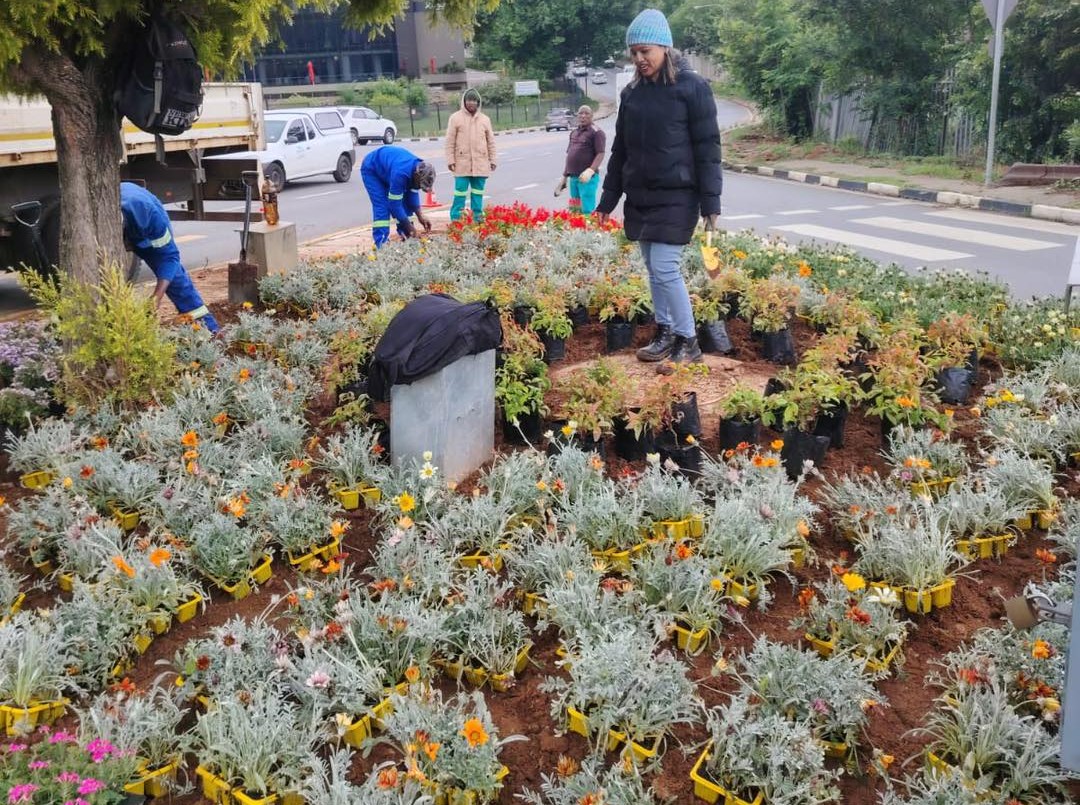
What we’re seeing right now isn’t urban management, it’s municipal makeup artistry. A bit of filler here, a bit of paint there, a mad rush to finish a Rea Vaya stretch, and an all-hands-on-deck clean-up for the tiny slice of the city where motorcades will pass.
Two blocks away? The same decay as always. This is the high-impact illusion. It looks impressive from a distance, but it’s a movie set: staff pulled from across the city to blitz one area for a few hours while the real problems remain untouched. It’s Joburg’s classic formula: impress the guests; ignore the residents.
The backlog behind the façade
But the illusion isn’t free. In fact, its cost is devastating. While every available truck and all available staff are yanked from their depots to sprint around Sandton, the rest of Johannesburg is left to burn. Urgent issues in every ward are being ignored. Backlogs are exploding. And residents will hear the usual, “We’re attending to it soon.” Except “soon” now means “next financial year”.
But the real cost is already paid. The operational budget – the money for your services for the entire year – has been rapidly depleted on this one-week performance. Is the material budget left? Unlikely. The very limited overtime budget? Probably expended.
So, when a burst pipe or collapsed road finally gets logged, the quiet, unspoken truth is that there’s nothing left in the bank. The money was taken to paint a kerb in Sandton or near Nasrec. The backlog isn’t delayed. It’s abandoned until July. And the list of what’s broken keeps growing while the city spends the last of its maintenance budget polishing kerbs for foreign dignitaries and paying ransoms to the very unions who guarantee the decay.
This is patch-and-pray governance in action. If you think I’m exaggerating, look at the Sandton CBD right now.
My fellow ward councillor has chased leak after leak in that area since the day she was elected. Every time one is repaired, another bursts. Why, because the pipes themselves are operating decades beyond their intended lifespan. The city’s own entities have failed to meet the bare minimum 8% maintenance target for more than a decade.
And now, while teams are scrambling to beautify Sandton for the G20, the inevitable has happened again. A pipe at Katherine Street and Protea Avenue burst, again, leaving a gaping, untarred wound on a primary route to the highway. In the exact week the city is trying to impress the world.
This is the predictable outcome of rewarding cadres who cannot manage a maintenance schedule and unions who strike against consequence management. You cannot Polyfilla decade-old pipes. You cannot patch your way out of structural rot. Eventually the system simply refuses to behave. And no amount of ribbon-cutting can hide the consequences.
And here’s the part that captures South Africa perfectly.
The real structural reforms this country needs are the very reforms we refused. We didn’t just need economic or energy reforms. We needed to break the stranglehold of cadre deployment. We needed critical labour reforms to build professional, effective, and accountable entities that can actually start making headway into years of maintenance backlogs.
Instead, we protected the cadres. We empowered the unions who hold the city hostage. This isn’t a vague political statement. It’s the entire G20 story.
On the very eve of the summit, with the city’s international reputation on the line, municipal unions held the administration hostage. This was the moment for a structurally sound city, led by professionals, to stand firm. Instead, our years of failure were leveraged against us. The unions didn’t demand better tools to fix the maintenance backlog. They didn’t demand accountability for the deployed cadres who have hollowed out our entities. They demanded money. They presented a bill for a staggering R10 billion in pay increases over the next three years, a demand made with the implicit threat of total service collapse during a global summit, and the mayor caved in. This is extortion, plain and simple, the direct, predictable consequence of empowering unaccountable actors over effective labour.
This is the structural reform we refused. And now we’re paying the price, literally. We’re paying a ransom to the very people guaranteeing the decay, all to put on a show. Had we implemented real reforms, Joburg wouldn’t be scrambling to look presentable for visitors. Had we implemented them, the city would look this good all year. Had we implemented them, the G20 itself wouldn’t have mattered.
Because here’s the uncomfortable truth: Donald Trump isn’t coming. And when the United States president withdraws, China withdraws. The Chinese premier isn’t coming either. Why? Because South Africa, in its current form, isn’t seen as credible, reliable, or strategically aligned. Our structural rot is obvious to the world. So, what are we doing? We’re applying frantic cosmetic repairs for a half-strength G20, an event weakened by the very structural failures those cosmetic repairs are trying to hide. It would be funny if it weren’t so painfully accurate.
Polyfilla governance cannot hold a city together
A city that looks presentable only under international pressure isn’t a functional city. It’s a façade. A stage set. A house of cracked foundations with a fresh coat of paint for company.
South Africans deserve better than Polyfilla governance. They deserve institutions that work all year, not just when motorcades are nearby. They deserve effective entities run by professionals, not cadres, and a workforce dedicated to service, not extortion. They deserve leaders who prioritise residents, not optics. And they deserve a Johannesburg that doesn’t collapse the minute the convoy turns the corner. Because a city built on quick fixes will always, always, fail on the next hill. And we’re running out of hills.
- Daniel Schay is a member of the City Council of Johannesburg, serving as the DA Shadow MMC of Development Planning and Ward Councillor for Ward 72.






Elize Pieters
December 5, 2025 at 9:36 pm
Just have a look at the shocking,unimagineable regression and utter decay of Durban, especially the harbour area. It is very telling that the ANC is quite happy to live in absolute squalor like that!