





OpEds
Green energy and red lines from only Israeli at G20

I may have been one of the only – perhaps the only – Israeli at the G20.
I often accompany Israeli leaders on African state visits in my role as a founder of the solar industry in Israel and Africa. It’s important to me as a person, a Jew, and an Israeli to advance African social and economic development, and green energy access is my value-added leverage point.
Since this was the first G20 on the continent, there was a concerted effort by civil society groups to ensure that the needs and concerns of Africans would be heard in the halls of power, especially since the G20 controls 80% of the world’s economy. The relationship with Africa has to change dramatically from one of extraction and exploitation to partnership and value-creation for all to benefit.
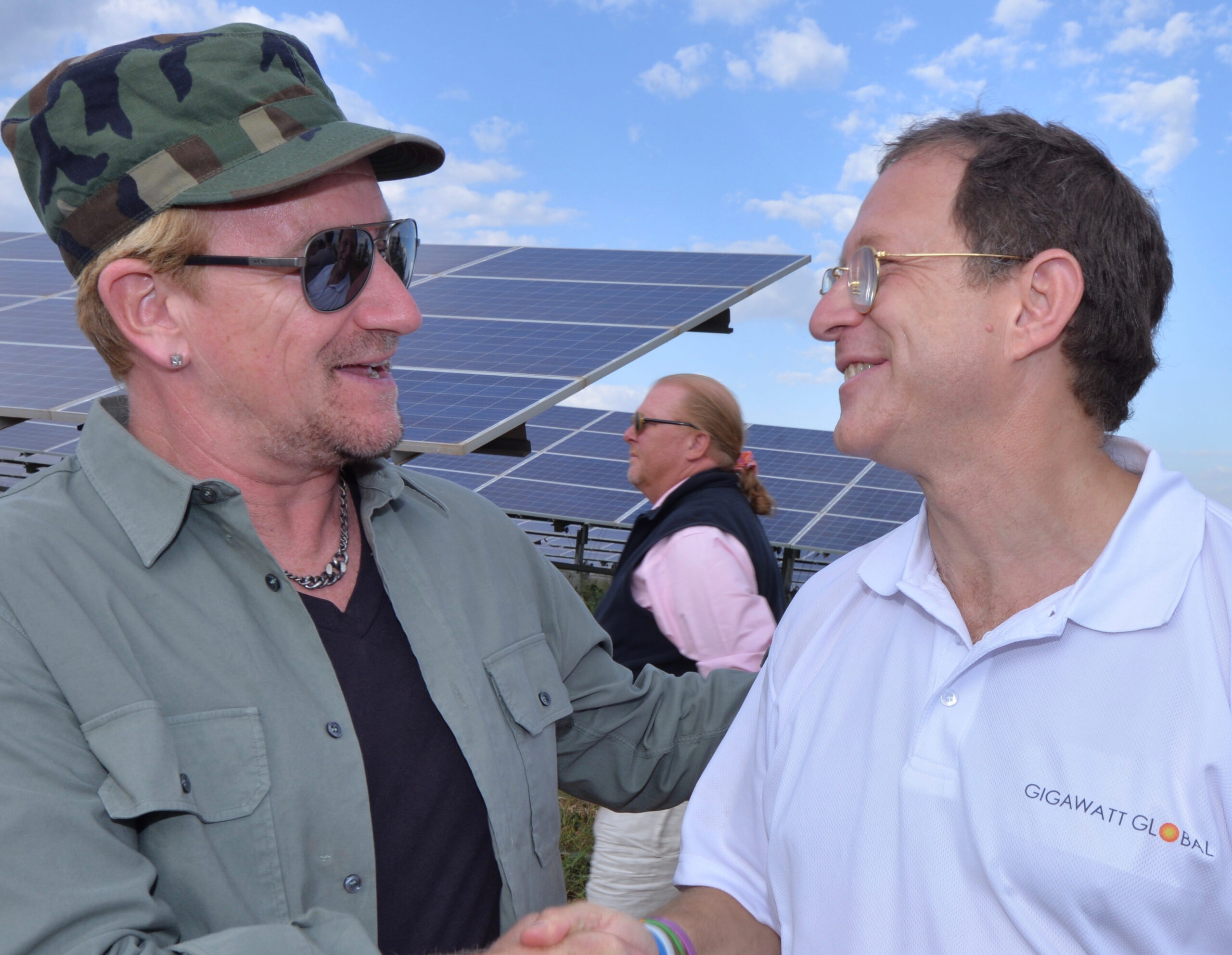
That’s very hard to do when 600 million Africans still lack access to electricity, which should be recognised as a fundamental human right. I was privileged to be part of the S20 under the ECOSOCC (United Nations Economic, Social and Cultural Council) delegation, and with our friends and partners at the ONE Campaign, which is an important part of activist and rockstar Bono’s activity to empower Africa. Bono came to the opening of my first solar field in Africa, in Rwanda, a decade ago to support our efforts, and the dream then was to bring power to hundreds of millions of people.
We still have a long way to go.
I felt privileged to participate in the G20 and get a front-row seat watching Africans advocate with intelligence and dignity for their fair-share of the world’s economic development and for a just transition to renewable energy throughout the continent. Africa produces about 4% of global greenhouse gas emissions, but is constantly and disproportionately hammered by the negative effects of climate change, usually extreme floods or droughts.
Israel is unique in having some of the world’s best climate technology that can raise human dignity for hundreds of millions of Africans. This is true for green energy, water, agriculture, and more. When people asked me where I was from, I usually answered, “The holy city of Jerusalem.” This usually elicits a warm response because of the deep faith of many Africans.
There’s an historic opportunity for Israel and Jewish investors in powering Africa’s growth. Half the world’s fastest growing economies are in Africa, and soon one in four people on the planet will be African.
Every once in a while, a speaker would invoke the Palestinian cause or the war in Gaza, but it was on the margins and not consequential. I thought about speaking to a presenter who demanded that Africa have a permanent seat at the UN Security Council, but I was incredulous that he supported the Palestine Solidarity Movement, which is irresponsible, both because it’s warped and because it does the opposite of advancing the interests of ordinary Africans who could benefit from being in relationship with Israel.
For African leaders to make the case for that permanent seat on the UN Security Council, there has to be much more progress in advancing peace on the continent as well as economic development. If corruption can buy off an African government to prevent switching from expensive diesel to low-cost solar, it can also buy off a veto at the Security Council.
South Africa should take pride in hosting the G20, but be aware that boycott by some world leaders is a sign of the waning influence of South Africa, mostly because of bad behaviour at home and abroad.
I was also happy to meet old friends in the Jewish community and hope to come back more often. The first time, in 1987, I came as a guest of the South African Union of Jewish Students during the state of emergency, when I was almost deported for my anti-apartheid activism. Though it’s good to see a democratic South Africa, it’s also deeply painful to see how the country’s leadership has squandered the opportunity to govern with the interests of the people in mind.
I would hope that South Africa’s government would pause the case at the International Court of Justice against Israel for a year. It only bolsters the right-wing in Israel, causing people to circle the wagons, and is costing the South African taxpayer tens of millions of dollars when the needs at home are so great. And it makes things more difficult for South Africa with the White House.
In addition to being a co-founder of the Arava Power Company in Israel, I serve as chief executive of Gigawatt Global, which is developing utility-scale solar projects in a dozen African countries to advance social and economic opportunity, lift dignity, as well as provide impact investors to align their values and money.
- Yosef Abramowitz is an Israeli-American environmentalist, solar energy pioneer, and activist. He is president and chief executive of Gigawatt Global (Energiya Global Capital), as well as co-founder of the Arava Power Company and nongovernmental organisation Gigawatt Impact. He has been nominated for a Nobel Peace Prize for his activism three times by 12 African countries, Belize, and Israel.





John Tomlinson
November 28, 2025 at 4:29 am
wish to post John Tomlinson Assumption University Windsor, but you don’t have a Share
(Windsor Ontario Canada)