OpEds
Battles won, hearts lost: Israel’s diaspora dilemma

In the aftermath of the most recent – and seemingly enduring – Gaza ceasefire, Israel finds itself in an invidious and deeply uncomfortable position.
On the battlefield, the Israel Defense Forces (IDF) achieved a series of tactical and operational successes unprecedented in modern warfare. It dismantled an encircling “ring of fire” that had, for years, threatened Israel’s national survival. A ring comprising Hamas entrenched in Gaza; Hezbollah in southern Lebanon; Bashar al-Assad’s regime in Syria, supported by Hezbollah, Russia, and Iran; the Houthi missile threat emanating from Yemen; the Shiites in Iraq; and Iran itself, with its looming nuclear capability and formidable missile arsenal.
Israel shattered that encirclement over two years, taking on each threat in turn, across several domains and theatres that stretched for thousands of kilometres. Yet, although magnificently victorious at the tactical and operational levels, the strategic picture remains ambiguous. Israel now confronts an existential strategic challenge, particularly in the realms of global narrative, perception, diplomacy, and the lived realities of Jews in the diaspora.
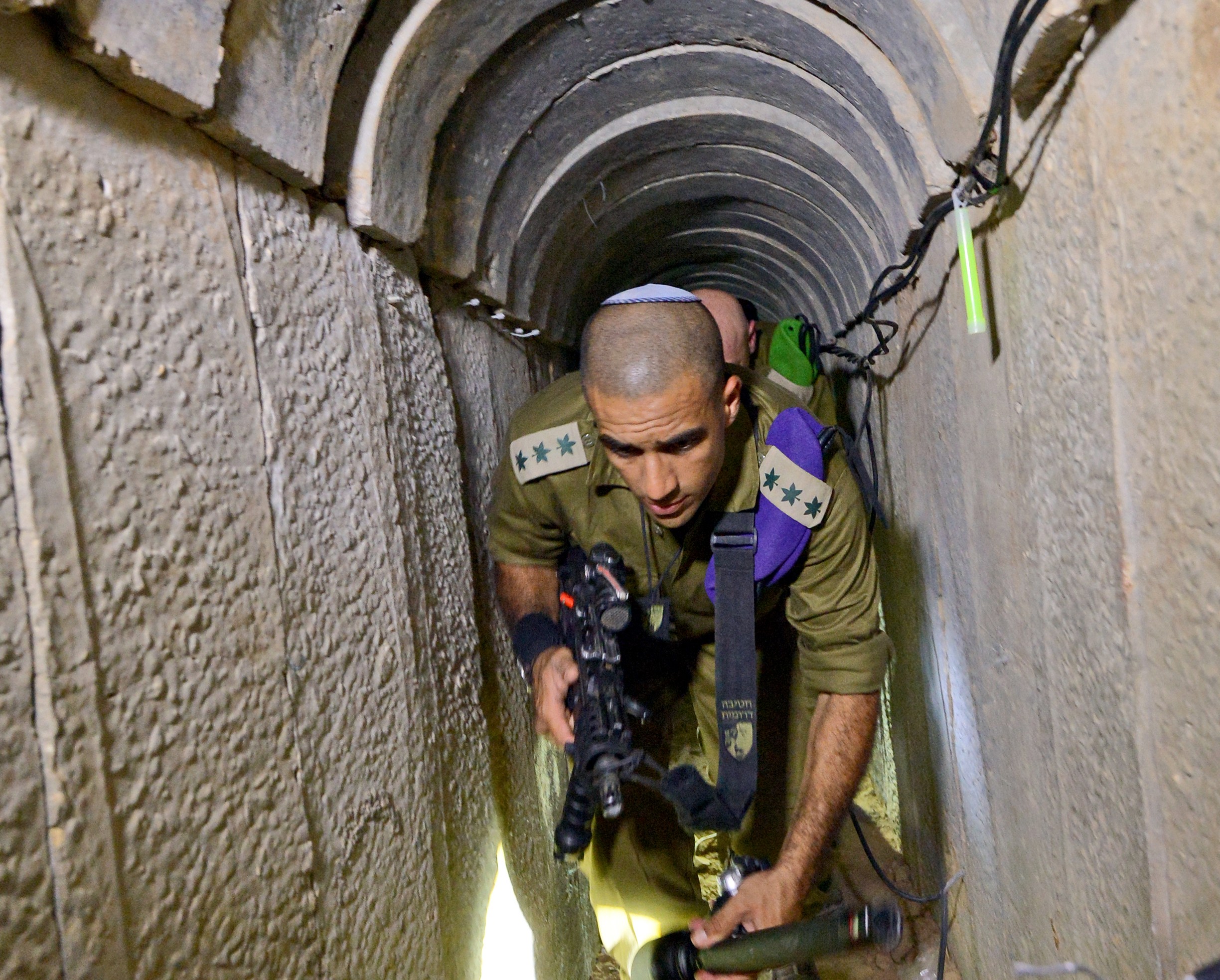
The military achievement is extraordinary, and shouldn’t be understated. In Gaza, the IDF faced what is arguably the most challenging operational environment on earth. A densely populated urban battlespace built on a vast network of fortified tunnels prepared over decades.
Hamas designed this subterranean world to control the tempo of warfare, protect its command structure, hide missile stockpiles, move fighters invisibly, and store hostages, all while placing civilians above these tunnels as human shields. In this extraordinarily complex environment, Israel executed combined-arms warfare in a manner never before seen. It developed new doctrinal approaches to urban combat, integrating armour, infantry, engineers, UAVs (unmanned aerial vehicles), precision fires, intelligence, and subterranean operations in a tightly co-ordinated system that will now become the subject of study for global militaries for decades. Military analysts, planners, and generals from across the world have already travelled to Israel to understand how the IDF managed to conduct successful combined-arms manoeuvres in an environment deliberately designed to neutralise exactly those strengths.
Beyond Gaza, the operational achievements continued. Israeli intelligence, humiliated and caught off guard on 7 October 2023, rebounded with astonishing speed and precision. Its infamous “pager operation”, in which it neutralised Hezbollah’s top echelon in a single devastating stroke, will enter the annals of intelligence history as one of the most audacious decapitation operations ever conducted. In Syria, Israel supported opposition groups, executed a series of pinpoint strikes, and contributed directly to the collapse of Assad-aligned Hezbollah infrastructure, effectively uprooting Hezbollah’s forward base in Syrian territory. Israel shrugged off the Iranian-Houthi threat using superior missile defence technology and electronic warfare capability. In a bold demonstration of reach and intelligence superiority, Israel executed a strike on Iran’s nuclear infrastructure deep inside Iranian territory with near impunity. Taken together, these achievements amount to what most analysts would classify as a resounding operational victory.
Yet, military victories don’t automatically translate into strategic success. Almost immediately after the initial shock of the Hamas atrocities faded, Israel found itself losing the narrative war with startling speed. For perhaps two days after the 7 October attacks, the world saw Israel as the victim of an unprecedented massacre. Sympathy proved fleeting. Within days, global discourse reframed Israel not as a nation responding to mass murder but as an aggressor waging a “genocidal” and “disproportionate” war. This discursive shift occurred despite Israel’s military conduct being, by historical standards, restrained, given the magnitude of the provocation and the complexity of the battlespace.
Part of the strategic erosion stems from the transformation of global information ecosystems. Israel today faces a hostile combination involving mainstream media scepticism; social media ecosystems dominated by influencers hostile to Israel; and a new, disturbing alliance between elements of the woke left and woke right. Personalities with massive followings, some previously considered mainstream, now promote fringe narratives without challenge. Ancient conspiracy theories have resurfaced with renewed intensity, including claims of Jewish control of global finance; secret cabals directing world events; and Israel as an unseen puppet-master. Influencers such as Kanye West, Dave Smith, Nick Fuentes, Tucker Carlson, and Candace Owens now articulate ideas that echo themes last seen in Europe during the darkest decades of the twentieth century. Their audiences number in the tens of millions. Zionists and Israelis – a code word for Jews – are held responsible for assassinating Charlie Kirk and manipulating the commanding heights of Western governments.
As the strategic consequences for world Jewry compound, Jewish life in the diaspora is more precarious than at any time since the 1930s and 1940s. Frothing protesters drive off Jews from university campuses. Synagogues require fortified security. Jewish students hide their identity for fear of intimidation. Zionism, a core expression of Jewish self-determination, is now treated as a form of racism and, increasingly, as justification for harassment. In major cities across the Western world, anti-Israeli sentiment has mutated into unambiguous anti-Jewish animus. Paradoxically, Israel’s defanging of the “ring of fire” has caused consternation in previously thriving Jewish communities worldwide.
To understand how this happened, one must also recognise that Israel entered the war from a position of strategic weakness. Before 7 October, Israel was already a deeply divided society, mirroring global left-right splits. The internal conflict between political camps, secular and religious communities, and competing visions of the state had reached levels of acrimony unseen in decades. Weekly protests, constitutional battles, and social fragmentation dominated national life. These divisions distracted the country and contributed directly to its unpreparedness. The grounds for strategic failure existed long before the first shots of the war rang out. A divided Israel isn’t strategically resilient, regardless of its battlefield excellence.
The question that now arises is whether Israel can regain strategic ground. The answer is complex but not without hope. Israel must pursue a multi-pronged approach. It requires a renewed diplomatic offensive that re-engages moderate states regionally and globally, rebuilding partnerships, and restoring trust. Israel must modernise its information strategy and treat the information space with the same seriousness it treats conventional warfare. It must address internal cohesion. A society in internal conflict cannot sustain long-term strategic credibility. Israel must also confront the global resurgence of antisemitism by partnering with allies, civil society organisations, and technological platforms to expose, counter, and delegitimise extremist rhetoric.
Israel has won undeniable tactical and operational victories. Alas, at a steep strategic price. The IDF may have dismantled the “ring of fire” surrounding Israel, but the broader battle for security, narrative sovereignty, and Jewish security worldwide remains unresolved. A coherent plan regarding the future of the West Bank and Gaza isn’t apparent. Battlefield success alone cannot secure long-term stability. Only a combination of unity at home, diplomatic initiatives abroad, and mastery of the information domain can restore Israel’s strategic standing in a world where perception now shapes power as much as firepower itself.
- Dr David Brock Katz is a research fellow at Stellenbosch University in the faculty of military science. He has published three books and numerous academic articles dealing with aspects of South African military history and military doctrine.