





National Jewish Dialogue
Torah that builds: a Jewish vision for a shared future

I was 16 years old when I decided to dedicate my life to the Jewish community. As a teen participant on a Poland tour, I stood in Auschwitz next to the ruins of a gas chamber, and felt deeply the destruction that our people had endured. At that moment, I felt the call to take responsibility, to do all that I could to rebuild our people after the destruction we had experienced.
While in so many ways we have indeed rebuilt and recovered from the Holocaust – with a thriving state of Israel, strong Jewish communities in South Africa and around the world, and a vibrant and dynamic Jewish intellectual and spiritual milieu, in so many other ways we still need to build.
And just as I felt that call to rebuild the Jewish nation, I feel we must also hear the call to rebuild the South African nation. We live in a country in which millions of people had their futures and opportunities stolen by the injustice and oppression of apartheid. Millions more today face the prospect of a bleak future with minimal opportunities in a country with the most dire youth unemployment rate in the world, due not only to the challenges of transformation, but the ongoing betrayals of corruption and state capture perpetrated by many of those who were entrusted with the hopes of our citizens.
We need to speak honestly about the state of our nation. But we must also resist the false comfort of retreat. In times of uncertainty, it’s tempting – and understandable – to turn inward, withdrawing from national life and pouring all of our energy into the safety and strength of our Jewish community. To some extent, in fact, we must. Our responsibility is primarily to our own community, to ensure that it’s provided for, resilient, secure, spiritually nourished, and internally coherent.
However, this isn’t where our commitment ends. Hashem has placed us in this generation, in this place, and in this time, and given us therefore additional responsibilities to those around us, to the society that sustains us, and to the future we’re shaping together.
I must admit that my own sense of patriotism and South African pride has diminished over the last two years. Our government’s attitude towards the world’s only Jewish state, an attitude which hasn’t been appreciably affected by the formation of the vaunted Government of National Unity; our media’s one-sided and biased reporting on Israel; and the animosity coming from so many South Africans all have me questioning the extent to which I and my people belong and are wanted here. It’s hard to be committed to our country when I feel that Jewish voices – and Jewish safety – is so easily cast aside.
But I’m not walking away. I remain deeply committed to being a builder of the Jewish community here, in this moment, and in this place. Because if we give up now, we abandon both our fellow South Africans and the powerful story we ourselves have to offer. We are heirs to perhaps the most inspiring story of the modern age: the rebuilding of a shattered people into a resilient and flourishing nation. In the aftermath of the Holocaust, the Jewish people established one of the most dynamic, creative, and – remarkably – happiest countries in the world. Israel’s story isn’t without complexity, but it’s a success story of vision, strength, moral courage, and national cohesion.
It’s precisely because we carry this legacy that we must not allow ourselves to become only members of a threatened minority in a struggling democracy, or simply “South Africans”, without our Jewish values, religion, and identity informing our decisions.
And this brings me to Torah and education. We all know that Torah and halacha (Jewish law) has plenty to say about the laws of milk and meat, all of which I believe we should learn and observe. They teach sensitivity to life and death; separation and reverence; boundaries and compassion. But Torah also has a great deal to say about the issues that are explicitly presenting enormous problems for our society.
Human trafficking, for example, is rampant in South Africa. According to the Global Slavery Index (2023), more than 150 000 people in South Africa live in conditions of modern slavery, including trafficking and forced labour. Torah isn’t silent here. According to Rashi (Shemot 20:13), the seventh commandment – “Lo tignov” – (Do not steal) refers not to property, but to the stealing of human beings. To ignore this plague is to ignore the voice of Sinai, and if we teach our community – children and adults – that Torah is concerned with kitchens but not kidnapping, then we’re not only missing an opportunity to make Torah itself relevant and meaningful, but we’re misrepresenting its message.
Torah also speaks with clarity about racism, insisting that every human being is created b’tzelem Elokim, in the image of G-d. Our sages criticise even Moshe Rabbeinu for speaking insensitively to his father-in-law Yitro about the death of the Egyptians. How careful we must be in the way in which we speak and think about those who are not part of our social circles. Our community has made strides, but we still have work to do. This must become part of our formal curriculum and our informal conversations.
I don’t propose that we trade halacha for politics, but that we learn to bring halacha into a world that needs thoughtful and nuanced solutions, guided by moral clarity, to complex and pressing problems. That we learn and speak and teach a Torah that addresses the urgent needs within and around us, that builds from observance rather than retreating into it.
We must also recognise that commitment to the Jewish future takes many forms. For some, it’s lived through mitzvah observance and daily Torah study. For others, it’s expressed through building Jewish institutions, strengthening communal structures, supporting Israel, or working to uplift society around us. There’s immense value in each of these paths, and we should encourage more of all of them, even when another person’s path doesn’t ignite the same passion in us as it does in them.
We must raise a generation literate in Torah and fluent in moral courage. A generation that knows how to daven and how to lead, how to learn and how to act. A generation that can sit with a page of Gemara and sit with the pain of a society still breaking under the weight of its history. If we want to preserve what we have built – our schools, shuls, families, and freedom – then we must invest in the people who will carry it forward.
Let’s not wait for the world to get better. Let’s raise people who will make it better.
That begins with what we teach. In every school, and every family, bring Torah into conversation with the world. Let’s put racism, human dignity, leadership, and ethical courage on the curriculum and at our Shabbat tables alongside parashah and prayer. Let’s invest in a Jewish communal life that both defends our people and elevates our society.
Our next generation is watching – the 16-year-old who will, or won’t decide to dedicate themselves to our community and this country. Let’s give them something inspiring to see, and even more inspiring to do.
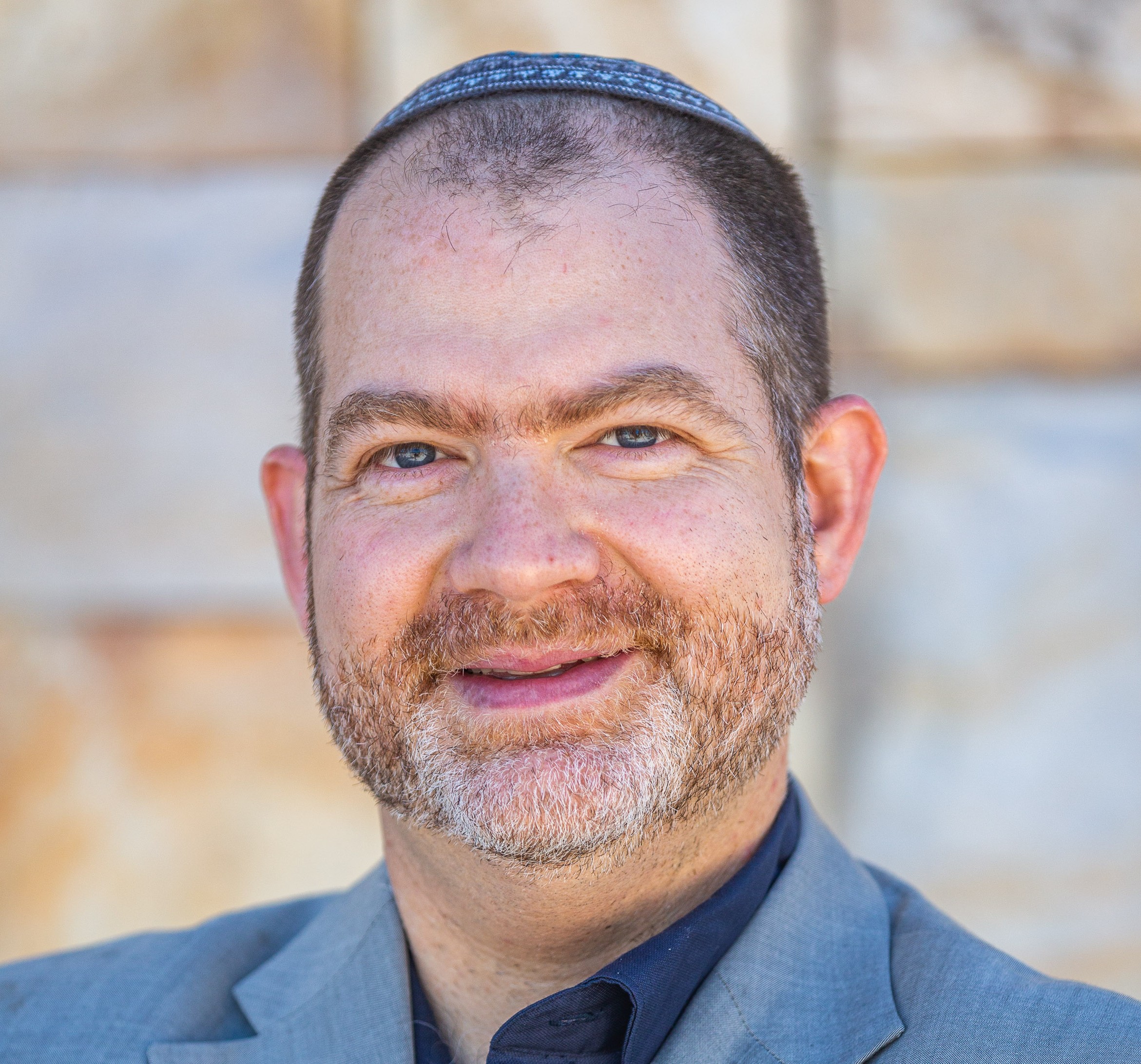
- Rabbi Sam Thurgood is the head of Jewish Life and Learning at United Herzlia Schools in Cape Town.



A. Burman
August 16, 2025 at 8:41 pm
Really nice article, thank you.