





OpEds
We are no longer that sort of Jew!

Earlier this month, the New England Patriots were trounced in a lacklustre football performance at the American Super Bowl, losing convincingly to the Seattle Seahawks. The most exciting moment of the game was a performance by Puerto Rican singer Bad Bunny. But during this year’s Super Bowl broadcast, one of the most talked-about moments had nothing to do with football. It was an advert funded by Patriots owner Robert Kraft.
Kraft reportedly spent around $15 million (R240.3 million) on a 30-second Super Bowl advertisement through his Foundation to Combat Antisemitism. It wasn’t the first time he has used America’s biggest television stage to confront Jew-hatred. The Super Bowl remains the most watched annual sporting broadcast in the United States, and Kraft decided to use that platform to address rising antisemitism in America.
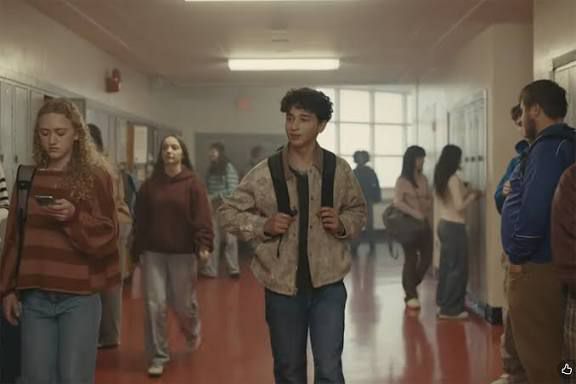
Kraft’s advert depicts a young Jewish schoolboy being bullied by classmates who stick a Post-it note reading “Dirty Jew” onto his backpack. A tall, lanky black student approaches, places an arm around the Jewish child, and quietly covers the hateful note with a blue Post-it of solidarity. It’s a poignant moment of fraternity, one that has divided opinion within the Jewish world.
Some critics argue that the advert portrays Jews as weak, pigeonholing us as victims in need of protection from a benevolent “older brother”. “We are no longer that sort of Jew,” they say. We are strong enough and proud enough to stand up for ourselves and, if necessary, fight.
Social media, powered by the miracle – and mischief – of artificial intelligence, quickly reimagined the advert. In one version, the Jewish boy beats up his tormentors. In another, he grows up to become a world-famous scientist and doctor while the former bully lies helpless on an operating table, passing him a note that, this time, reads, “Thank you.”
I’m enormously grateful to Kraft for his willingness to spend vast sums in defence of our community. But if I’m honest, the revenge edits resonated more instinctively with my worldview. Personally, in my darker moments, I might even have preferred the world-class doctor to leave his patient on the operating table and walk away.
They don’t have to like us, but if they don’t, they must fear us.
When I was three years old, my parents scraped together enough money to move our family out of Hillbrow. I remember watching the Hillbrow Tower being built from our kitchen window. We moved a kilometre away to the corner of Carse O’Gowrie Road and Boundary Road in Parktown, directly opposite Roedean School.
Our first visitor was the domestic worker from the house across the road. She explained that she worked for the Laurence family. They had asked her to deliver a message: they did not like Jews and did not want their children playing with Jewish children. We should please stay away.
I never met the Laurences. I don’t know whether their children attended Roedean. But as the recent Roedean tennis saga unfolded, my mind kept returning to that domestic worker forced to deliver a message of hate and exclusion: “We do not want our children to play with Jews.”
The SA Jewish Report, which I have the honour to chair, had the Roedean tennis story days before it broke publicly. King David Schools tried to dissuade us from publishing the story, and arguing that a newspaper report could threaten student safety. We disagreed with that argument. I told Peta, our editor, “not playing tennis doesn’t constitute a safety threat to our students, allowing Jew-hating racism to flourish does”.
We took the decision to continue with the story, but as often happens, the story had leaked and gone viral long before we put pen to paper.
But then something very strange happened. The alumni of Roedean started standing up against Roedean’s decision to cancel the tennis match; current students started demanding they leave the school that colloquially became known as “Hitler High”; and parents stood up, one by one, to demand that they not be tarnished with the brush of antisemitism. One of the trustees called me and sobbed, irreconcilable with grief over the hurt the school had caused to the Jewish community.
Suddenly, we weren’t alone. We found ourselves surrounded by love and respect, supported by students, parents, teachers, and alumni who believed that the school needed to acknowledge the harm it had caused, and make amends by apologising and, of course, play the tennis game.
The loudest dissenters were the usual Jew-hating professional agitators, the Temu version of Candace Owens, without her polish or following.
And in that moment, I realised that perhaps Robert Kraft had understood something profound. There are times when strength means standing alone. And there are times when strength means accepting the arm placed around your shoulder.
At moments of hatred and isolation, the embrace of that tall, lanky black kid isn’t weakness. It is solidarity. It is alliance. It is the reminder that we aren’t alone.
For that, and for having the courage to say so on America’s biggest stage, I’m forever grateful to Mr Kraft.
- Howard Sackstein is an internationally renowned human rights activist, writer, and speaker. He hosted Nelson Mandela in Brussels to introduce him to top European diplomats and businesspeople. He is an award-winning marketeer and political analyst. He has had a personal relationship with every South African president since the end of apartheid. He is chairperson of the SA Jewish Report, but writes in his personal capacity.





barbi
February 22, 2026 at 5:42 pm
Thank you Howard for that piece. I am 86 and my arms are strong enough and my words to never stay quiet. and so are we all.