


Advertorial
SOSA brings hope to patients in public healthcare

For years, SOSA Medical has been a lifeline for community members who simply cannot afford the medical care they desperately need. But behind the scenes, something even more powerful has been happening. Guided by empathy and a genuine desire to ease suffering, Rabbi Shaun Wingrin, SOSA’s founder and director, has been quietly creating new solutions that bring dignity, comfort, and hope to those facing the public healthcare system.
Today, SOSA supports more than 100 Jewish families with medical aid. Yet sometimes this still isn’t enough, especially when life-saving medication is unavailable at government hospitals.
“When I was recently treated at the Wits Donald Gordon Medical Centre, my specialist told me that the most critical medication I rely on is usually not available in the state system,” Wingrin explains. “The outcome is often tragic. When I looked deeper, I discovered that half of all oncology drugs aren’t accessible to state patients.”
SOSA couldn’t ignore this fact. A dedicated medication fund was immediately launched to ensure that Jewish patients in state hospitals have access to the treatment they need and deserve.
But SOSA’s compassion didn’t stop there.
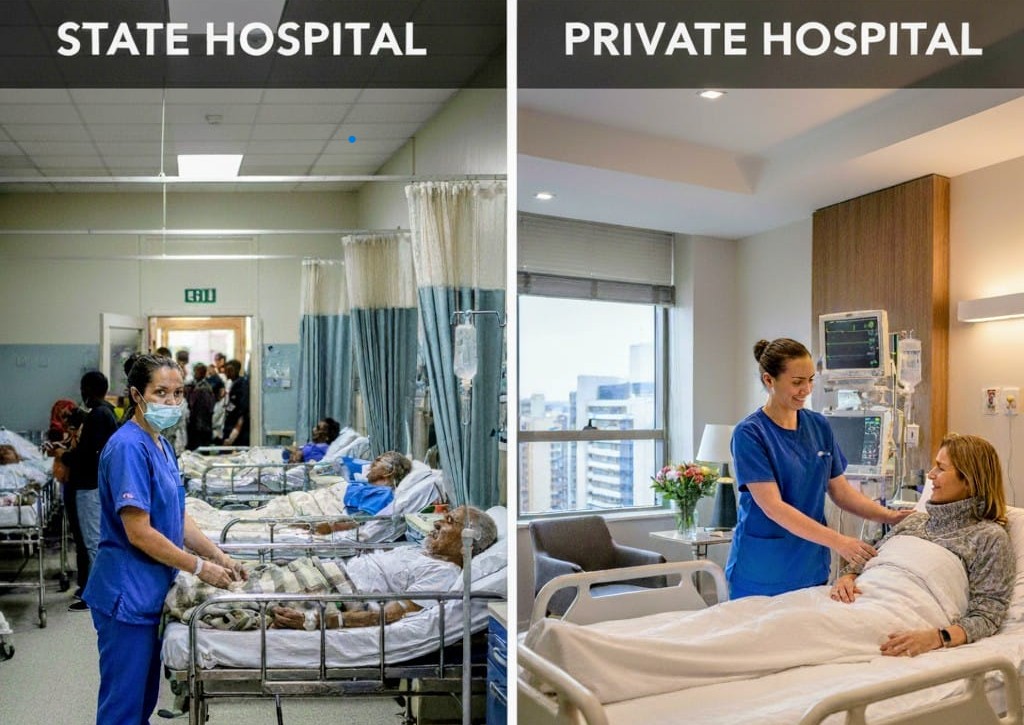
Another heartbreaking case revealed a different gap in care. “When vulnerable Jewish patients are admitted to public hospitals, families often can’t reach them or get any updates,” Wingrin says. “One elderly woman we assisted broke her hip. Although surgery within a day is ideal, she waited more than four weeks – alone, in pain, and bedridden in government hospitals. After her surgery, she was sent home unable even to reach the bathroom.”
This situation was simply unacceptable. So SOSA created a team of nurses who visit patients in hospital; check on their well-being; advocate for their needs; and update their families. It’s a small intervention with enormous impact, delivering comfort, safety, and dignity to the bedside.
Though these innovations are already transforming lives, Wingrin emphasises that the most powerful protection is still access to a basic hospital plan. “Many can’t afford it,” he says, “but the truth is, they also can’t afford not to have one”.
He shares the painful story of a man in his forties with a psychiatric illness. Although he had basic cover through SOSA, his care team didn’t know, and he was mistakenly taken to a state hospital.
“He waited more than 24 hours in casualty with no food, first sitting in a chair, then tied to a bed after a breakdown. He spent 48 hours in an isolation ward. It was devastating,” the rabbi says.
Once SOSA intervened, he was transferred to a private psychiatric hospital, where he received 21 days of quality, compassionate care, fully covered by his basic medical plan.
“Everyone in our community deserves this level of care,” Wingrin says. “No one should have to suffer like that.”
SOSA is working on another deeply meaningful initiative: the dramatic improvement of the quality of kosher meals available in private hospitals. With guidance from professional nutritionists and a smart new logistics system, the aim is to deliver fresh, nourishing, appetising kosher meals within an hour of ordering. It’s a small kindness that brings comfort when it’s needed most.
SOSA’s annual fundraiser launches on 23 November, with a goal of raising R3.3 million for life-saving care.
Every donation will be matched, doubling the impact of your kindness.
Together, we can uplift the vulnerable, protect the ill, and make sure no member of our community faces illness alone.
ILLUSTRATION: SHUI HOPPY
Donate to: SOSA, First National Bank; Account Number: 62713804559
To volunteer, scan the QR CODE:
Contact: 011 882 8322; admin@SOSAmedical.org
www.SOSAmedical.org