


World
A new Hebrew press in Berlin argues that Israel doesn’t own the language

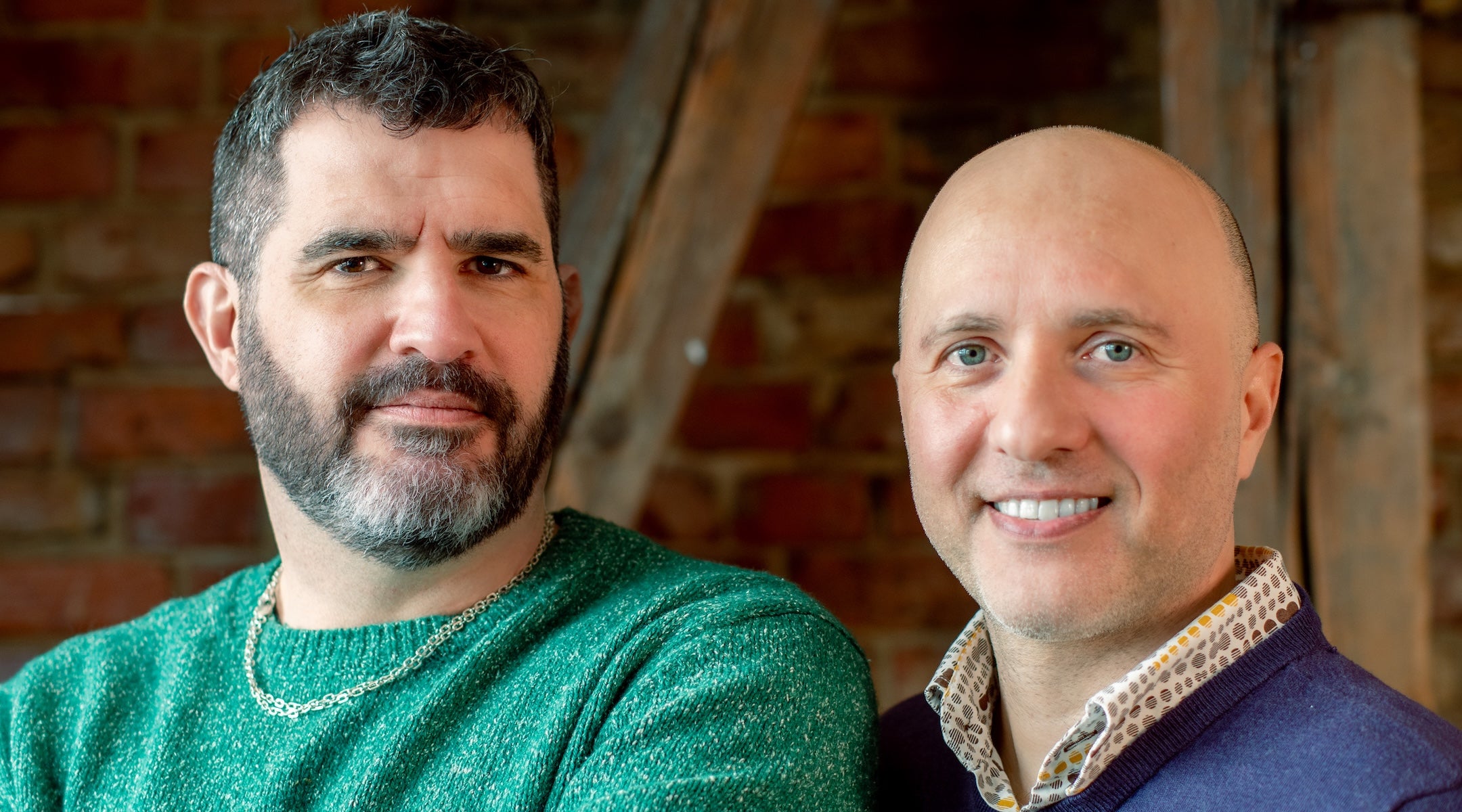
JTA – Dory Manor and Moshe Sakal, who run a press for Hebrew literature in Berlin, are often asked if their business is Israeli.
The partners in life and publishing come from Israel, though they have lived in Berlin and Paris for the better part of two decades. But they say their publishing house, Altneuland, is neither Israeli nor European. Instead, they sought to create a home for Hebrew literature from around the world, open to Israeli writers, but free from Israeli state funding.
Altneuland is the first non-religious Hebrew publishing house to set up outside of Israel since the state was established. Manor and Sakal founded the press in 2024, and this year, Altneuland will launch in the United States.
“I believe that the Hebrew language is not only a national language,” said Manor, the editor-in-chief. “Hebrew has always been a global language, and even modern Hebrew has been an international language ‒ mostly European, but not only ‒ before the creation of the State of Israel.”
Manor and Sakal have expanded their mission from Hebrew literature to publishing Jewish authors across languages, including German, French, Russian, and Yiddish. The US launch will include an original English-language book by Ruth Margalit, along with English translations of Hebrew novels by Noa Yedlin and Itamar Orlev.
Altneuland is also the German publisher of The Future is Peace, a New York Times bestseller by Israeli Maoz Inon, whose kibbutznik parents were killed on 7 October, and Palestinian Aziz Abu Sarah, whose brother died in 1990 after being tortured in an Israeli prison.
In a time when thousands of authors and publishers globally have pledged to boycott Israeli institutions over what they identify as a “genocide” perpetrated by Israel in Gaza, Manor and Sakal say that Altneuland is not a boycott. They work with writers who live in Israel and sell to Israeli bookstores. Establishing a Berlin-based publishing house made them ineligible for Israeli public funding so they could avoid the fraught question of accepting support from the government.
Sakal, the publisher, acknowledged that Israel was a centre for Hebrew and Jewish literature, but said it doesn’t have to be the only centre. “We are not replacing it,” he said. “We are doing something else.”
Altneuland allows the founders to work with Israelis while staying apart from the Israeli Ministry of Culture, which provides funding for Israel’s publishing industry, largely through literary awards.
In January, the ministry cancelled its annual culture prizes. Culture Minister Miki Zohar, a member of Prime Minister Benjamin Netanyahu’s right-wing Likud party, cited the political bent of the prizes and said their cancellation was due to the organisers “clearly ignoring artists whose opinions are held by most of the country”. The cuts came shortly after Zohar launched an alternative state film award ceremony, cutting funds to the Ophir Awards, Israel’s equivalent of the Oscars, after it awarded best film to The Sea, about a Palestinian boy in the West Bank who attempts to go to Tel Aviv and see the sea.
Israel’s literary world, which pays poorly and lacks broad recognition, depends heavily on state-sponsored prizes.
“This government is, for me, an enemy of Israel and not Israel itself,” said Manor. “So no, I’m not boycotting anyone, but I don’t want to deal with the current Israeli government. I do want to deal with Israeli readers, with Israeli writers.”
Those writers share many of Manor and Sakal’s political views. The founders’ goal is to make Altneuland a home for Jewish authors with a liberal outlook ‒ especially those who feel pressured by rising nationalism, whether in Israel or elsewhere.
Margalit, a Tel Aviv-based journalist, will publish a collection of her political and cultural profiles in Israel through a collaboration between Altneuland and Pushkin Press. Her book, In the Belly of the Whale: Portraits from a Fractured Israel, is coming out in September.
Margalit said she was drawn to Manor and Sakal’s “humanist spirit”, along with their ability to publish the book simultaneously in English, Hebrew, and German.
“At a time when so many people are quick to jump to labels or cancellations, it was bracing to find thoughtful partners who were similarly aggrieved about the political situation as I was,” she said.
Arad’s Hebrew novel Our Lady of Kazan will be published in German by Altneuland as Kinderwunsch in July. Arad, an Israeli-born writer, has lived in California for more than 20 years and authored 12 books of Hebrew fiction. One Haaretz reviewer summed her up as “the finest living author writing in Hebrew” who was “in exile in the US”.
Arad’s books, often featured on bestseller lists in Israel, tend to deal with Israelis living abroad. The theme fits into the global perspective of Altneuland, targeting readers who are curious about crossing national boundaries.
“I’ve been thrilled to see that Israeli readers are willing ‒ even eager ‒ to read stories about Israeli expatriates,” said Arad. “The experience of living outside Israel, whether temporarily for work or study or on a more permanent basis, has become a central theme in Hebrew literature.”
Altneuland takes its tongue-in-cheek name from Theodor Herzl’s 1902 novel, literally meaning “old new land”. The founder of political Zionism envisioned a utopic, multicultural Jewish state where Jews and Arabs lived peacefully together.
“When we finally decided to call our press Altneuland, it was because our Altneuland, an ‘old new land’, is a land without territories. It is the Hebrew language,” said Manor.
Berlin is a thriving hub for up to 30 000 Israeli expatriates. Among them is a growing community of writers and intellectuals, including some who left Israel out of frustration and anger at their government.
Manor and Sakal see another reason for making Berlin their home base. They view Altneuland as a continuation of Schocken Verlag, a Jewish publishing house in Berlin that improbably persisted through the 1930s. Schocken Verlag was a cultural lifeline for Jews under Hitler’s regime, publishing books by Franz Kafka, Heinrich Heine, Rabbi Leo Baeck, and Shmuel Yosef Agnon, a founding father of modern Hebrew literature.
In 1939, the publishing house was finally forced to shutter and moved to British Mandate Palestine. The reestablished Schocken Books lives on today as part of Penguin Random House. But Manor and Sakal said their project aligns with the original Schocken Verlag, the one destroyed by Nazism.
“What we find in both models is the possibility of a Jewish cultural space that is cosmopolitan, multilingual, humanist, non-national, and not dependent on a single territory,” said Sakal.
Altneuland has faced scepticism, particularly from Israel. Publisher and editor Oded Carmeli said in Haaretz, “The truth is that there aren’t enough Hebrew readers outside of Israel to support a publishing house ‒ not even a bookstore, not even a shelf in a bookstore ‒ and even if there were enough readers, no store in Berlin or Madrid would maintain such a shelf, for fear of repercussions.”
The Altneuland duo said their risky proposition is working out so far. Most of their Hebrew readers remain in Israel, where they are printing books in the thousands and going into second printings on select titles. But they are also cultivating a readership in Germany, where they print smaller special runs of Hebrew-language editions.
Naomi Firestone-Teeter, the chief executive of the Jewish Book Council, said that Altneuland has emerged as pressure mounts on Jewish authors from the right and the left through “book bans, boycotts, and cancellations”. The council itself was recently criticised by dozens of Jewish authors for a “bias toward centring Israeli and Zionist voices”.
“In this moment, we see their effort to build another home for Hebrew literature and Israeli voices as a meaningful contribution to the Jewish literary landscape,” said Firestone-Teeter.
Altneuland’s books in German and English are the fruit of collaborations with Pushkin Press and New Vessel Press. Manor said they were “positively surprised” when they began talks about working with publishers in Europe and North America. Those conversations began in the immediate aftermath of 7 October, and continued against the backdrop of a rising international chorus that has accused Israel of committing “genocide” in Gaza. So far, no one has boycotted them.
“Usually we had interesting talks, very open talks with people who understood, in most cases, the nuances between our being a Hebrew publishing house and Israel as a state, Israel as a regime,” said Manor. “This is something that we could not predict when we created Altneuland.”