





Israel
SA royals champion stronger ties with Israel

At a time when relations between the South African and Israeli governments remain deeply strained, a group of royals has returned from Israel calling for greater cooperation between the countries.
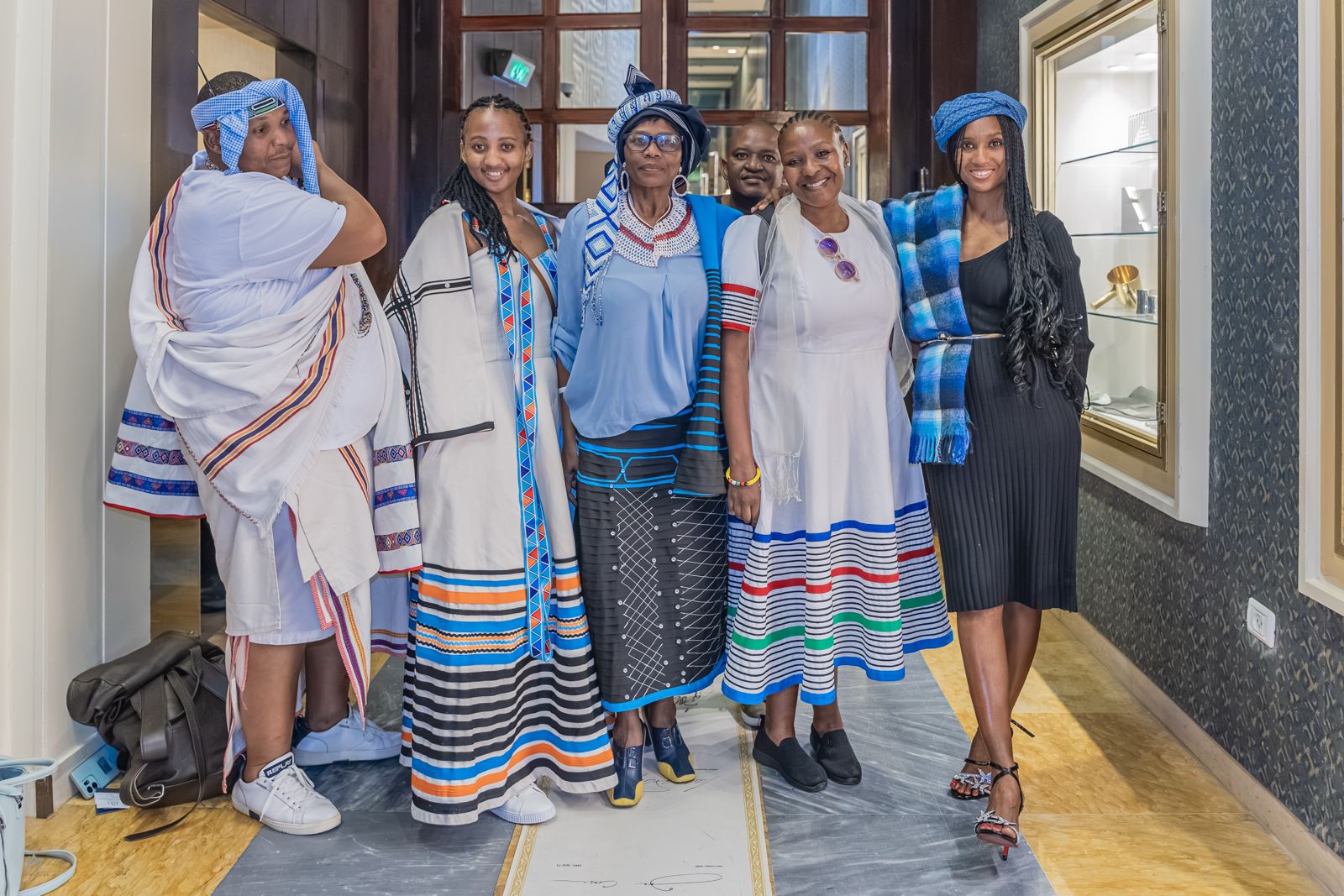
The 12-member delegation included Queen Sinokuhle Matiwane of the AmaMpondomise Kingdom, eight princesses, and two princes, representing several traditional communities. The visit at the beginning of September focused on healthcare, water, agriculture, technology, innovation, and cultural ties.
Princess Bhelekazi Siphokazi Mabandla of the AmaBhele kaJamangile Traditional Community said she returned from Israel more determined than ever to strengthen ties between the countries.
“My role is to make sure that the relationship between South Africa and Israel is restored,” Mabandla told the SA Jewish Report. “And to see Israel as a strategic partner for the continent and for our country and our communities.”
Mabandla had previously visited Israel shortly after 7 October 2023, but the latest visit gave her a different perspective because she was travelling with a new delegation and had the opportunity to see more of the country.
Her interest in Israel is driven by opportunities for practical cooperation. She highlighted Israeli expertise in agriculture, water management, land management, and technology as areas that could benefit rural South Africans.
Mabandla is based in the Eastern Cape, where many communities face development challenges. She said Israel’s approach to using available resources and developing new solutions had made a strong impression on her. “There is so much that we could benefit from. Water management, land management, agriculture, using what you have.”
The delegation’s coordinator, Princess Fundiswa Babalwa Zote of the AbaThembu Kingdom, said water was one of the most important issues discussed during the visit.
“There’s no water in our communities,” she said. “We’ve been speaking to Innovation:Africa to see how we can collaborate and use some of the Israeli technology to bring water to our people.”
The non-profit organisation Innovation:Africa uses Israeli solar and water technology to provide clean water and electricity to communities in Africa. The delegation’s interest in water solutions formed part of a broader focus on practical development.
According to Daniel Jacobi, executive director of the South African Friends of Israel, the visit followed that of AbaThembu King Buyelekhaya Dalindyebo in December 2025. That visit established relationships that led to an invitation for other recognised traditional leaders to visit Israel.
“The sole purpose of them coming to Israel was exchanging culture and seeing the cooperation opportunity and potential to strengthen their relationship and a better understanding of Israel,” Jacobi said.
South African traditional leaders hold cultural and community authority alongside the country’s elected political structures. Their role is particularly significant in rural communities.
The latest delegation included mainly female traditional leaders, who met with Israeli organisations and officials and visited healthcare, humanitarian, cultural, and religious sites.
They visited Save a Child’s Heart, an Israeli humanitarian organisation that provides life-saving cardiac treatment to children from developing countries. The organisation has treated more than 8 500 children from 75 countries since its establishment in 1995.
The South African royals met children from several African countries and danced to Jerusalema with them. Save a Child’s Heart spokesperson Daniel Campos, said the delegation was enthusiastic about interacting with the children.
Zote also expressed interest in greater medical cooperation between South Africa and Israel, saying initiatives such as Save a Child’s Heart demonstrated how cooperation could benefit communities across Africa.
At Magen David Adom’s national headquarters in Ramla, the royals were shown the organisation’s National Human Milk Bank, emergency dispatch centre, National Blood Bank, and specialised emergency vehicles.
They also saw how Israeli emergency medical operations function during wartime.
Other visits included Hadassah Medical Center, Yad Vashem, the Museum of Tolerance in Jerusalem, the City of David archaeological site, and Christian holy sites in Jerusalem and the Galilee.
“As Christians, it’s been important that we come to the holy land and to relive the Bible and walk the Bible,” Zote said. She described visiting Jerusalem as “amazing” and singled out Magdala, believed to be the birthplace of Mary Magdalene, as one of the highlights of the trip.
The visit to Israel took place against the backdrop of the deterioration in relations between the South African and Israeli governments since the Hamas attack on 7 October. South Africa has taken a strongly critical position towards Israel and instituted proceedings against it at the International Court of Justice in December 2023, accusing it of “genocide” in Gaza. Israel has rejected South Africa’s allegations. Formal diplomatic relations between the two countries have remained severely strained, with both expelling the other’s diplomat.
The royal delegation’s visit therefore represented a different form of engagement.
Mabandla said political disagreements shouldn’t prevent cooperation. “Diplomacy is about dialogue and cooperation,” she said. “We can disagree. It doesn’t mean you don’t disagree with diplomacy.”
She urged South Africans to take the opportunity to learn more about Israel directly. “People must take time to learn or take time to visit if they are able to,” she said. “To visit the region and see things for themselves.”
Mabandla was particularly struck by the involvement of Jewish communities from around the world in Israeli institutions. She said she repeatedly saw buildings and facilities bearing the names of families and communities that had contributed towards them. That experience changed how she viewed the relationship between communities and their country of origin. “I said I’m really going to take that and personalise it in my own life.”
Mabandla was moved by the welcome they’d received from ordinary Israelis. She recalled people approaching the group after learning they were from South Africa and thanking them for visiting.
She said those interactions stood out because they weren’t government officials or political representatives. “They were ordinary people that have nothing to do with government,” she said. “So it was real.”
For Zote, the visit ended with a message of friendship and faith. “May G-d bless the city of Jerusalem. May G-d keep her. May G-d bless Israel and keep Israel in perfect peace,” she said. “We love you.”
Mabandla intends to return to Israel and continue working towards stronger relations between the countries. “I will use my voice in diplomacy, which is my love language, and I will not stop until my last breath,” she said.






Jean-Roux Viljoen
September 10, 2026 at 8:19 pm
Brilliant go and see the truth for yourself. Israel is decades ahead of anyone in resource management.
leFras
September 10, 2026 at 9:25 pm
God bless you.