





OpEds
When one Jew speaks for all of us

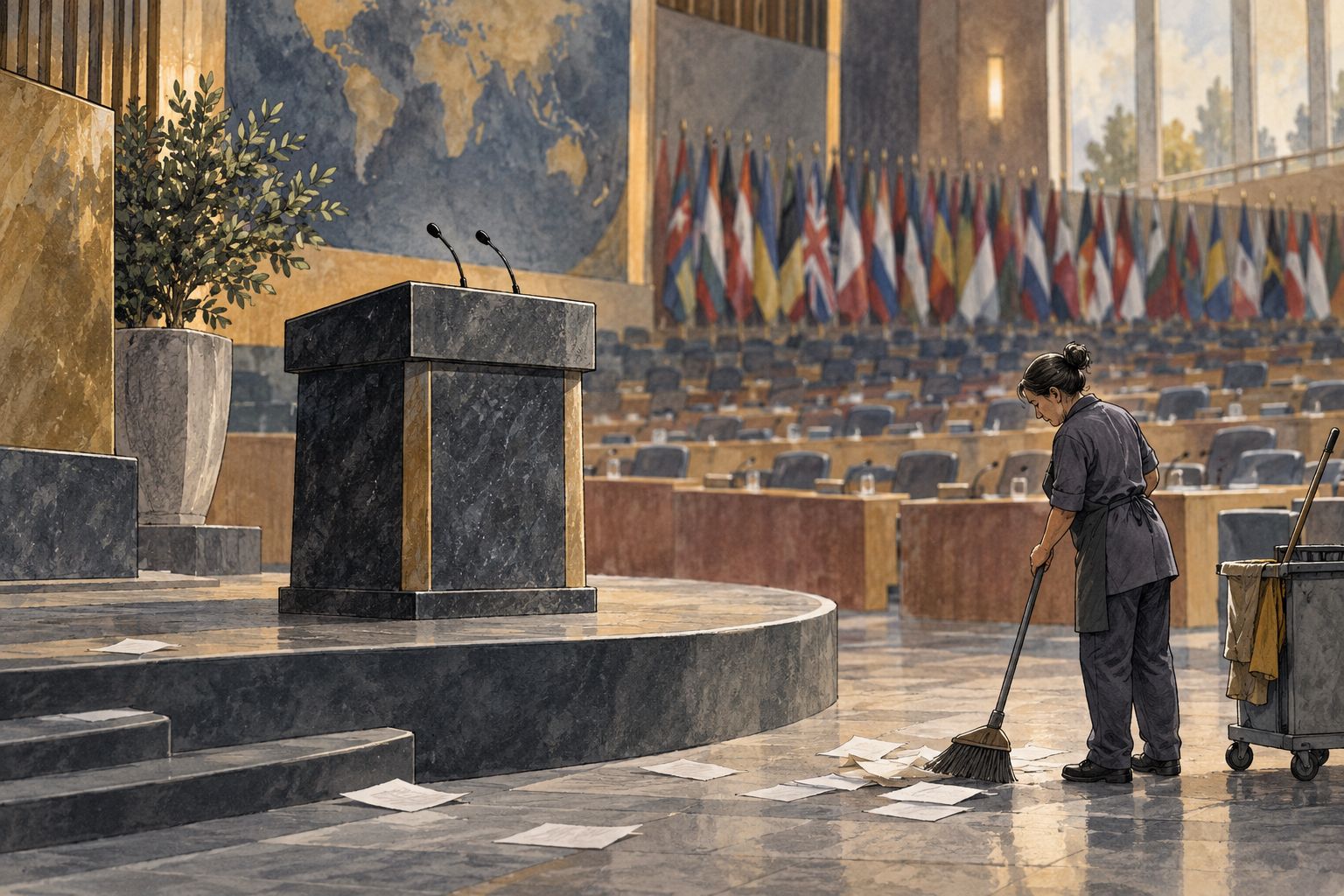
There was something particularly depressing about the United Nations (UN) General Assembly this week. World leaders gathered in New York to share their wisdom, their concerns, and their thoughts with the rest of us. If you were hoping for intelligence, depth, or even a passing relationship with reality, you would have been terribly disappointed.
For the most part, the content was drivel.
French President Emmanuel Macron told the world that Hamas was not active in the West Bank, as though saying something confidently behind a large UN sign somehow makes it true. King Abdullah of Jordan spoke movingly about the Palestinians. Jordan has traditionally found it easier to care for Palestinians in speeches than in practice. And Turkish President Recep Erdoğan stuck to the script. I’m not entirely sure what the script was, but Israel was responsible, Turkey was virtuous, and history began at whichever point was most convenient.
The speeches were uninformed, biased, selective, and dishonest. They also lasted a very long time. If this is the best leadership the planet can offer, then we are in considerably more trouble than we thought.
Closer to home, we were reminded that dangerous words don’t come only from podiums in New York.
A video circulated after Yom Kippur showing an elderly Jewish man in Johannesburg using vile, racially abusive language during a confrontation with another driver. We don’t know what happened before the recording began. There was clearly an incident before the camera came out, and we should be careful about pretending to know what it was.
But there is no missing context that could make the language acceptable.
I hated watching it.
I hated the words. I hated the ugliness. I hated knowing that it would be used by people who already believe the worst about Jews. Most of all, I hated that the man saying those things was Jewish, not because Jews are incapable of racism or bad behaviour, but because I desperately wish we were.
The community condemned his behaviour. The shul responded quickly, honestly, and directly.
A few people asked why we should apologise for the behaviour of someone who isn’t us. A fair question. I didn’t know him. I wasn’t there. I didn’t provoke the incident and I didn’t use those words. Why should I carry responsibility for the conduct of a stranger simply because we share a religion?
The answer might be uncomfortable.
We cannot speak endlessly about Jewish peoplehood when it suits us and then suddenly become enthusiastic individualists when it doesn’t. We cannot say that we feel the pain of a Jew we have never met in Israel, France, or Australia, but that the behaviour of a Jew in Norwood has absolutely nothing to do with us. We cannot claim the achievements of Jews across the world as a source of collective pride, but insist that Jewish disgrace is strictly a private matter.
That doesn’t mean that every Jew is personally guilty when another Jew behaves badly. It means that being part of a community comes with both privilege and responsibility.
Judaism has always understood this. We have a name for behaviour that brings shame to our people and our values: a chillul Hashem. The concept itself recognises that none of us operates entirely in isolation. Whether we like it or not, people sometimes look at one Jew and see all Jews.
That might be unfair. It is still true.
Our responsibility is not to defend the indefensible. Nor is it to turn one ugly incident into a communal crisis larger than it is. Our responsibility is to say clearly: this is not who we aspire to be.
But saying it is only the beginning.
Words can condemn racism while our behaviour continues to tolerate it. They can proclaim compassion while we remain indifferent to the person standing in front of us. They can speak endlessly about dignity, justice, and community while requiring absolutely nothing from the person speaking.
The United Nations proves this annually.
The real measure of our values is what happens once the microphone is switched off. It is how we speak to someone when no one is recording. It is whether we challenge prejudice when it comes from someone on our own side. It is whether we treat the stranger, the employee, the waiter, the security guard, and the driver with the dignity we demand for ourselves.
It is easy to condemn Erdoğan. It is much harder to confront an uncle at the Shabbat table. It is easy to rage at the dishonesty of world leaders. It is harder to examine the small dishonesties and prejudices we have made comfortable in our own lives.
That is not an argument for communal guilt. It is an argument for communal responsibility. We are not responsible for everything another Jew says or does. But we are responsible for what we say afterwards, what we tolerate, and what kind of community we choose to build in response.
One man’s words may embarrass us. Our actions must define us.





Darren Platzky
September 25, 2026 at 2:48 pm
I agree with everything Howard said, but occasionally one Jew speaking for us speaks sense. This year at the UN,
Bibi Netanyahu, who I don’t vote for, was that one Jew.
Gods shabbos and Good yomtov
Alfreda Frantzen
September 25, 2026 at 4:54 pm
Bravo, well said.