





SA
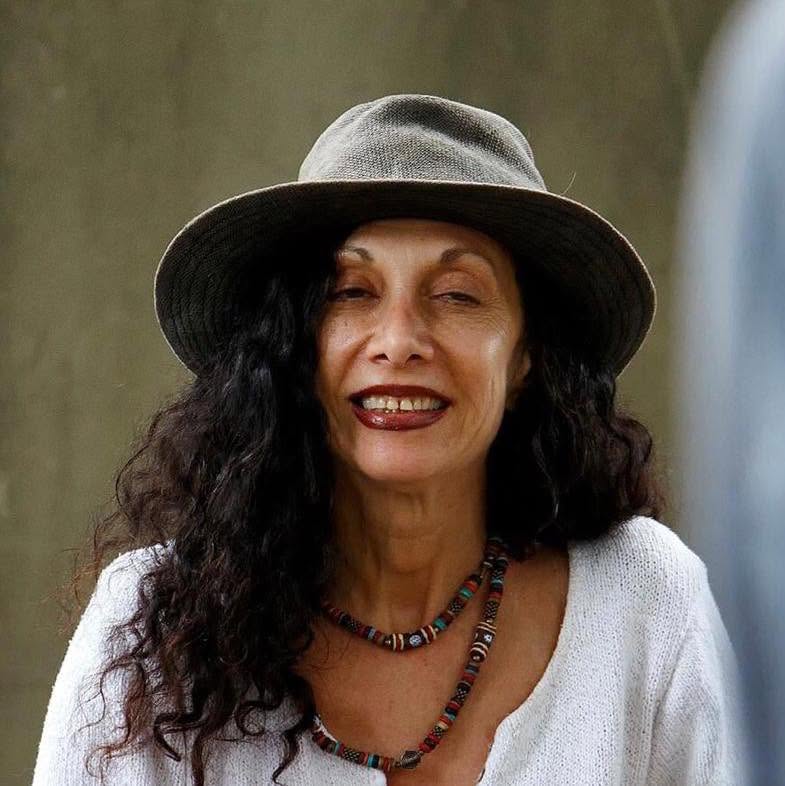
Epstein’s SA connections explored in new book

Jeffrey Epstein’s connections to South Africa extended beyond the women he recruited and abused. Investigative journalist Hazel Friedman’s new book, The Devil Wears Sneakers, examines the country’s place in his international network. She believes there are still unanswered questions about the sex offender’s full reach and the people who enabled him.
Friedman’s interest in Epstein intensified after she met South African survivor Juliette Bryant in December 2022. Bryant’s experiences connected Epstein’s activities in South Africa with his international operations and the failure to hold him accountable.
Initially, Friedman’s focus was on Bryant’s story. However, her research soon revealed that Epstein’s footprint in South Africa was far more significant than it first appeared to be, Friedman told the SA Jewish Report.
Epstein was a wealthy American financier who sexually abused girls and young women and operated a sex-trafficking network. He died in a New York jail in August 2019 while awaiting trial on federal sex-trafficking charges.
Friedman said his 2002 trip to South Africa with former United States president Bill Clinton was among the most widely reported events in Epstein’s history. Clinton was visiting as part of an African HIV/AIDS awareness and economic development tour.
Friedman said her research identified several South African survivors, including women recruited locally. She believes others may have experienced similar abuse without coming forward.
Beyond sexual exploitation, she found evidence of Epstein’s attempts to establish business relationships and gain access to political circles. She said his interests extended across the African continent. “He was in it for the money. It wasn’t about ideology. It was about the bottom line, how he could gain greater proximity to profits, to people, and to power.”
Friedman describes Epstein as a criminal opportunist whose associations crossed national, political, and social boundaries.
Epstein’s Jewish identity has featured prominently in some public discussions of his crimes. Friedman, who is Jewish herself, said her background had no bearing on her decision to investigate him. “My ethnicity, my religion has got nothing to do with me writing the book,” she said. “Absolutely nothing.”
She acknowledged that Epstein was Jewish and grew up in a largely Jewish community in Brooklyn. But she rejected the suggestion that his religious or ethnic background explained his behaviour. “His Jewishness ultimately, in my eyes, had nothing to do with his predation,” she said.
Friedman argued that Epstein’s relationships should be understood through evidence of his conduct and the advantages he sought. He cultivated connections across different communities and political environments.
However, she stressed that the presence of a name in Epstein’s records did not establish wrongdoing. “There’s absolutely no proof of any wrongdoing by any South African businessman in relation to him.”
Friedman found evidence suggesting Epstein had been in South Africa during the late 1980s and possibly the 1990s. However, she acknowledged that she had not investigated every potential connection. She hopes the book will encourage further research into these relationships.
Friedman discussed possible links between Epstein’s network and intelligence figures, including Robert Maxwell, the late British media proprietor and father of Epstein associate Ghislaine Maxwell. However, she said she had been unable to investigate this dimension as extensively as she would have liked.
She did not establish that Epstein’s crimes were directed by any intelligence agency.
Friedman also pointed to Epstein’s relationships with people outside Jewish communities, including political figures and wealthy individuals in different countries. She said these connections reinforced her view that his principal interests were money, influence, and power.
Verifying information was one of the most demanding aspects of writing the book. She examined correspondence, documents, photographs, and flight logs connected to Epstein and his associates.
One resource was Jmail, a website that organises Epstein-related email correspondence. Friedman said the material was extensive and not always presented chronologically. When she encountered information that required confirmation, she consulted original documents available through the United States Department of Justice. She also used the Epstein Files Archive to examine documents and other records.
Friedman searched correspondence for names and references connected to Cape Town, South Africa, and the wider African continent. She then attempted to establish how individual connections fitted into the broader picture. “It was also almost like building an unfinished house from within while living in it,” she said.
Friedman had approximately three months to turn a large volume of material into a completed manuscript. She described the process as isolating and emotionally demanding.
The research also exposed her to the institutions and organisations that she believes helped Epstein maintain access to influential circles. She said one man could not have operated on such a scale without an environment that enabled his behaviour.
Her investigation isn’t presented as a final account of every South African connection. Friedman said new information had emerged since she completed the manuscript, leaving parts of the story unresolved.
Although the book investigates Epstein’s network, Friedman said the experiences of survivors remain central to her work. She described how predators can gradually exploit vulnerabilities, aspirations, and trust rather than relying on the image of a threatening stranger. In Bryant’s case, Epstein had appealed to her aspirations to become a model, said Friedman.
Another South African survivor, identified in the book as Sasha, was recruited in Cape Town. Friedman said Sasha challenged Epstein’s flattery and attempts at manipulation, helping her avoid further sexual assault. However, Friedman emphasised that avoiding sexual assault did not mean Sasha escaped trauma.
She said survivors may struggle for years with shame, anger, sadness, and the difficulty of being believed. The consequences can continue long after the immediate experience has ended. Friedman believes survivors’ willingness to share their experiences has been essential to exposing Epstein’s activities. Journalists did not uncover the full story alone.
Instead, survivors took considerable personal risks by speaking publicly, sometimes facing disbelief or vilification. Friedman hopes her book will help survivors in South Africa feel able to come forward. She also wants it to prompt further investigation into people and institutions that may have enabled Epstein.
“There are some among us who live in rooms of experience that we can never enter,” she said, reflecting on a quotation by author John Steinbeck that she included in the book. She hopes the investigation will open the door to further questions and give survivors greater recognition.
Friedman said millions of documents connected to Epstein remain redacted or inaccessible. She believes the full extent of his network has yet to be established.
For South Africa, she hopes the book will encourage closer examination of the country’s role in Epstein’s activities. She also wants readers to understand the courage required for survivors to reclaim their stories. The investigation, she said, remains unfinished.


