SA
Antizionist protesters’ appeal request gives ‘oxygen’ to hate

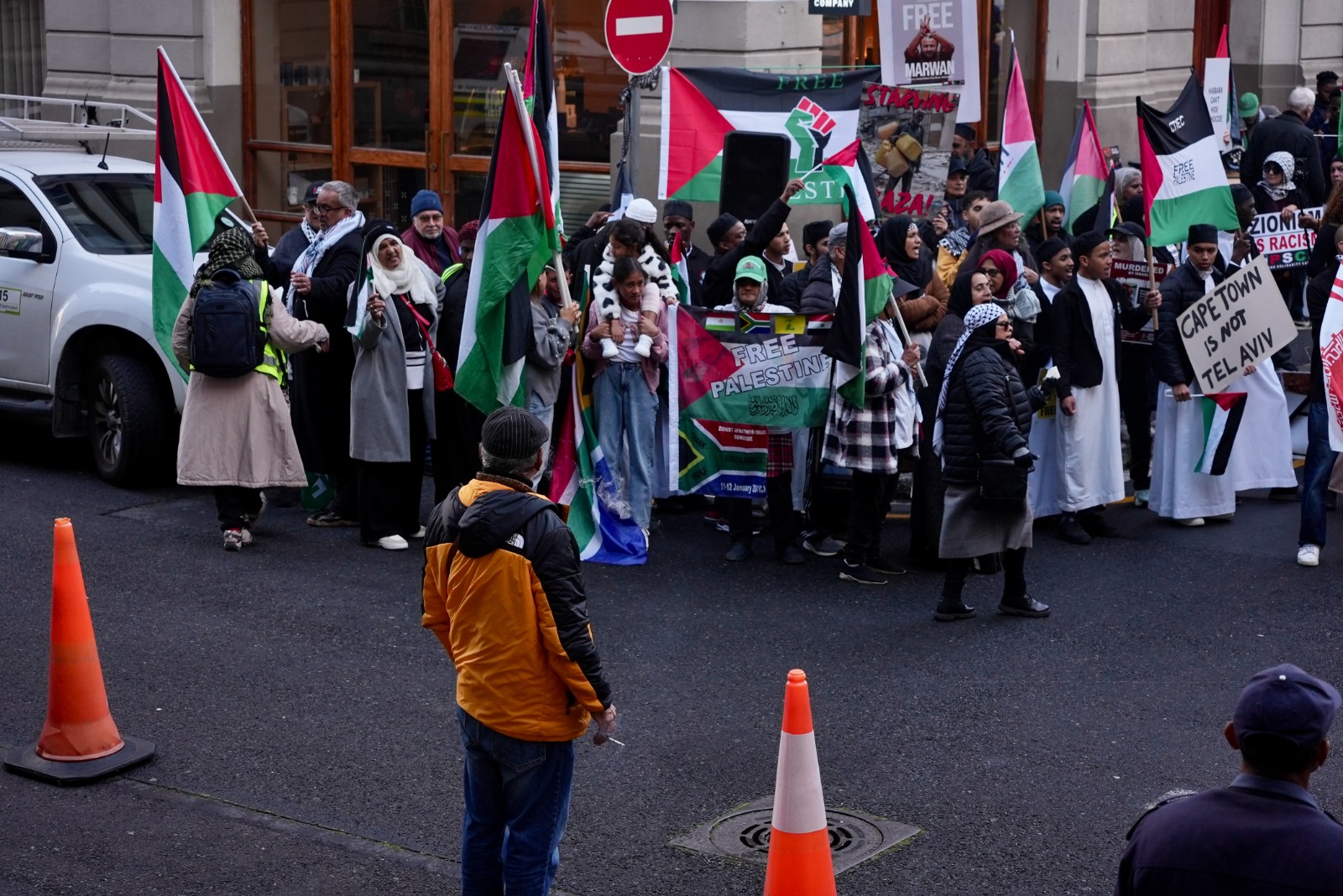
In May this year, Martin Jansen, the treasurer of the Palestine Solidarity Campaign (PSC), claimed the Cape Union Mart case was “bankrupting” the antizionist organisation. He called on supporters to “mobilise and have a mass presence at that court and put pressure on the judges”.
But now, after the PSC lost the case, it has announced that it’s applying for leave to appeal.
The original case was heard in the Western Cape High Court in June, before a full bench. The court interdicted the PSC and its supporters from claiming that Cape Union Mart or its brands are associated with the State of Israel, fund “genocide” or the conflict in Gaza, or that Cape Union Mart’s executive chairperson, Philip Krawitz, funds the Israeli army or the conflict.
It also restrained claims that the retailer or Krawitz are “killing children” or “supporting genocide”, barred obstruction of customer access to stores, and required compliance with the Regulation of Gatherings Act. However, it allowed the PSC and its supporters to protest and boycott lawfully.
“There is no polite way to describe what the PSC is doing. It is asking a court to let it keep saying things that three High Court judges, unanimously, found to be false and defamatory,” says Joshua Schewitz, executive director of the South African Zionist Federation Cape Council.
The judgment, delivered unanimously on 4 September 2026, was “framed in unusually firm language”, says independent practising attorney David Polovin, who believes the court is unlikely to grant leave to appeal.
He says the PSC’s application lacks reasonable prospects of success because “the factual record of the posters, chants, and social media posts was largely common cause, and the court carefully limited the relief so that it does not prohibit peaceful protest or a consumer boycott”.
However, the interdicts ordered by the court are suspended pending the leave application, which means the PSC could try to defame Krawitz and Cape Union Mart in the interim. The organisation says it will continue to protest lawfully.
The court will schedule a hearing to consider the leave to appeal.
The PSC stated that it is requesting leave to appeal because “aspects of the judgment and orders raise important constitutional questions concerning freedom of expression, political speech, and peaceful protest”.
The PSC claims the court’s order is “too broad”, but Schewitz says “this is dishonest” because the order does not prohibit protest, boycotts, or criticism of Israel. “The court’s own judgment records that no such relief was sought. What the order prohibits is the repetition of specific claims found to be false, and the harassment of customers and staff. The PSC is not fighting for freedom of expression. It is fighting for the freedom to defame.”
Schewitz says the facts are not in dispute. “A full bench of the Western Cape High Court heard argument over three days, examined almost 900 pages of answering affidavits, and delivered a unanimous judgment. The court found that the admissible evidence establishes that Krawitz is not ‘funding a genocide’ or ‘murdering babies’. It found that Cape Union Mart is not doing so either.”
The court found the PSC’s words and symbols to be “egregiously” defamatory.
“The PSC lost on every point,” says Schewitz. “It could not produce a single piece of admissible evidence to support the central allegations of its 19-month campaign.”
That campaign caused “real harm”, he emphasises. “Krawitz, his family, and approximately 3 000 Cape Union Mart employees across 270 stores were subjected to posters calling him a ‘genocide funder’, chants asking how many children he had killed, manipulated photographs depicting him with devil’s horns, swastika imagery superimposed on Israeli flags, and a poster accusing Jews of being ‘The synagogue of Satan’. Staff and customers were harassed and intimidated. The PSC’s own members admitted responsibility for this conduct. The court examined it and granted a final interdict.”
In a statement, Cape Union Mart said that the company and Krawitz had approached the court to address specific conduct that the court found warranted relief, “and we stand by that judgment”.
Harassment and intimidation of customers and employees; breaching the Regulation of Gatherings Act; and false and defamatory claims, made without proof, linking Cape Union Mart and its chairperson to the conflict in Gaza and the military actions of Israel “are not lawful or peaceful protest”, said the statement.
Cape Union Mart‘s legal adviser, Simone Sulcas, says it stands for the constitutional right to peaceful and lawful protest. However, “that does not include defamatory and harmful claims that are repeated during protests or posted online. Nor does it include harassment and intimidation. We welcome the High Court’s decision to confirm this principle – a principle we believe all law-abiding South Africans support – and we trust that the respondents will fully comply with the High Court judgment.”
Attorney Shimron Shapiro says that the PSC is entitled to ask for leave to appeal, “but this was a unanimous decision of a three-judge full bench, and the court’s findings went beyond simply restricting political speech: it found specific allegations to be defamatory, and held that the PSC had failed to establish an adequate evidentiary basis for them”.
That presents “a significant, and I believe insurmountable, hurdle, as a court will only allow an appeal to be heard if there are reasonable prospects of success”, explains Shapiro.
“Publicity is the real prize” for the PSC, says Polovin. “An appeal will keep the media focused for months more. For an organisation that thrives on public attention, sustained exposure is oxygen.”
“The PSC is wasting the court‘s time,” says Schewitz. “The original reason for its protests has been proven false in court. So why does it continue? Because Cape Union Mart is a Jewish business. What the PSC now wants is a green light from the courts to continue saying what was proven as false, and to intimidate people on the strength of those lies. We are confident that South Africa‘s court system will not be duped by such thuggish conduct.”
The Cape South African Jewish Board of Deputies executive director, Daniel Bloch, says, “South Africa is a constitutional democracy and the PSC is entitled to apply for leave to appeal. We respect that process and do not believe the community should be unduly concerned.”
At the same time, “the appeal process cannot be used to disregard the existing court order or to continue making statements that the court found to be defamatory”, says Bloch. “Our message to the community is to allow the legal process to take its course.”
South Africa’s courts have spoken clearly, says Schewitz. An application for leave to appeal “does not change the facts. It simply confirms that the PSC intends to waste further court time, rather than accept what three judges told it plainly: stop making claims you cannot prove.”