



SA
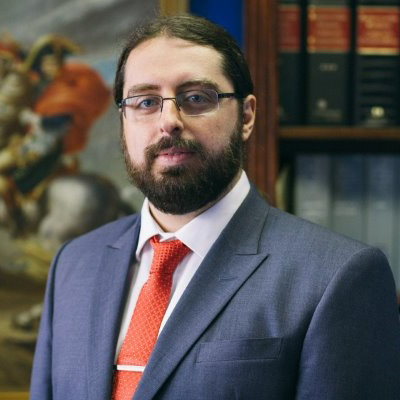
UCT leader faces expulsion for highlighting antisemitism

As one of the few Jewish and Zionist members of the University of Cape Town (UCT) Council, advocate Mark Oppenheimer has endured relentless attacks from fellow council members who are fighting tooth and nail to get him ousted from the university’s highest decision-making body.
An inquiry report now recommends that Oppenheimer be expelled because he criticised UCT’s restrictions on Israeli academics, in its “Gaza resolutions”, and discussed antisemitic and antizionist hate on campus, including student support for terrorist organisations. Oppenheimer spoke on human rights activist Ayaan Hirsi Ali’s podcast. Fellow council member David Ansara may be suspended for six months after he expressed support for Oppenheimer.
The report also includes objections to Oppenheimer and Ansara taking part in an event in the United States that memorialised murdered South African farmers. Those commemorated came from a range of ethnicities and religions, including Jewish strawberry farmer Jeffrey Zetler, who was killed on his Stellenbosch farm in 2018.
Council convened on Sunday 18 October to decide whether to expel Oppenheimer and suspend Ansara. But in the days before the meeting, public pressure mounted, asking why Oppenheimer and Ansara were being punished for exercising their rights to freedom of expression. The council decided to choose a committee to consider the matter. For now, the fate of Oppenheimer and Ansara’s seats on council hang in the balance.
Oppenheimer is one of four candidates that the UCT alumni body elected to serve four-year terms on the council, from 2024 to 2028. The others are Ansara, chief executive of the Free Market Foundation; Emeritus Professor Brian Kantor: and legal academic Kelly Phelps. Many alumni hoped the four would help steer UCT back to a more moderate, inclusive, and rational path than the extreme left turn taken in recent years.
Oppenheimer, an outspoken defender of Jewish rights, has fought to steer UCT away from extremism, but has been constantly attacked and blocked by a large antizionist lobby on council, as well as antizionist individuals and organisations on campus.
Speaking to the SA Jewish Report, Oppenheimer says that what’s happening to him and Ansara is a “witch hunt”, similar to council’s attempt to oust Vice-Chancellor Professor Mosa Moshabela. “Antizionist extremists at UCT will stop at nothing to advance their agenda, even if it is to the detriment of the institution.”
He says that being on council and fighting for a better UCT has “been brutal”, but he does it because he highly values his UCT law school education, and the institution itself. “I felt it is worth doing this, to push against the tide.”
He says the Jewish community does need to be concerned about antisemitism and antizionist hate on campus, and that it will get worse if people don’t push back. If he is expelled from council, he will continue to demand better from the university. He has seen the ramifications of UCT leadership’s radicalism first-hand, including donors withdrawing support.
He reminds the community of the antizionist hate seen on campus in recent years. This has included students openly expressing support for terrorist organisations and inviting speakers from such bodies to address students on campus; the hanging of Hezbollah, Hamas, and Palestinian Islamic Jihad flags on campus; a student dedicating the “victory” of anti-Israel resolutions to terrorist organisations; and a student ripping a kippah off the head of a Jewish student. All this is why he said that there is an “Islamist” influence on campus when speaking on the podcast.
David Benatar, Emeritus Professor of Philosophy at UCT and author of The Fall of the University of Cape Town: Africa’s Leading University in Decline, says the singling out of Oppenheimer “reeks of double standards and an abuse of unacknowledged power”.
He says “a massive cloud of misconduct hangs over other segments of council”, but it is “the liberals who are being targeted, not for wrongful actions but for unpopular words”.
Former director of the Free Speech Union of South Africa Sara Gon says Oppenheimer’s appearance on the podcast “is a legitimate form of public dissent, not misconduct. No one was named and thus defamed.”
She explains that free speech recognises that any opinion may be countered freely by the opposite opinion. Therefore, “the appropriate response from Oppenheimer’s critics is to challenge him with counter arguments. ‘Embarrassment’ does not justify curtailing free speech.”
Ansara’s alleged “culpability” for retweeting a post in support of Oppenheimer is “bizarre and petty”, says Gon.
Veteran journalist William Saunderson-Meyer says the actions against Oppenheimer and Ansara are the antithesis of what a university stands for, and are unconstitutional.
Therefore, even if they are expelled from council, “this undoubtedly would be overturned by the courts. Which begs the question, why is it happening?” Saunderson-Meyer suggests it may be “political theatre designed to harass and intimidate”.
The executive director of the Cape South African Jewish Board of Deputies, Daniel Bloch, says his organisation is “deeply concerned” by these developments. Universities should be places where differing opinions are encouraged, “not where individuals risk sanction for challenging dominant political ideologies,” says Bloch. “UCT Council has a responsibility to safeguard freedom of expression, intellectual independence, and academic freedom, while ensuring that the well-being and interests of its entire university community take precedence over ideological agendas.”
UCT Renewal is a group of alumni working to ensure graduates have a genuine voice in how the university is run and to create accountability for decision-making.
In a statement, it told the SA Jewish Report that if a university wants alumni to be “true stakeholders who engage passionately”, it should not punish those who do so. “Some voices cannot matter more than others.”
In addition, “as a proponent of free speech and member of the UCT Academic Freedom Committee, it is not surprising that Oppenheimer debates widely. His account of foreign terrorist organisations present on UCT campus is the lived experience of students and staff at UCT. Videos show what happened.”
Phumlani Majozi, a senior political economist, wrote in an article addressing the matter, “The problem with pro-Palestine movements is that they want to force others to interpret the world as they do. Disagree with them, and you must suffer.”
The executive director of the South African Zionist Federation Cape Council, Joshua Schewitz, says this incident is the latest step in a long campaign to push pro-Israel voices off the UCT Council. For two years, “there have been repeated attempts to unseat Oppenheimer”.
“We stand with Oppenheimer and Ansara, and call on council to reject these recommendations,” says Schewitz. “UCT should be working to make campus a place where every view can be heard and every student feels safe. Instead, it is spending its energy silencing the people who raised the alarm.”